Słuchaj tego podcastu za darmo w aplikacji: Pobierz za darmo z App Store
radio.pl
Sleep timer
Zapisz stacje
404 odcinków
Ep 393 - When Science Isn't Ready for "Prime Time"
21.10.2026 | 1 godz. 12 min.Trexler and Helms step back from training specifics to talk about how science gets interpreted, communicated, and applied.
Trexler opens with two anecdotes that exposed a blind spot in his own communication — a one-minute clip of a talk on the Minnesota starvation experiment that drew online backlash, and a classroom tangent on macaque calorie-restriction research that a colleague worried could nudge students toward disordered eating — both cases where true, interesting science left too much room for misapplied conclusions. That leads into the academic-versus-applied distinction (when an idea is "ready for showtime"), what Trexler has absorbed from science communicators and evolutionary-biology seminars outside fitness, the case for structuring science as story, leading with a question rather than an attack on social media, and modeling intellectual humility.
The back half covers how to tell when information isn't "ready for prime time," a worked example from a Mass article on weight-variability research, and the shared pull — across researchers, communicators, and audiences alike — to carry findings past what the evidence supports.
Join us for new episodes of Iron Culture on Tuesdays at 5:30 pm eastern time!
Be sure to use code "MRR10" for 10% off your order at elitefts.com
Iron Culture is proudly presented by the MASS Research Review
massresearchreview.com
Chapters
0:00 Intro
6:50 Interpreting, communicating & applying science
9:29 Anecdote: a clipped talk & the starvation experiment
14:21 Anecdote: the macaque calorie-restriction tangent
16:27 Academic ideas vs. "ready for showtime"
26:09 What talks outside fitness taught him
28:46 Science needs story: "Houston, We Have a Narrative"
41:35 Lead with a question, not an attack
44:53 Modeling humility: the Enoka example
52:57 When information isn't "ready for prime time"
1:00:31 Wanting science to do more than it can
1:07:02 Completing the circle & the expert's blind spotEp 392 - Training Frequency for Hypertrophy
14.10.2026 | 1 godz. 20 min.Trexler and Helms dig into training frequency and hypertrophy, prompted by a wave of recent discussion and two new papers: a new original study comparing three weekly sessions of three sets against one session of nine, and a new preprint from an independent research team utilizing the openly available data from Pelland's previously published meta-regression. They trace the long history of the frequency debate (including Helms's own shifting position), review where the science had settled, and put the current online discourse and the reanalysis under the microscope. The back half turns practical: a state-of-the-science recap, higher frequency as a tool for distributing volume and managing fatigue, and "zigging where the data zags," with a personal example of practical application.
Join us for new episodes of Iron Culture, Tuesdays at 5:30 pm eastern time!
Be sure to use code "MRR10" for 10% off your order at elitefts.com
Iron Culture is proudly presented by the MASS Research Review
massresearchreview.com
Chapters
0:00 Intro & business
5:30 Tonight's topic: frequency & hypertrophy
8:54 A history of the frequency debate
21:19 Where the science had settled
29:33 The new claim & study under the microscope
42:39 The state of the science
56:24 Distributing volume & managing fatigue
1:04:52 Zigging where the data zags (a practical application)
1:18:32 Wrap-upBONUS: The Missing Dimension to Optimum Sports Nutrition? - Eric Helms & Steve Hall
06.10.2026 | 1 godz. 1 min.In this episode, Eric Helms and Steve Hall explore the nature of aging, the importance of self-awareness, and practical insights into nutrition and training for bodybuilders.
They share personal stories, scientific perspectives, and coaching tips to help listeners optimize their health and performance.
Catch new Iron Culture episodes every Tuesday at 5:30 pm eastern time!
Be sure to use code "MRR10" for 10% off your order at elitefts.com
Iron Culture is proudly presented by the MASS Research Review
massresearchreview.com
Chapters
00:00 Introduction and reflections on aging
02:03 The linear acceleration towards death
03:52 Microplastics and health concerns
05:54 Leadership, responsibility, and feeling like an adult
10:04 The impact of losing a parent and human fallibility
14:58 Coaching Winnie and competition prep insights
24:11 Meal timing, protein intake, and practical nutrition
35:50 The science of nutrient timing and meal frequency
49:49 Constraints, individualization, and coaching philosophy
59:57 Closing thoughts and future topicsEp 391 - What Can You REALLY Learn From Pre-Steroid Era Bodybuilders? (with Dr. Conor Heffernan)
30.09.2026 | 1 godz. 46 min.This episode looks at bodybuilding before steroids became widespread, arguing that the era is far more useful (and more complicated) than the usual "pure, simple, natty golden age" story. Drs Eric Helms and Conor Heffernan break down how strength sport, judging standards, gym access, and culture shaped physiques from the 1940s through the 1950s. The big takeaway is that early bodybuilding was not a direct comparison to modern natural bodybuilding. The sport was tied to Olympic weightlifting, evaluated with very different criteria, and influenced by training tools and social norms that changed the entire game.
Catch new Iron Culture episodes every Tuesday at 5:30 pm eastern time!
Be sure to use code "MRR10" for 10% off your order at elitefts.com
Iron Culture is proudly presented by the MASS Research Review
massresearchreview.com
Chapters
0:00 Intro
5:20 The "pre-steroid era" myth
13:48 Using history to break the rules
15:22 When did steroids actually arrive?
29:13 Were the silver-era physiques natural?
32:11 What the average lifter really looked like
39:33 Why old physiques look so different
43:02 Photography before Photoshop
51:37 Inside the Mr. America contest
1:05:27 Training shifts & the Weider–Hoffman rivalry
1:09:21 Equipment & accessibility
1:21:24 Why training volume was limited
1:22:41 The machine age changes everything
1:31:43 How your entry point shapes you
1:37:05 Lessons from the pre-steroid era
1:42:36 The "banned" lifts that were once normal
1:44:50 Wrap-upEp 390 - Is Muscle Loss Really a Big Deal?
23.09.2026 | 1 godz. 8 min.Bodybuilders are laser-focused on retaining as much muscle as possible while dieting, and for very good reason. In that context, the smallest details matter. But what about everybody else?
This episode explores a hot take on weight loss, lean mass loss, and why the usual fear of losing muscle may be overstated in the context of successful long-term weight loss. Drs Eric Helms and Eric Trexler break down what lean mass loss actually represents, how body composition changes in obesity differ from bodybuilding or weight cycling, and why the health benefits of sustained fat loss substantially outweigh moderate losses in fat-free mass.
Catch new Iron Culture episodes every Tuesday at 5:30 pm eastern time!
Be sure to use code "MRR10" for 10% off your order at elitefts.com
Iron Culture is proudly presented by the MASS Research Review
massresearchreview.com
Chapters
00:00 Introduction
15:16 Helms' hot take on losing lean mass
19:02 Defining lean mass loss
23:28 Why obesity increases fat-free mass
30:14 Temporary versus lasting muscle loss
35:05 DEXA versus MRI measurements
42:12 Prioritizing function and quality of life
47:29 Obesity, stigma, and public health
73:35 Weighing health benefits against muscle loss
Więcej Zdrowie i Fitness podcastów







Trendy w podcaście Zdrowie i Fitness
















O Iron Culture presented by MASS
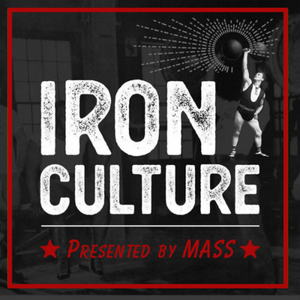
Iron Culture was started by Eric Helms and Omar Isuf as a means of exploring the world of physical culture and attempting to distill a unified philosophy of lifting and to help listeners find greater meaning from the iron. It's now hosted by Eric Helms and Eric Trexler, who repeatedly beg Omar to return as a guest.
Iron Culture focuses on dispensing practical, useful information to the listener, bouncing from history, to philosophy, to contemporary lifting culture issues, to science. The format includes casual conversations between the two hosts on a variety of topics, discussions with a panel of experts and interviews with authoritative figures in the lifting community.
Iron Culture is proudly presented by the MASS Research Review.
Strona internetowa podcastuSłuchaj Iron Culture presented by MASS, Stan skupienia. i wielu innych podcastów z całego świata dzięki aplikacji radio.pl
Uzyskaj bezpłatną aplikację radio.pl
- Stacje i podcasty do zakładek
- Strumieniuj przez Wi-Fi lub Bluetooth
- Obsługuje Carplay & Android Auto
- Jeszcze więcej funkcjonalności
Uzyskaj bezpłatną aplikację radio.pl
- Stacje i podcasty do zakładek
- Strumieniuj przez Wi-Fi lub Bluetooth
- Obsługuje Carplay & Android Auto
- Jeszcze więcej funkcjonalności
Iron Culture presented by MASS
Zeskanuj kod,
pobierz aplikację,
zacznij słuchać.
pobierz aplikację,
zacznij słuchać.
 Polska