Słuchaj tego podcastu za darmo w aplikacji: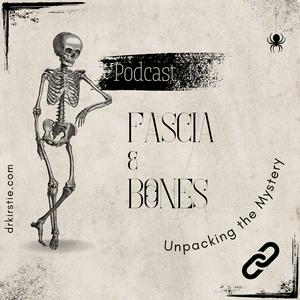 Pobierz za darmo z App Store
radio.pl
Sleep timer
Zapisz stacje
Dostępne odcinki
5 z 25
- S2E6: In this episode an Interview with Kieran Schumaker, BCSISend us a textIn Episode 6 of Season 2, I am interviewing a friend and colleague, Kieran Schumaker (they/them), Board Certified Structural Integrator and instructor of Neurovascular Release work they developed. Kier started practicing in massage therapy in 1998 and trained with Anatomy Trains in 2005. Before transitioning to bodywork, she trained in environmental science at The Evergreen State College. They are skilled in a gentle approach to supporting the body via the nerves as well as osteopathic methods of treatment. Kier is an experienced instructor of structural integration and has a wonderful way of sharing with metaphor and clear descriptions of the anatomy involved with the techniques they are teaching. One of the things I love about Kier is their choices of words. They are careful and articulate in how they describe and share their thoughts.In this podcast, we discuss several topics in our fields around integrating nerves in our work, how we learned to explore and be curious as we learn and creative as children, neurodivergence, and our love of our field.Kier’s website is via AgileBody Integrative Learning at https://learn.neurovascular-release.online/ and now for the conversation with Kier. They will be teaching here in Taos, New Mexico in September 18-20 and November 13-16 of 2026.--------46:33
- S2E5: In this episode I am interviewing Dr. Maria DeFranco, DC and Holistic PhysicianSend us a textWelcome back to Fascia and Bones: Unpacking the Mystery. Some things I love—fascia and bones with a detective mystery. I am a practicing manual osteopath and structural integrator and love working with the connective tissue of the body and the holistic systems of the body. I am also a long-time educator in the field of bodywork and movement. My hope is to share some insights into the fields I practice.In Episode 5 of Season 2, I am interviewing a dear friend and colleague, Dr. Maria DeFranco. Maria and I met in 2005 working together in a café in Taos, New Mexico. She was just beginning her practice as a licensed massage therapist. We ended up starting a new spa at the Taos Ski Valley together. Dr. Maria left to Portland to attend chiropractic school. I love seeing how Dr. Maria has developed and grown her OM3 BODY practice that offers excellence in bodywork. Dr. Maria has creatively combined chiropractic and massage therapy, offering a wide range of holistic boutique treatments in Fullshear, Texas, and Portland, Oregon. Some of her specialties include holistic pelvic care and TMJ care. Which she describes in her podcast with Dr. Julia Ward’s podcast at https://podcasts.apple.com/us/podcast/the-functional-edge-with-dr-julia-ward/id1794557606?i=1000720918959.Topics we cover a wide and varied in this episode. We discuss pelvic diaphragm work, self-care for the practitioner, how we approach our work, Bali, and integrating our neurodivergence and how we became aware that we are both neurodivergent. I am very excited to share our love for how we listen and practice embodied presence within our work.Dr. Maria’s website is www.om3body.com/, and now for the conversation with Dr. Maria.Somatic Touch © 2023 by Kirstie Segarra is licensed under CC BY-SA 4.0--------1:11:32
- S2E4: Unpacking New Models of Healing Ecology, Animistic, Feminine and moreSend us a textFascia and Bones: Unpacking the MysterySeason 2 Episode 4With Dr. Kirstie SegarraOctober 17th, 2025Welcome back to Fascia and Bones: Unpacking the Mystery. Some things I love—fascia and bones with a detective mystery. I am a practicing manual osteopath and structural integrator and love working with the connective tissue of the body and the holistic systems of the body. I am also a long-time educator in the field of bodywork and movement. My hope is to share some insights into the fields I practice.The Fall Equinox happened with a myriad of eclipses and full moon in Pisces, and more. It seemed like a challenging time in Taos as the weather was still presenting warm days as we moved into October. As I rode my bicycle, I watched the brown and tan tarantulas migrating across the high desert. Finding myself upset every time someone sped by in their car, oblivious as they killed another tarantula. Something about walking and cycling keeps the pace slow and more kindred to the connection to the land. This relationship supports a form of embodiment that is relational within presence. Through my years of study and work, I have found myself always returning to the land in which I cultivate and live. It looks over the mountains of Taos, where the land belongs to the Red Willow people of Taos Pueblo. Making offerings is a daily ritual. I have altars throughout my home and practice space as well as bones I have collected throughout my garden landscape. The bones remind me of the finite existence we embody as well as the vitality that runs through all living systems. I have a large quartz crystal buried by my front door that faces east, to anchor in healing of my biological family. It has been there for several years. I placed it during a period of estrangement for two years from my parents and sibling. I will never forget the level of grief I had to endure on my own without support. It is the ritual that held me. To this day, I separate my biological family from the quiescence of my inner life to protect me from the enduring abuse I grew up with. I do not believe there will be a reconciliation now that my mother has developed dementia along with other terminal illnesses, and my father passed away in 2019. So I return to the land as an opportunity to heal in my home here in Taos.--------17:10
- S2E3: Unpacking Relational Anatomy, Embryology and Osteopathy in the Cranial Field and Biodynamic CSTSend us a textWelcome back to Fascia and Bones: Unpacking the Mystery. Some things I love—fascia and bones with a detective mystery. I am a practicing manual osteopath and structural integrator and love working with the connective tissue of the body and the holistic systems of the body. I am also a long-time educator in the field of bodywork and movement. My hope is to share some insights into the fields I practice.As you may have heard in the previous podcast with Lauren Christman, I have some musings around changing how we talk about anatomy and physiology. Primarily, this is influenced by my study in embryology—the motion of form and function. There is a felt sense and somatic response that happens within me when anatomy is taught from a reductionistic lens—and I am guilty of this too. It is challenging to find new language to describe the relationship between structures and how they were formed. What do I mean by this? For example, my latest obsession is the continued deep dive into neurobiology in the trauma field. If I begin describing the parts of the anatomy, I speak about the vagus nerve, amygdala, nucleus tractus solitarius, periaqueductal gray, and nucleus ambiguous. However, they all grow in relationship and formation to the whole system in the first few weeks of life in utero. When I wear the lens of embryology, the distinction between these processes is more relational. In this podcast, my hope is to unpack the relational lens of anatomy along some recent experiences that invited me to explore this further.Two recent experiences invited me to think within this lens. The first I experienced was with an anatomy teacher at the Fascia Research Congress, where they were quite combative in how they spoke and challenged the group. I am not sure if this is how they teach in their normal settings, as I haven’t experienced it. I had a visceral response to feeling quite uninvited to engage with the person. I tried to stay present, and I realized after an hour of feeling like the group was being berated, I did speak up in the group to invite a reframe, and the invitation was not received.The second experience was when I heard another anatomy teacher speaking about the body as if the muscles, insertions, and origins have a certainty to them. It really struck me that we as teachers are not helping move the field forward in a more holistic and embryological model of understanding. I have deeply pondered this, and I am challenging myself as a teacher to find more fluid and holistic models of teaching in my upcoming courses.--------17:44
- S2 E2 Interview with Lauren Christman conversations in Craniosacral, Structural Integration and bringing healing language to how we describe the work we teach.Send us a textWelcome back to Fascia and Bones: Unpacking the Mystery. Some things I love—fascia and bones with a detective mystery. I am a practicing manual osteopath and structural integrator and love working with the connective tissue of the body and the holistic systems of the body. I am also a long-time educator in the field of bodywork and movement. My hope is to share some insights into the fields I practice.In Season 2 Episode 1, I am interviewing Lauren Christman, MFA LMT CCST CBSI ATSI, who is a long-time practitioner and teacher in the field of bodywork in Seattle, Washington. Lauren and I share many parallels with a love of craniosacral, visceral, and structural integration through the lens of osteopathy. I particularly appreciate Lauren’s thoughtfulness in how she languages and speaks about the work we do. You can learn more about Lauren’s courses at craftedtouch.com. In this episode, we share a deep conversation beginning with Lauren’s foyer into touch work in hospice care centered around supporting folks with AIDS. Exploring the idea of “touch without violence”. Exploring teaching anatomy that speaks to relationship from an embryological lens with clarity without being reductive. Exploring the idea of the work we do as a “living body of work”.Now for the interview with Lauren.--------1:06:17
Więcej Zdrowie i Fitness podcastów
 Madame Monday - po dorosłemuZdrowie i Fitness, Zdrowie Psychiczne
 Stan skupienia.Zdrowie i Fitness, Zdrowie Psychiczne
- ZA MOICH CZASÓWZdrowie i Fitness, Społeczeństwo i Kultura, Zdrowie Psychiczne
 Live BetterZdrowie i Fitness
 Bracia Rodzeń. Można pięknie żyć*Zdrowie i Fitness
 Jamrozek wrażliwieZdrowie i Fitness, Zdrowie Psychiczne
 Zwierciadło PodcastyZdrowie i Fitness, Zdrowie Psychiczne
 Tak właśnie mamZdrowie i Fitness, Zdrowie Psychiczne
 Sznurowadła myśliZdrowie i Fitness, Społeczeństwo i Kultura, Zdrowie Psychiczne
 Karolina SobańskaZdrowie i Fitness
Trendy w podcaście Zdrowie i Fitness
 N°1 PODCAST - Lab OneZdrowie i Fitness, Odżywianie
 Opowiadania erotyczne.Zdrowie i Fitness, Seksualność
 The Checkup with Doctor MikeZdrowie i Fitness, Medycyna
 PortalYogi PodcastEdukacja, Zdrowie i Fitness, Samodoskonalenie
 AtypoweEdukacja, Zdrowie i Fitness, Społeczeństwo i Kultura, Zdrowie Psychiczne, Relacje, Samodoskonalenie
 Sekrety Skutecznego OdchudzaniaZdrowie i Fitness, Odżywianie
 Sekrety DługowiecznościZdrowie i Fitness
 Tracks To Relax Sleep MeditationsZdrowie i Fitness, Medycyna Alternatywna, Zdrowie Psychiczne
 Being Well with Forrest Hanson and Dr. Rick HansonEdukacja, Zdrowie i Fitness, Zdrowie Psychiczne, Samodoskonalenie
 FoundMyFitnessZdrowie i Fitness, Fitness, Medycyna, Odżywianie
 Sleep Magic: Sleep Hypnosis & Meditation for Sleep PodcastEdukacja, Zdrowie i Fitness, Medycyna Alternatywna, Samodoskonalenie
 Bartosz Czekała i podcast "The Universe of Memory"Edukacja, Zdrowie i Fitness, Nauka Języków, Odżywianie, Samodoskonalenie
 The Matt Walker PodcastZdrowie i Fitness, Nauka, Medycyna, Nauki Społeczne
 Owsiana PodcastZdrowie i Fitness
 Hello Zdrowie PodcastyZdrowie i Fitness, Zdrowie Psychiczne
 UKOJENIAZdrowie i Fitness, Zdrowie Psychiczne
 СаморефлексіїZdrowie i Fitness, Zdrowie Psychiczne
 Sekielski o nałogachZdrowie i Fitness, Zdrowie Psychiczne
 Meno Żadna PauzaZdrowie i Fitness, Seksualność
 Чай с психологомEdukacja, Zdrowie i Fitness, Nauka, Nauki o Zyciu, Zdrowie Psychiczne, Samodoskonalenie
 The Peter Attia DriveZdrowie i Fitness, Fitness, Medycyna
 Brown Noise for SleepZdrowie i Fitness, Medycyna Alternatywna
 OptimumEdukacja, Zdrowie i Fitness, Zdrowie Psychiczne, Samodoskonalenie
 Podkast psychologicznyZdrowie i Fitness
 WYSOKIE WIBRACJEZdrowie i Fitness, Zdrowie Psychiczne
 Andrzej Silczuk PodcastZdrowie i Fitness, Zdrowie Psychiczne
- Sznurowadła myśliZdrowie i Fitness, Społeczeństwo i Kultura, Zdrowie Psychiczne
 Dr Tadeusz - O zdrowiu i zdrowym życiuZdrowie i Fitness, Medycyna
O Fascia & Bones: Unpacking the Mystery
Some things I love—fascia and bones with a detective mystery. I am practicing manual osteopath and structural integrator and love working with the connective tissue of the body and the holistic systems of the body. I am also a long-time educator in the field of bodywork and movement. My hope is to share some insights in the fields I practice.I am generalist in my practice, which means I do a little of everything and there are some areas I focus on such as neurodivergence, trauma, birth work and chronic pain. As an educator, I am connected with many people in my fields of study and my hope is to share their experiences and expertise within the discussions we have. In the new podcast I will begin with interviewing folks starting with the field of Structural Integration (SI). I want to unveil some sticky points in our field and take an honest look at some bias that has happened due to how the lineage was set up by Dr. Ida Rolf. In the future, I hope to interview a broader range of innovators in the field of fascia.
Strona internetowa podcastuSłuchaj Fascia & Bones: Unpacking the Mystery, Madame Monday - po dorosłemu i wielu innych podcastów z całego świata dzięki aplikacji radio.pl
Uzyskaj bezpłatną aplikację radio.pl
- Stacje i podcasty do zakładek
- Strumieniuj przez Wi-Fi lub Bluetooth
- Obsługuje Carplay & Android Auto
- Jeszcze więcej funkcjonalności
Uzyskaj bezpłatną aplikację radio.pl
- Stacje i podcasty do zakładek
- Strumieniuj przez Wi-Fi lub Bluetooth
- Obsługuje Carplay & Android Auto
- Jeszcze więcej funkcjonalności

Fascia & Bones: Unpacking the Mystery
Zeskanuj kod,
pobierz aplikację,
zacznij słuchać.
pobierz aplikację,
zacznij słuchać.
 Polska