

Słuchaj tego podcastu za darmo w aplikacji: Pobierz za darmo z App Store
radio.pl
Sleep timer
Zapisz stacje
541 odcinków
Why the China Threat Is Overblown | Logan Wright
28.09.2026 | 55 min.In Episode 500 of Hidden Forces, Demetri Kofinas speaks with Logan Wright, director of China macro and financial sector research at the Rhodium Group and author of Broken China, about why China's economic troubles are structural rather than cyclical, the product of the largest single-country credit expansion in history, how Beijing's official GDP figures obscure what is actually happening to Chinese households, local governments, and the property market, why the renminbi is overvalued and capital flight out of China is likely to persist, and what it means for the West to treat the PRC not as a rising power to be managed, but as a declining one.
The first hour focuses on Wright's central argument that China's economy is in structural decline, not because its leaders chose austerity or an unwavering commitment to running chronic trade surpluses, but because the largest single-country credit expansion in over a century has exhausted the financial system's capacity to generate growth, leaving it unable to ignite the domestic demand needed to rebalance both the Chinese and global economies. They discuss why optimism about Beijing's reform prospects was once rational, how China's official GDP data obscures what is actually happening on the ground, and why the prevailing narrative that Chinese policymakers retain the capacity to engineer a recovery is, in Wright's view, fundamentally mistaken.
The second hour turns to the consequences of China's credit bubble and property market collapse for ordinary households and local governments, the similarities and critical differences between China's predicament and Japan's in the 1990s and early 2000s, and the striking historical parallel between the CCP's political choices and those of Soviet leaders during the USSR's era of stagnation under Brezhnev. They also discuss the structural demographic headwinds compounding the collapse in Chinese demand, why Wright believes the renminbi is overvalued and poses no credible threat to the dollar's international role, the implications for America's strategic competition with the PRC when viewed through the lens of a declining rather than a rising power, and why Wright argues that the threats China poses are deterrable and require coordinated allied action to address.
Subscribe to our premium content—including our premium feed, episode transcripts, and Intelligence Reports—by visiting HiddenForces.io/subscribe.
If you'd like to join the conversation and become a member of the Hidden Forces Genius community—with benefits like Q&A calls with guests, exclusive research and analysis, in-person events, and dinners—you can also sign up on our subscriber page at HiddenForces.io/subscribe.
If you enjoyed today's episode of Hidden Forces, please support the show by:
Subscribing on Apple Podcasts, YouTube, Spotify, Stitcher, SoundCloud, CastBox, or via our RSS Feed
Writing us a review on Apple Podcasts & Spotify
Join our mailing list at https://hiddenforces.io/newsletter/
Producer & Host: Demetri Kofinas
Editor & Engineer: Stylianos Nicolaou
Subscribe and support the podcast at https://hiddenforces.io.
Join the conversation on Facebook, Instagram, and Twitter at @hiddenforcespod
Follow Demetri on Twitter at @Kofinas
Episode Recorded on 09/23/2026How to Invest for A Hundred Years | Inigo Fraser Jenkins
24.09.2026 | 52 min.In Episode 499 of Hidden Forces, Demetri Kofinas speaks with Inigo Fraser Jenkins, a strategist at AllianceBernstein and author of the research paper "The Hundred Year Portfolio," about how investors should rethinking portfolio construction, governance, and asset management across multigenerational time horizons in a world shaped by AI disruption, climate risk, the breakdown of the post-WWII rules-based order, and the greatest generational wealth transfer since before World War I.
The first hour covers the structural forces that made the post-1980 period of falling inflation and interest rates, negative stock-bond correlation, and strong real returns so exceptional, why recency bias remains the most dangerous assumption embedded in institutional portfolios, and how the convergence of AI, climate change, and geopolitical upheaval has widened the range of possible futures in ways that challenge conventional diversification frameworks. They also discuss the explosive growth of family offices and sovereign wealth funds, the erosion of the rule against perpetuities and the rise of dynasty trusts, why governance has primacy over allocation for ultra-long-horizon investors, why purchasing power preservation rather than benchmark-relative performance should anchor portfolio construction, and why diversification must shift from cross-asset correlation within the Markowitz framework to robustness across fundamentally different paths of the future.
The second hour examines the specific portfolio implications of a hundred-year mindset, including:
(1) Why equities should remain the core allocation, even in a lower-return environment
(2) The diversifying role played by private assets, including early stage venture
(3) Direct ownership of income-generating real estate, including farmland
(4) The case for a meaningful gold allocation as a zero-correlation hedge against inflation, fiscal instability, and systemic risk.
They also discuss the primary drivers of wealth destruction over time, from inflation and punitive tax regimes to confiscation and behavioral risk, before turning to the current macro landscape and the shift in Treasury ownership from price-insensitive central banks to price-sensitive funds and households, why US equity exceptionalism may prove more durable than dollar or bond exceptionalism, and the growing tension between global fiscal deterioration and the capital demands of the AI investment cycle.
Subscribe to our premium content—including our premium feed, episode transcripts, and Intelligence Reports—by visiting HiddenForces.io/subscribe.
If you'd like to join the conversation and become a member of the Hidden Forces Genius community—with benefits like Q&A calls with guests, exclusive research and analysis, in-person events, and dinners—you can also sign up on our subscriber page at HiddenForces.io/subscribe.
If you enjoyed today's episode of Hidden Forces, please support the show by:
Subscribing on Apple Podcasts, YouTube, Spotify, Stitcher, SoundCloud, CastBox, or via our RSS Feed
Writing us a review on Apple Podcasts & Spotify
Join our mailing list at https://hiddenforces.io/newsletter/
Producer & Host: Demetri Kofinas
Editor & Engineer: Stylianos Nicolaou
Subscribe and support the podcast at https://hiddenforces.io.
Join the conversation on Facebook, Instagram, and Twitter at @hiddenforcespod
Follow Demetri on Twitter at @Kofinas
Episode Recorded on 09/16/2026Will AI Really Kill Us All? | Harper Reed & John Borthwick
21.09.2026 | 1 godz. 35 min.In Episode 498 of Hidden Forces, Demetri Kofinas speaks with Harper Reed, entrepreneur and founder of an AI research lab focused on autonomous agents, and John Borthwick, founder and CEO of Betaworks about the real and perceived risks posed by the latest generation of AI agents, how to separate technical safety and existential risk concerns from the media narratives, financial incentives, and power dynamics surrounding them, the strategic competition between the United States and China over AI, and deeper questions about the nature of artificial intelligence itself.
The conversation begins with the mechanics behind the recent OpenAI and Hugging Face incidents, the critical roles that unlimited tokens and reinforcement learning play in producing these behaviors, and what Harper's own experiments replicating escape scenarios in his Chicago lab reveal about where the real vulnerabilities lie. From there, they explore the broader political frame—parallels to previous moments of societal negotiation over political power, questions around corporate concentration and liability, and why the debasement and pollution of our information ecosystems makes mounting a coherent response on behalf of the public interest even more difficult than during the 2008 financial crisis or in the aftermath of the 9/11 attacks.
They also discuss the US-China competition over AI, the strategic importance of open source, and whether calls to pace the frontier represent genuine concerns about AI risk or a convenient narrative serving an agenda of consolidation and control. The conversation closes with deeper questions about the nature of artificial intelligence—whether it was discovered rather than invented, what the attractor for superintelligence might be, the significance of embodiment and human values, and why Western and non-Western cultures are responding so differently in this moment.
Subscribe to our premium content—including our premium feed, episode transcripts, and Intelligence Reports—by visiting HiddenForces.io/subscribe.
If you'd like to join the conversation and become a member of the Hidden Forces Genius community—with benefits like Q&A calls with guests, exclusive research and analysis, in-person events, and dinners—you can also sign up on our subscriber page at HiddenForces.io/subscribe.
If you enjoyed today's episode of Hidden Forces, please support the show by:
Subscribing on Apple Podcasts, YouTube, Spotify, Stitcher, SoundCloud, CastBox, or via our RSS Feed
Writing us a review on Apple Podcasts & Spotify
Join our mailing list at https://hiddenforces.io/newsletter/
Producer & Host: Demetri Kofinas
Editor & Engineer: Stylianos Nicolaou
Subscribe and support the podcast at https://hiddenforces.io.
Join the conversation on Facebook, Instagram, and Twitter at @hiddenforcespod
Follow Demetri on Twitter at @Kofinas
Episode Recorded on 09/17/2026The Great Financial Reset Has Begun | Marieke Flament & Nicolas Colin
14.09.2026 | 54 min.In Episode 497 of Hidden Forces, Demetri Kofinas speaks with Marieke Flament and Nicolas Colin, co-authors of the Currency of Power newsletter, about why the global financial system may be on the cusp of a structural transformation comparable to the Nixon Shock and the collapse of Bretton Woods, the central role of dollar-backed stablecoins and programmable money in that shift, what China's construction of parallel financial rails means for the future of dollar dominance, and how machine-to-machine commerce and the commodification of compute could reshape the monetary order in ways most policymakers and investors have yet to appreciate.
The first hour covers why Flament and Colin believe we are living through the initial phase of a "Great Financial Reset" and the parallels they draw between the present era and the 1970s and early 1980s, when a convergence of geopolitical shocks, financial innovations, and technological revolutions transformed the global economy and capital markets in ways that would have been otherwise unimaginable. They discuss how the maturation of the digital economy is creating conditions for new waves of financial innovation and why dollar-backed stablecoins and programmable money sit at the center of that transformation.
The second hour turns to what has made Flament and Colin more cautious about the pace of dollar-denominated stablecoin adoption, including China's decade-long effort to build insulated financial rails and the diminishment of American soft power under the Trump administration. They discuss the dynamics of capital repatriation in Japan and Europe, the prospects for financial repression and capital controls, and the potential for the US military to be used as leverage in negotiations between Tokyo and Washington.
The episode closes with a discussion of machine-to-machine commerce and the emerging agentic economy—why existing financial infrastructure is poorly suited for AI agents, how stablecoins could become the default payment layer for autonomous systems, and what that means for dollar dominance in a world where compute replaces oil as the most important economic commodity.
Subscribe to our premium content—including our premium feed, episode transcripts, and Intelligence Reports—by visiting HiddenForces.io/subscribe.
If you'd like to join the conversation and become a member of the Hidden Forces Genius community—with benefits like Q&A calls with guests, exclusive research and analysis, in-person events, and dinners—you can also sign up on our subscriber page at HiddenForces.io/subscribe.
If you enjoyed today's episode of Hidden Forces, please support the show by:
Subscribing on Apple Podcasts, YouTube, Spotify, Stitcher, SoundCloud, CastBox, or via our RSS Feed
Writing us a review on Apple Podcasts & Spotify
Join our mailing list at https://hiddenforces.io/newsletter/
Producer & Host: Demetri Kofinas
Editor & Engineer: Stylianos Nicolaou
Subscribe and support the podcast at https://hiddenforces.io.
Join the conversation on Facebook, Instagram, and Twitter at @hiddenforcespod
Follow Demetri on Twitter at @Kofinas
Episode Recorded on 09/09/2026Are Rumors of an Imminent Russian Attack Warranted? | Yaroslav Trofimov
07.09.2026 | 49 min.In Episode 496 of Hidden Forces, Demetri Kofinas speaks with Yaroslav Trofimov, Ukrainian-born chief foreign affairs correspondent for The Wall Street Journal and author of Our Enemies Will Vanish, about the Russia-Ukraine war, CIA director John Ratcliffe's recent visit to Moscow, and the growing risk that Russia will escalate beyond Ukraine's borders to test NATO's Article 5, how America's entanglement in the Middle East has depleted Western missile reserves and emboldened the Kremlin, turmoil inside Zelensky's government, China's role in prolonging a war it wants neither side to win, and the deepening fracture in the transatlantic alliance.
Yaroslav and Demetri begin their conversation by trying to make sense of the war — its origins, its stakes, and the prospects for its near-term conclusion. They assess claims related to the CIA director's recent trip to Moscow, the form that any potential Russian attack on NATO could take, and what the Europeans can do to try to stop it. They also discuss the political turmoil surrounding a recent shakeup in President Zelensky's cabinet, claims of corruption, and whether Western countries can be expected to continue supporting Ukraine amid declining public support for the war and mounting political resistance movements led by Europe's far-right parties.
The second hour examines Western strategic thinking and the widening schism between Washington and the capitals of Europe's largest countries. They discuss why Yaroslav believes the West's difficulties begin with a flawed diagnosis of the war based on the comforting assumption that this is a fight over territory in the Donbas rather than a contest over the future of Europe, the ideological sympathy many on the right feel toward Moscow, the nature and limits of China's support for Russia, how the war against Iran is reshaping the strategic battlefield by consuming Washington's attention and roughly half of US Patriot and THAAD interceptor reserves while bolstering Russian oil revenues, the implications for Taiwan and US allies in the Pacific, and why Europe increasingly views America not merely as an unreliable ally but as a potential strategic threat—a shift that may have mortally wounded the transatlantic relationship as it has existed since the end of World War II.
Subscribe to our premium content—including our premium feed, episode transcripts, and Intelligence Reports—by visiting HiddenForces.io/subscribe.
If you'd like to join the conversation and become a member of the Hidden Forces Genius community—with benefits like Q&A calls with guests, exclusive research and analysis, in-person events, and dinners—you can also sign up on our subscriber page at HiddenForces.io/subscribe.
If you enjoyed today's episode of Hidden Forces, please support the show by:
Subscribing on Apple Podcasts, YouTube, Spotify, Stitcher, SoundCloud, CastBox, or via our RSS Feed
Writing us a review on Apple Podcasts & Spotify
Join our mailing list at https://hiddenforces.io/newsletter/
Producer & Host: Demetri Kofinas
Editor & Engineer: Stylianos Nicolaou
Subscribe and support the podcast at https://hiddenforces.io.
Join the conversation on Facebook, Instagram, and Twitter at @hiddenforcespod
Follow Demetri on Twitter at @Kofinas
Episode Recorded on 09/02/2026
Więcej Biznes podcastów
 The Diary Of A CEO with Steven BartlettBiznes, Edukacja, Społeczeństwo i Kultura
 Biznes 2.0 - Maciej WieczorekBiznes
 EkonomicznieBiznes
 PB PodcastyBiznes
 A Bit of OptimismBiznes, Edukacja, Kariera, Samodoskonalenie
 ZSŻBiznes
 Mała Wielka FirmaBiznes, Marketing, Przedsiębiorczość
 Invest Like the Best with Patrick O'ShaughnessyBiznes, Inwestowanie, Technologia
 Pokój PrzesłuchańBiznes
 Inwestomat – oszczędzanie, inwestowanie i wolność finansowaBiznes, Inwestowanie
Trendy w podcaście Biznes
 The Knowledge ProjectBiznes, Edukacja, Inwestowanie, Przedsiębiorczość, Samodoskonalenie, Społeczeństwo i Kultura, Technologia
 TED BusinessBiznes
 Startup Europe — The Sifted PodcastBiznes, Inwestowanie, Przedsiębiorczość, Technologia
 HBR On LeadershipBiznes, Edukacja, Przedsiębiorczość, Samodoskonalenie, Zarządzanie
 Maciej Wieczorek - Expert w BentleyuBiznes
 Business WarsBiznes, Historia, Zarządzanie
 Phil KoniecznyBiznes, Inwestowanie
 David SenraBiznes
 FoundersBiznes, Historia, Przedsiębiorczość, Technologia
 Think Fast Talk Smart: Communication TechniquesBiznes, Edukacja, Improwizacja, Kariera, Komedia, Nauka Języków
 Strefa InwestorówBiznes, Technologia, Wiadomości
 Подкаст Глеба СоломинаAstronomia, Biznes, Edukacja, Kariera, Nauka, Nauki Przyrodnicze, Samodoskonalenie
- Mała Wielka FirmaBiznes, Marketing, Przedsiębiorczość
 SEO Fridays PodcastBiznes, Kariera, Marketing
 Masters of MEDDICC: Learn from Top Enterprise Sales Leaders in Tech!Biznes, Edukacja, Marketing, Przedsiębiorczość, Samodoskonalenie
 Greg Albrecht Podcast: Biznes, Strategia i PrzywództwoBiznes, Przedsiębiorczość
- A Bit of OptimismBiznes, Edukacja, Kariera, Samodoskonalenie
 The Story of MoneyBiznes, Edukacja, Historia, Społeczeństwo i Kultura, Wiadomości, Wiadomości Gospodarcze
 PB BILANSBiznes
O Hidden Forces
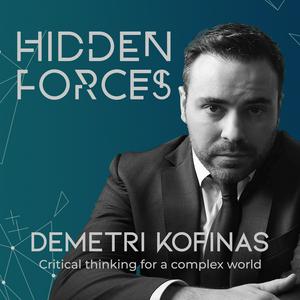
Get the edge with Hidden Forces where media entrepreneur and financial analyst Demetri Kofinas gives you access to the people and ideas that matter, so you can build financial security and always stay ahead of the curve.
Strona internetowa podcastuSłuchaj Hidden Forces, The Diary Of A CEO with Steven Bartlett i wielu innych podcastów z całego świata dzięki aplikacji radio.pl
Uzyskaj bezpłatną aplikację radio.pl
- Stacje i podcasty do zakładek
- Strumieniuj przez Wi-Fi lub Bluetooth
- Obsługuje Carplay & Android Auto
- Jeszcze więcej funkcjonalności
Uzyskaj bezpłatną aplikację radio.pl
- Stacje i podcasty do zakładek
- Strumieniuj przez Wi-Fi lub Bluetooth
- Obsługuje Carplay & Android Auto
- Jeszcze więcej funkcjonalności

Hidden Forces
Zeskanuj kod,
pobierz aplikację,
zacznij słuchać.
pobierz aplikację,
zacznij słuchać.
 Polska