PodcastyHistoriaThe Culture of Cloth

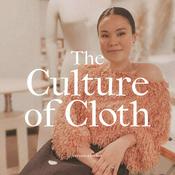
The Culture of Cloth

Veronica Tucker
The Culture of Cloth
Najnowszy odcinek

8 odcinków

  • The Culture of Cloth

    The First Makers: West Africa & the Diaspora

    22.06.2026 | 13 min.
    The First Makers: West Africa and the Diaspora
    This edition is different from every other one in this series.
    Every tradition we’ve covered so far came to us through a written documentary record (the Kojiki, the Rigveda, Hesiod). The traditions in this edition travelled through the worst thing human beings have ever done to each other. And they survived.
    In this episode I cover:
    Anansi (ah-NAHN-see) – the Akan spider trickster of Ghana, whose web became the origin of kente cloth. 
    The Dogon of Mali – whose sage Ogotemmêli described the loom as a living body through which divine word enters the world. To weave at night would be to weave silence and darkness into the cloth. 
    Oshun (O-shun) – Yoruba goddess of freshwater, fertility, and the creative arts. When the other gods failed to populate the Earth, it was Oshun who succeeded.
    Yemoja (yeh-MOH-jah) – Yoruba mother of waters, mother of many gods, whose presence in the Americas is one of the most remarkable stories of religious survival in human history.
    Because then the Middle Passage happened. Approximately 12.5 million Africans were taken from their homes and forced onto ships crossing the Atlantic. They arrived with nothing except what they remembered and they kept it alive.
    In Brazil it became Candomblé. In Cuba, Lucumí. In Haiti, sacred textile flags were made inside Vodou temples to honour the spirits. 
    This is the First Makers thesis in its fullest form. A tradition that survived the unsurvivable because the people who carried it refused to let it die.
    The First Makers is part of the Goddess Project – a long-form series tracing the history of draped cloth as political act, culminating in the Esther sewing pattern in August/September 2026.
    Diasporic Threads: Black Women, Fibre and Textiles. https://www.commonthreadspress.co.uk/products/diasporic-threads-black-women-fibre-textiles-revised-edition
  • The Culture of Cloth

    The First Makers: South & East Asia

    13.06.2026 | 14 min.
    Every culture created a goddess who presided over making. But not all of them did it the same way.

    This episode introduces two categories. 
    The first: goddesses whose mythology is explicitly about weaving. Documented, primary sources, this is what the texts actually say. 
    The second: goddesses that weavers chose. Figures whose domains of creativity, wisdom and skill made them the natural patrons of women at the loom, even though weaving isn’t the centre of their story.

    Both categories are true. They’re just true in different ways.

    In this episode I cover:

    Amaterasu (Japan) — the sun goddess whose most significant mythological moment begins in a weaving hall, documented in the Kojiki (712 CE) and Nihon Shoki (720 CE)

    Zhinu and Orihime (China and Japan) — the Weaver Girl of the Milky Way, a myth over 2,600 years old that travelled the Silk Road and became Japanese

    Leizu (China) — the empress who discovered silk when a cocoon fell into her tea, invented the loom, and was eventually deified for it

    Saraswati (India) — goddess of knowledge and the arts, and the patron weavers in Kanchipuram have invoked before beginning new patterns for centuries

    Benzaiten (Japan) — who began as Saraswati in India, travelled through China, and arrived in Japan transformed

    Dewi Sri (Java, Bali, Lombok) — the rice goddess in whose name women across Indonesia have always woven sacred cloth

    You never find a god of weaving. Not once, across any of these traditions. Every time, in every culture, the act of making cloth belongs to the feminine divine.

    The First Makers is part of the Goddess Project, a long-form series tracing the history of draped cloth from the beginning of time, culminating in the release of the Esther sewing pattern in August–September 2026.
  • The Culture of Cloth

    A Compass, Not a Photocopier: Trend Forecasting, AI and Why Origin Matters with Tully Walter

    05.06.2026 | 53 min.

    Tully Walter is a Strategic Futures Director at Soon Futures and this is one of the most substantial conversations I've had on the show.
    We get into what trend forecasting actually is (observed, invented, or accelerated) and how the answer changes depending on who's paying. We talk about cultural appropriation and why origin gives a trend its meaning, what happens when that context gets stripped out, and why the Prada sandal situation was an after-the-fact correction that should have been built in from the start.
    We talk about AI. About what it can synthesise, what it can't feel, and why a forecast that looks right isn't the same as a forecast that is right. Tully's line on this one is worth the whole episode: AI doesn't have the magic ✨
    We also get into the trench coat problem in Australia, why independent makers can use trend forecasting differently to the big end of town, and what it actually feels like to stand in a room full of planners and fight for a trend you believe in.
    And we close with the Fashion Five: Tully's first childhood memory of fashion, her style icon, her favourite designer, and what makes her hopeful about the future of the industry.

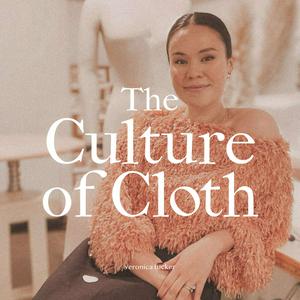
    The Culture of Cloth is hosted by Veronica Tucker of Veronica Tucker the Label, a label built around the Goddess Project, a content series tracing the history of draped cloth as a political act.
    Find the Goddess Project content below:
    Instagram: https://www.instagram.com/veronicatuckerthelabel?igsh=MXkxNGNtNTVlZDUycQ%3D%3D&utm_source=qr
    Substack: https://open.substack.com/pub/veronicatuckerthelabel
    YouTube: https://youtube.com/@veronicatuckerthelabel?si=JvM1ZGgv9Uy-xyGl
  • The Culture of Cloth

    The First Makers: Celtic & European

    30.05.2026 | 11 min.
    Every single one of these goddesses survived, but none of them survived intact.

    In this episode I trace the weaving goddesses of Celtic and European mythology (Brigid, Arianrhod, Frigg, and Holda) and the pattern running through all of them. They were rewritten, renamed, absorbed into new religions, turned into fairy tales, reduced to saints.

    Brigid survived by becoming a saint. Holda survived by becoming a fairy tale. Arianrhod survived in a manuscript written by people who tried to contain her. Frigg survived as a constellation, the stars of Orion’s Belt named for her spinning tool.

    And then there’s the distaff. The broomstick. The spindle that cursed Sleeping Beauty. The ordinary tools of women’s making, reframed as instruments of evil.

    This is Edition II of the First Makers series, part of the Goddess Project, tracing the history of draped cloth as a political act.

    The carousel is live on Instagram here: https://www.instagram.com/p/DY8g1jMgefZ/?igsh=aW04bXZ3N3I1eXd2
  • The Culture of Cloth

    The First Makers: Ancient Mediterranean & Near East

    23.05.2026 | 9 min.
    While researching the Goddess Project, I came across something that stopped me completely. Every culture, independently and without contact with each other, created a goddess who presided over weaving. Not because ideas travelled along trade routes, but separately. Across thousands of years and thousands of kilometres.

    In this episode I walk through the oldest part of that record, from Uttu, the Sumerian spider goddess who dates to 3000 BCE, through Inanna, Neith, Hathor, Isis, and Athena. Six goddesses, roughly 5000 years, and one argument running through all of them: making was never just craft. 

    Part of The Goddess Project series. Find the companion carousel on Instagram 🔗 link below
    https://www.instagram.com/p/DYsJxDcAeiW/?igsh=aWo3Y3Jybmt0ZGxx
Więcej Historia podcastów
O The Culture of Cloth
Clothing is never just clothing.Every fibre, every colour, every silhouette is telling you something. About power, politics and whose story got told and whose didn’t. The Culture of Cloth is a podcast about learning to read that story. Starting with the cloth itself and then following it wherever it leads.Most fashion history looks at the outside. This show looks at the inside. The construction, the decisions, the invisible hands that made it, and the world those hands were living in. The women who encoded military intelligence into knitting. The weavers whose binary logic built the first computer. The dyers, the spinners, the pattern cutters whose names were never written down.Cloth tells the truth even when the official record doesn’t.For makers and thinkers. For everyone who has ever looked at a garment and felt there was more to it than they were being told.Hosted by Veronica Tucker.
Strona internetowa podcastu

Słuchaj The Culture of Cloth, Podcast Wojenne Historie i wielu innych podcastów z całego świata dzięki aplikacji radio.pl

Uzyskaj bezpłatną aplikację radio.pl

  • Stacje i podcasty do zakładek
  • Strumieniuj przez Wi-Fi lub Bluetooth
  • Obsługuje Carplay & Android Auto
  • Jeszcze więcej funkcjonalności
The Culture of Cloth: Podcasty w grupie