Powered by RND
PodcastyEdukacjaADHD with Jenna Free

ADHD with Jenna Free

Jenna Free
ADHD with Jenna Free
Najnowszy odcinek

Dostępne odcinki

5 z 37
  • EP. 36: "What Will People Think?" Why ADHD Makes You a People Pleaser (The Fawn Response) | ADHD with Jenna Free
    You can get your free ADHD Regulation Guide here - www.adhdwithjennafree.com/adhdguide Join the waitlist for ADHD Groups (starting January) - www.adhdwithjennafree.com/groups Chapters 00:00 Introduction: Worrying What People Think 01:00 The Fawn Response: A Safety Mechanism 03:00 The Trap of External Regulation 05:00 It's Safe to Be Misunderstood 07:00 My Garbage Bag Story: Regulation in Action 09:00 How Fawn Costs Us Our Lives 11:00 The Fear No Longer Drives the Bus 13:00 Practice: Who Am I Trying to Keep Safe? 16:00 Building Freedom Through Tiny Moments 18:00 Their Dysregulation Doesn't Have to Be Mine Summary In this episode, I talk about ADHD people pleasing and the fawn response - why worrying what people think isn't about being nice, it's a nervous system safety response. If you've ever changed what you were going to do because of what someone might think (even a stranger), this is for you. For people with ADHD and chronic dysregulation, the fawn response makes us believe that keeping everyone happy, approved of, and not upset is what keeps us safe. When we've lived in fight or flight for years, our body reads conflict, judgment, or criticism as life-threatening danger - even though logically we know it's not. I explain how this people pleasing pattern is actually external regulation, where we try to control what other people think so we can feel calmer and safer. But here's the trap: when we worry what people think, we're not actually hearing them - we're hearing ourselves and reacting to imaginary opinions as if they're facts. I share a personal story about taking out the garbage with a plastic bag on my head (conditioner treatment) when construction workers were outside, and how I caught myself in the fawn response and chose to do it anyway to show my nervous system I'm safe. The fawn response costs us a lot - we live smaller, shape our lives around imaginary opinions, delay what we want, and let fear dictate our decisions. When we start regulating, we stop needing other people's approval to feel safe. We can handle being misunderstood, judged, or criticized because we know we're safe regardless. This episode gives you a practice to start breaking down these walls and building freedom through tiny moments of choosing what you want to do instead of what feels safest. Action Step This week, catch yourself hesitating or about to change what you're doing because of what someone might think. Pause and ask: "Who am I trying to keep safe right now? What am I fearing?" Notice the specific worry - are you worried your coworker will think you're lazy if you take a break? That someone will judge you? Once you're aware, take one small step toward what you actually want to do. Push yourself just a little past that discomfort (not obliterating your comfort zone, just stretching it). Go grab that coffee, take that break, ask for that help. See if you can collect evidence that you're safe even when people might be thinking things about you. Remember: their potential thoughts are not dangerous. You are safe. Takeaways ADHD people pleasing isn't about being nice - it's the fawn response, a nervous system safety mechanism where your body believes keeping everyone happy is what keeps you safe When we worry what people think, we're not hearing them - we're hearing ourselves and reacting to imaginary opinions as if they're facts The fawn response costs us our lives - we live smaller, delay what we want, and let 10% (or way more) of our decisions be dictated by imaginary scenarios Real regulation means the fear no longer drives the bus - you can handle being misunderstood, judged, or criticized because you trust you're safe regardless Most people aren't thinking about you anyway - they're worried about what you think of them, and any judgment they do have is usually their dysregulation talking Connect with Me Instagram TikTok
    --------  
    20:32
  • EP. 35: How to Regulate For Real: Why Tips and Tricks Don't Work for ADHD | ADHD with Jenna Free
    You can get your free ADHD Regulation Guide here - www.adhdwithjennafree.com/adhdguide Join the waitlist for ADHD Groups (starting January) - www.adhdwithjennafree.com/groups Chapters 00:00 Introduction: How to Regulate For Real 01:00 Why Tips and Tricks Don't Actually Work 03:00 External vs Internal Regulation 05:00 Regulation Through Avoidance Isn't Real Regulation 07:00 Layer One: The Body (Nervous System Regulation) 09:00 Layer Two: The Mind (Thought and Belief Regulation) 11:00 Layer Three: Behavior (Balanced Action) 15:00 Why People Think Regulation Doesn't Work 18:00 You Don't Have to Do It Perfectly 20:00 What Real Change Looks Like 23:00 Start With the Foundation: Your Nervous System Summary In this episode, I break down how to actually regulate for real - not with tips, tricks, or surface-level ADHD coping strategies, but with deep, internal work that changes how you function. If you've ever felt frustrated by hearing "just regulate" without knowing what that actually means, or if you've tried breathing exercises and meditation but nothing has fundamentally changed, this episode is for you. I explain why ADHD regulation has been oversimplified by wellness culture into surface-level fixes like bubble baths and rigid routines, and why that approach doesn't create lasting change. Real regulation is internal, not external - it's not about what you do, it's about how you do it. I walk through the three layers of the ADHD regulation method: body (nervous system regulation where you teach your body it's safe), mind (rewiring fear-based beliefs formed in survival mode), and behavior (shifting from extreme all-or-nothing patterns to balanced, sustainable action). I also address why people think regulation doesn't work - expecting instant results instead of gradual re-patterning, confusing calming down with becoming regulated, or stopping at just the nervous system piece without doing the thought and behavior work. This is not a quick fix. It takes time and repetition, just like going to the gym. But the time will pass anyway, and in a year you can either have an entirely new experience of life or continue the dysregulation cycle. I share my own journey and what regulation has done for my daily life, and give you the foundation to start with. Action Step This week, start with the foundation: nervous system regulation. Throughout your day, notice the physical sensations telling you you're dysregulated - tense shoulders around your ears, holding your breath or shallow breathing, rushing around, or sitting in overwhelm and paralysis. When you catch yourself, interrupt it: slow down your walking, drop your shoulders, take a deep breath. You're "pretending" to be a regulated person (someone not being chased by a bear), and over time your nervous system will start to believe it's true. Don't expect one deep breath to fix everything - it's about repeatedly interrupting the pattern. Remember: to sleep, we first have to pretend to sleep. Same with regulation. Takeaways Real regulation is internal, not external - it's not about bubble baths, rigid routines, or perfect habits, it's about retraining your nervous system, thoughts, and behavior from the inside out The three layers of ADHD regulation: body (teaching your nervous system you're safe), mind (rewiring fear-based beliefs like "I'm behind, I need to catch up"), and behavior (shifting from extreme all-or-nothing to balanced, consistent action) External regulation (organizing your space, doing yoga, strict routines) is like sprinkles on icing - helpful but not the meat of the work Regulation takes time and repetition, just like building muscle at the gym - one deep breath won't regulate you, just like one workout won't make you fit You can only regulate in the present moment, and there's only ever one thing to do - interrupt the pattern when you notice it, then do it again, and again Connect with Me Instagram TikTok
    --------  
    26:55
  • EP. 34: ADHD at Work: Putting Work in Its Place (The Severance Episode) | ADHD with Jenna Free
    You can get your free ADHD Regulation Guide here - www.adhdwithjennafree.com/adhdguide Take the free Dysregulation Quiz here - https://adhdwithjennafree.typeform.com/adhdquiz Register for the ADHD at Work 2.0 Workshop - www.adhdwithjennafree.com/adhdwork Chapters 00:00 Introduction: ADHD at Work and the Severance Episode 01:00 When the Mental Boundary Between Work and Life Disappears 03:00 Why Everything Feels Urgent When You're Dysregulated 05:00 You Can't Work Your Way to Peace 06:00 Signs You've Lost Your Work-Life Severance 08:00 Regulating Your Body at Work and at Home 10:00 The Beliefs Behind Your Urgency 13:00 Regulating Your Behavior: Finding Balance 16:00 My Personal Experience with Work Boundaries 19:00 What Regulation Actually Looks Like 21:00 ADHD at Work 2.0 Workshop Announcement Summary In this episode, I talk about ADHD at work and how to actually put work in its place - not with better time management or productivity hacks, but with nervous system regulation. If you've ever been at your kid's soccer game and suddenly remembered an email you should have sent, and now your whole body feels uncomfortable until you send it, this is for you. I'm calling this "the Severance episode" after the TV show, because for ADHDers struggling with ADHD burnout and work-life balance, the mental boundary between work and life can completely disappear. I break down why ADHD makes it so hard to stop thinking about work, even when you desperately want to rest. When you're dysregulated, everything feels urgent - you can't stop thinking about work at home, but then when it's actually work time, you might be stuck in ADHD procrastination and overwhelm. It's the worst trap. I explain how working from dysregulation creates more dysregulation, so you'll never work yourself into peace. I also share the three types of regulation you need: body (slowing down, breathing, relaxing tension), mind (challenging beliefs like "if I don't stay on top of this, everything will fall apart"), and behavior (creating consistency instead of extreme work patterns). I share my own journey from obsessively thinking about work 24/7 to now having natural boundaries and actually feeling done at the end of the day. This episode will help you understand why ADHD at work feels so exhausting and what you can actually do about it. Action Step This week, pick one area to start practicing regulation. For your body: slow your walking between meetings or around your house, bring your shoulders down from your ears, and check if you're breathing or holding your breath. For your mind: notice when you feel urgent and ask yourself "what belief is driving this urgency?" Is it "if I don't stay on top of this, everything will fall apart" or "if I'm not thinking about it, I'll forget something"? For your behavior: set a quitting time and actually stop, regardless of how much you got done. Notice when you think "just one more email" - that's dysregulation trying to externally regulate. Start small with whichever feels most doable. Takeaways For dysregulated ADHD brains, the mental boundary between work and life can completely disappear When you're dysregulated, everything feels urgent - this is why you can't stop thinking about work You can't work your way to peace - working from dysregulation creates more dysregulation Three types of regulation: body (slow down, breathe, relax tension), mind (challenge beliefs behind urgency), behavior (create consistency instead of extremes) Regulation gives you the internal ability to turn work off when you want rest, and turn it on when you want to work - that's the real skill Connect with Me Instagram TikTok
    --------  
    22:30
  • EP. 33: But It's Boring: Why Your ADHD Brain Mistakes Calm for Discomfort | ADHD with Jenna Free
    Take the free Dysregulation Quiz here - https://adhdwithjennafree.typeform.com/adhdquiz Join the waitlist for ADHD Groups (starting January) - www.adhdwithjennafree.com/groups You can get your free ADHD Regulation Guide here - www.adhdwithjennafree.com/adhdguide Chapters 00:00 Introduction to Boredom and ADHD 01:00 What Does "Boring" Really Mean? 03:00 Boredom as a Nervous System Mechanism 05:00 When Dysregulation Feels Like Boredom 08:00 Boredom Can Be a Motivator for Change 10:00 The Mismatch Between Your State and the Task 12:00 Is Regulation Boring? (Spoiler: No) 15:00 This Week's Practice: Notice Your Body During "Boring" Tasks Summary In this episode, I talk about ADHD and boredom - something I hear constantly from ADHDers struggling with procrastination and task avoidance. If you've ever said "it's just too boring, I can't do it" about laundry, dishes, emails, or paperwork, this episode is for you. I break down why ADHD makes certain tasks feel unbearably boring, and spoiler - it's not actually about the task itself. It's about ADHD dysregulation showing up as physical discomfort. That crawling-out-of-your-skin feeling when you're trying to focus on "boring" tasks? That's your nervous system, not lack of willpower. Using a real example from one of my ADHD regulation group members who couldn't do her taxes (not because they were hard, but because the ADHD overwhelm and boredom felt like a physical wall), I explain how ADHD procrastination is often really a mismatch between your nervous system state and what the task requires. When your ADHD brain is in fight or flight but the task needs calm, steady focus - that's when everyday tasks feel impossible. I also address the fear that ADHD regulation sounds boring, because we confuse dysregulation with excitement. But the stress chemistry of running late and doing things last minute isn't fun - it's exhausting. ADHD regulation gives you real free time, actual relaxation, better focus, and improved self-esteem. Way more exciting than chaos. Action Step This week, when you catch yourself saying "this is boring," pause and get curious. What does your body actually feel right now? Pick one task you've been avoiding because it's "boring" - folding laundry, washing dishes, filling out a form - and do it while really noticing what's happening in your body. Are you restless? Rushing to get it over with? Feeling physically uncomfortable? Take a breath and see if you can slow down and match your internal energy to what the task actually requires (which is usually pretty calm and steady). Notice if slowing down and matching the energy makes it less painful. I'd love to hear what you discover. Takeaways Boredom for ADHD brains is often actually dysregulation showing up as physical discomfort - tension, restlessness, that crawling-out-of-your-skin feeling The real issue is a mismatch: your internal state is heightened (fight or flight) but the task requires calm, steady action For dysregulated ADHD brains, stillness and calm can feel threatening instead of soothing Regulation isn't about forcing focus - it's about shifting your internal state so the task doesn't feel like a threat We confuse dysregulation with excitement, but that "excitement" is really just stress chemistry (cortisol and adrenaline) A regulated life gives you real free time, actual relaxation, and better self-esteem - way more exciting than chaos When you're uncomfortable during a task, it's usually because your system has revved up and started rushing Sometimes boredom is a signal that something needs to change, but often we're calling dysregulation "boredom" and avoiding things we actually want to get done Connect with Me Instagram TikTok
    --------  
    18:51
  • EP. 32: The Belief That's Keeping You Stuck in Survival Mode (And How to Finally Let It Go) | ADHD with Jenna Free
    Take the free Dysregulation Quiz here - https://adhdwithjennafree.typeform.com/adhdquiz Join the waitlist for ADHD Groups (starting January) - adhdwithjennafree.com/groups You can get your free ADHD Regulation Guide here - adhdwithjennafree.com/adhdguide Chapters 00:00 Introduction and Dysregulation Quiz 01:00 Beliefs Are the Roots of the Tree 03:00 The "I'm Behind, I Need to Catch Up" Belief 05:00 What Are Belief Schemas? 07:00 Common ADHD Dysregulated Beliefs 09:00 Perfectionism as a Hidden Belief System 11:00 Step 1 - Name It, Don't Shame It 12:00 Step 2 - Connect Body and Belief Work 14:00 Step 3 - Update Your Schema Over Time 16:00 Bringing It Back to Reality vs. Potential 18:00 You're Rewriting Your Brain's Story 20:00 Noticing When Beliefs Don't Make Sense Summary In this episode, I dive into belief schemas - the deep, often subconscious belief systems that keep us dysregulated even when we're working on physical regulation. I explain how beliefs like "I'm behind, I need to catch up," "I can't trust myself," and "something bad will happen if I relax" were formed during childhood (often through the friction of being neurodivergent in a neurotypical world) and continue to trigger our nervous system into fight or flight. Using powerful examples like rushing to a massage appointment or dragging your child home from school for no logical reason, I demonstrate how these beliefs run like software in the background, keeping us stuck in panic, perfectionism, and avoidance. This episode teaches you the three steps to work with dysregulated beliefs: name it without shame, connect the body work with belief work, and update your schema to match your adult reality. Action Step: This week, notice when you feel rushed, panicked, or pressured. Pause and ask yourself: "What belief is underneath this feeling right now?" Look for thoughts like "I'm behind," "There's not enough time," "I should be further along," or "Something bad will happen if I stop." Simply bringing awareness to these beliefs is the first powerful step in changing them. Takeaways Regulation isn't just nervous system work - beliefs and thoughts need regulation too. Belief schemas are the subconscious lens through which we interpret the world. Many ADHD belief systems were formed in childhood from being misunderstood and constantly corrected. Common dysregulated beliefs include: "I'm behind, I need to catch up," "I can't trust myself," "If I'm not achieving, I'm failing," and "Something bad will happen if I relax." These beliefs trigger the nervous system into dysregulation, even when nothing dangerous is happening. The belief "I'm behind" often creates paralysis rather than productivity - it backfires. Perfectionism can be hidden - your life may look far from perfect, but the belief system is still running underneath. The three steps: Name it (awareness), connect body and belief work together, and update your schema over time. You have more autonomy as an adult than your internal system realizes - updating this is crucial. Living in "potential" (shoulds, judgments) versus reality keeps you stuck and powerless. There's never a logical reason to rush - notice when you're rushing for no reason at all. Thought and belief regulation brings you back into your power and the present moment. Connect with Me Instagram TikTok
    --------  
    20:56

Więcej Edukacja podcastów

O ADHD with Jenna Free

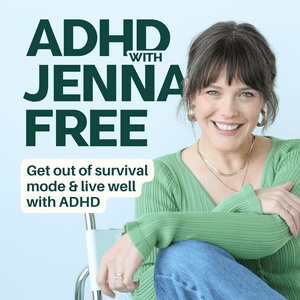
When you're tired of trying the latest ADHD tips and tricks it's time to do some deeper work. This is what we do here. No more rushing to get everything over with so you can go lay down. We are here to regulate and start truly living (and enjoying) your life. Through ADHD Regulation work we will change the way you experience life with ADHD (think more fun and less dread).
Strona internetowa podcastu

Słuchaj ADHD with Jenna Free, Rezultaty i wielu innych podcastów z całego świata dzięki aplikacji radio.pl

Uzyskaj bezpłatną aplikację radio.pl

  • Stacje i podcasty do zakładek
  • Strumieniuj przez Wi-Fi lub Bluetooth
  • Obsługuje Carplay & Android Auto
  • Jeszcze więcej funkcjonalności

ADHD with Jenna Free: Podcasty w grupie

Media spoecznościowe
v8.0.7 | © 2007-2025 radio.de GmbH
Generated: 12/7/2025 - 3:46:05 AM