Słuchaj tego podcastu za darmo w aplikacji: Pobierz za darmo z App Store
radio.pl
Sleep timer
Zapisz stacje
631 odcinków
Do You Have Trouble Sleeping?
19.10.2026 | 1 godz. 30 min.Millions of us move through our days without getting enough sleep. We know that sleep deprivation can affect our physical health and our mood. But sleep researcher Chris Barnes says a chronic lack of good sleep can also affect how we make decisions and even what we value. He joins us to explore the forces that keep us from getting the rest we need, and offers practical strategies for getting better sleep. Later, psychologist Rachel Zoffness returns to answer your questions about the experience of pain, in our latest installment of "Your Questions Answered."
Is your parenting style preventing your child from thriving? We explore this question — and share five practical parenting strategies we've featured on Hidden Brain — in our latest YouTube video. Check it out here, and share your parenting strategies with us in the comments!
Hosted by Simplecast, an AdsWizz company. See pcm.adswizz.com for information about our collection and use of personal data for advertising.Why Am I Unhappy?
12.10.2026 | 1 godz. 33 min.We often imagine that feelings of unhappiness come from outside us — in our circumstances or the difficult people in our lives. But what if the forces that erode our happiness come from within? Psychologist George Loewenstein joins us to explore why our minds nudge us toward the negative, even when we want to feel happy. He also offers ways to better understand these forces and lessen their power over us. And on Your Questions Answered, psychologist Alison Ledgerwood returns to respond to your questions about our tendency to focus on the negative.
What if your emotions aren't reactions to the world, but predictions that your brain is making? We discuss this mind-bending idea on our YouTube channel. Check it out, and be sure to subscribe so you don't miss any of our upcoming videos!
Hosted by Simplecast, an AdsWizz company. See pcm.adswizz.com for information about our collection and use of personal data for advertising.When Bad Things Happen to Good People
05.10.2026 | 1 godz. 32 min.When historian Kate Bowler was diagnosed with Stage IV cancer, she became fascinated by the ways people try to impose order on events they can't control. She joins us to explore what it means to live fully when life offers no satisfying explanation for the tragedies we may face. Then, in the latest installment of "Your Questions Answered," psychologist Lisa Miller returns to answer listener questions about the relationship between science and spirituality.
In our companion conversation for subscribers to Hidden Brain Plus, we take a deep dive into the origins and surprising spread of the prosperity gospel that Kate has studied. If you're a subscriber, that episode is called “The Gospel of Success.” If you're not yet a subscriber, you can access a free seven-day trial at support.hiddenbrain.org or apple.co/hiddenbrain.
Hosted by Simplecast, an AdsWizz company. See pcm.adswizz.com for information about our collection and use of personal data for advertising.How to Make a Difference: Part 2
28.09.2026 | 49 min.Think about the last time you had a discouraging thought. Maybe you told yourself, "This won't work. I'm not cut out for this." Did you take that thought as fact? Last week, we talked with psychologist Martin Seligman about why some people come to believe that their actions don’t matter. In the second part of our conversation, he explains how we can strengthen our sense of agency, learn to see new possibilities, and build confidence in our ability to shape what happens next.
Anyone who has struggled with depression knows that it feels terrible. But is there a point to that terrible feeling? We consider a new way of thinking about depression in our latest YouTube video -- check it out, and be sure to subscribe so you don't miss our future videos.
Hosted by Simplecast, an AdsWizz company. See pcm.adswizz.com for information about our collection and use of personal data for advertising.How to Make a Difference: Part 1
21.09.2026 | 48 min.Why do some people act on the possibilities before them, while others come to believe that nothing they do will make a difference? Psychologist Martin Seligman describes his groundbreaking research on learned helplessness, and explains how the stories we tell ourselves about setbacks can shape what we do next. We also explore how optimism can help us rediscover our ability to change things for the better.
If you have a question or comment about the science of optimism and pessimism that you'd be willing to share with the Hidden Brain audience after listening to this episode, please find a quiet room and record a voice memo on your phone. Email the file to us at feedback@hiddenbrain.org. Use the subject line: “How to Make a Difference.”
If you love Hidden Brain in audio, check out our video series on YouTube. You'll find episodes there about memory, focus, getting unstuck, and much more at youtube.com/@hiddenbrain.
Hosted by Simplecast, an AdsWizz company. See pcm.adswizz.com for information about our collection and use of personal data for advertising.
Więcej Nauka podcastów





Trendy w podcaście Nauka












O Hidden Brain
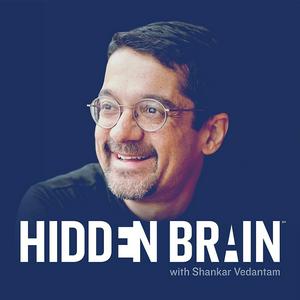
Why do I feel stuck? How can I become more creative? What can I do to improve my relationships? If you’ve ever asked yourself these questions, you’re not alone. On Hidden Brain, we help you understand your own mind — and the minds of the people around you. (We're routinely rated the #1 science podcast in the United States.) Hosted by veteran science journalist Shankar Vedantam.
Strona internetowa podcastuSłuchaj Hidden Brain, Tygodnik Powszechny: Nauka i wielu innych podcastów z całego świata dzięki aplikacji radio.pl
Uzyskaj bezpłatną aplikację radio.pl
- Stacje i podcasty do zakładek
- Strumieniuj przez Wi-Fi lub Bluetooth
- Obsługuje Carplay & Android Auto
- Jeszcze więcej funkcjonalności
Uzyskaj bezpłatną aplikację radio.pl
- Stacje i podcasty do zakładek
- Strumieniuj przez Wi-Fi lub Bluetooth
- Obsługuje Carplay & Android Auto
- Jeszcze więcej funkcjonalności
Hidden Brain
Zeskanuj kod,
pobierz aplikację,
zacznij słuchać.
pobierz aplikację,
zacznij słuchać.
 Polska