

Słuchaj tego podcastu za darmo w aplikacji: Pobierz za darmo z App Store
radio.pl
Sleep timer
Zapisz stacje
221 odcinków
Breakfast with Jesus: Walking the Camino
25.09.2026 | 31 min.Anne and I are walking the vast Camino path - about 800km from St Jean in France to Santiago in Spain. We thought it would be a good time to revive our ‘Breakfast with Jesus’ channel in Gospel Conversations. And rather than just me doing the talking, we have recorded this as a conversation to try to capture the reality of how we are walking and talking.
This chat is about Psalm 145. But it begins with Anne talking about some of her spiritual journey over the last few years - and how some significant physical suffering has (mysteriously) precipitated a deeper faith journey in her spirit. We also explain how we use some resources to guide our discussions - in this case the wonderful Walter Bruggemann on the Psalms. (‘The Message of the Psalms”). And we did an unscripted conversation in this talk - which captures the exploratory way we read and talk together in our morning devotions. A real conversation explores and that means it surprises, with its twists and turns and questions and alleyways. So that is what you get in this ‘talk’.
In a real way this conversation illustrates what Ben Myers talked about in his recent talk on how the Bible’s ‘inspiration’ works. According to Ben, the biblical text is not a set in concrete version of the truth but rather a divine stimulus to get us thinking and talking - which means that the modern reader experience is somehow part of the ‘inspiration’. Of course, that brings the Holy Spirit into view as always working - from the initial authorship to the modern day reading.
So our humble little conversation, with all its pauses and meanderings, is a picture of that ‘reading’ inspiration at work - on Psalm 145. We hope you join us in enjoying this little journey.
Get full access to Gospel Conversations at gospelconversations.substack.com/subscribeHow to read Scripture as a living document
02.09.2026 | 1 godz. 10 min.Inspiration and Scripture is a two way process - it includes our reading of scripture not just its delivery through authors. That is the fascinating perspective that Ben Myers offers in this thought provoking interview I did with him recently. It builds on Mark Strom’s recent talk on his journey through a widening perspective on what ‘Scripture’ means.
Ben begins with the opening of Erich Auerbach’s famous book on Western Literature, Mimesis. Auerbach contrasts Homer and Moses - in particular the story of Abraham in Genesis 22. He says that Moses’ narrative is deep and mysterious, in contrast to Homer which is shallower and eloquent. For Ben (and Auerbach) this suggests the unique way that Scripture works - as in invitation to the reader to enter the text and start a conversation with God about what is going on.
The picture that emerges from Ben’s ideas is really important for us today. It defies the view that Scripture is a flat text with clear and precise meaning which we are called to excavate. Rather the scripture is like a deep ocean with the surface visible but the depths hidden and attractive. So in this view our ‘reading’ is part of the inspiration process.
Enjoy this talk. Between Mark and Ben, they offer rich depth to the idea of what ‘scripture’ and ‘inspiration’ mean.
Get full access to Gospel Conversations at gospelconversations.substack.com/subscribeTheology and Mental Health
15.08.2026 | 53 min.This is a talk by our beloved colleague Leisa Aitken. You will be familiar with her work on hope from previous talks. Here is her introduction to the talk.
This Talk is adapted from a paper entitled, “Responding to a crisis of hope- Gregory of Nyssa in dialogue with contemporary psychology” presented at the John Behr conference at Alphacrucis College last year. Ben Myers and I co-wrote the original paper, and I am grateful for Ben’s theological input. This version also reflects some of my further reading and thinking.
I offer it as an example in my life of the ‘So What’ question we are exploring this year in Gospel Conversations. How might the more expansive theological landscapes of the Church fathers and mothers reshape not only our understanding of God himself, but our intellectual and professional life? As a Clinical Psychologist with an academic interest in the psychology of hope, I have been reflecting on how patristic theology intersects with my own work. The content is therefore quite ‘niche’ but hopefully illustrates the ‘So What’ exercise. As Ben more eloquently puts it (as always), it is an exercise in ressourcement – returning to ancient texts to illuminate contemporary questions.
An important personal caveat is that, until recently, I have spent my Christian intellectual life in the undulating lowlands of the reformed evangelical world. It has only been in the last few years, through Tony’s encouragement via Gospel Conversations, that I began reading the towering figures of patristic theologians. I have read many of Gregory of Nyssa’s books and writings, but I am by no means an expert on his grand theological vision, which has its own assumptions, internal coherence and historical situatedness.
In drawing on those aspects of Gregory’s fourth century thought that connect to my own, I know I do not yet fully inhabit his intellectual and theological landscape. I haven’t done the full pilgrimage - it feels like I’ve been flown in to hike the last few kilometres of Everest! I may not have done the full ascent from basecamp, but I can still glimpse some of the rewards of the final view. His mountaintop concepts- epektasis, apokatastasis, the mystery of God - have provided a rich new vantage point to view my theological and psychological homelands.
I understand, for example that for many universalist theologians like Gregory (and more recently Bulgakov and Bentley Hart), the reconciling of all things in Christ is the natural consequence of other ‘basecamp’ foundational understandings of scripture and cannot be simply be ‘an option’, as I present my own position in this talk. Like many GC listeners, I am still working out which hermeneutic makes the best sense to me and how new thinking integrates with my existing frameworks. That pilgrimage itself involves quite steep and rocky terrain and will take time.
I am thankful that relationship with Jesus himself doesn’t require theological acumen or certainty on such matters, and only that I come to him as his child. On this challenging and exciting journey, I rest in that.
Get full access to Gospel Conversations at gospelconversations.substack.com/subscribeChanging ways to read the Bible
20.07.2026 | 1 godz. 3 min.In churches around the world, Christians will affirm that ‘the Bible is the word of God’. But what do they mean by this? Whether they realise it or not, they are making a claim about a genre - a certain class of literature that is special and ‘inspired’. But this claim has been a stumbling block for Christians and onlookers alike. Do we really claim that all 66 books are literally true? And what does ‘true’ even mean?
This is the huge topic that we asked Mark Strom to address for us. It really is one of the ‘so what’ questions for our day and age. Mark is uniquely qualified to give us some wisdom on this because, among things, he wrote a significant book on how to read the Bible called ‘The Symphony of Scripture’. (Still readily available and if you have not got a copy - buy it). So at first we just expected him to give us a summary of the book. But he went further.
He decided to give us a story of how his relationship with the Bible - the way he interpreted what ‘scripture’ meant - developed over the years. He gives us nine different perspectives he went through. They are not ‘right or wrong’ but rather growing perspectives on the Bible, his experience of reading it, and how we should respond to it. Marvellous stuff and very very thought provoking. More than that - very wise and we can benefit from Mark’s long, and at times, torturous experience.
He used slides in the talk - if you watch on youTube you will see them spliced into the talk. If not, here they are to download.
Get full access to Gospel Conversations at gospelconversations.substack.com/subscribeAI and the Image of God
06.07.2026 | 1 godz. 20 min.A recent (Christian) book puts up the white flag of surrender before the insurgent world of Artificial Intelligence; ‘Intelligence is no longer a quality that marks out human beings from the rest of the world…’ So - machines can think and think better than us? Or can they? And what does this say about what it means to be a human being and what the vast Christian vision of being ‘made in the image of God’ means?
That is what I address in this talk. This year we are taking a ‘so what’ view for the Creation gospel… in other words, what are its consequences and how does it help us see the world and serve? One of our precious themes in Gospel Conversations is a high view of humanity. I have thought for years that we need to get a higher view of humanity if we are to have any chance of grasping the incarnation and indeed the whole gospel. So if we start from that mountain top - how do we view the threat of AI - and it is scary. Very scary.
As I explain in this talk my perspective is pretty unique on this particular topic for a couple of reasons. Firstly I have spent my professional career helping people ‘think’ better in the face of complex problems. So I have a lot of ideas about what ‘intelligence’ means. My consulting company spent years helping some very large clients address ‘wicked’ problems, and we pioneered design thinking on a global scale. And secondly I am now the chair of one of the most innovative tech start ups in genAI - so I have a front row seat on what it means and on the new economy that is emerging. So my views on AI come from the front line of experience not from reading articles about it.
I end up in a very different place from the quote of our friend that I began with. So our job is not to surrender in the face of AI but to discover at ever deeper levels the mystery of thought and of being human and to stand beside Shakespeare after all those years and say “What a piece of work is man - how noble in reason, how infinite in faculties, in form and moving; how express and admirable in action; how like an angel in apprehension; how like a god; the beauty of the world; the paragon of animals.”
I used Powerpoint slides when I first delivered this talk at the St James Institute in Sydney. Here they are if you want to download them.
Get full access to Gospel Conversations at gospelconversations.substack.com/subscribe
Więcej Chrześcijaństwo podcastów
 The Candace Cameron Bure PodcastChrześcijaństwo, Religia i Duchowość
 Mroczna historia WatykanuChrześcijaństwo, Religia i Duchowość
 mniejsiChrześcijaństwo, Religia i Duchowość
 American GloryChrześcijaństwo, Religia i Duchowość
 Historie potłuczoneChrześcijaństwo, Religia i Duchowość
 ChlebakChrześcijaństwo, Religia i Duchowość
 WHOA That's Good PodcastBiznes, Chrześcijaństwo, Religia i Duchowość, Społeczeństwo i Kultura
 Zeszyty Miłości PełneChrześcijaństwo, Religia i Duchowość
 The Bible in a Year (with Fr. Mike Schmitz)Chrześcijaństwo, Historia, Religia i Duchowość
 Ewangelia z komentarzem - Mieczysław Łusiak SJChrześcijaństwo, Religia i Duchowość
Trendy w podcaście Chrześcijaństwo
 Pochodnia | Słowo Boże na dziśChrześcijaństwo, Duchowość, Religia i Duchowość
- 7me Niebo | PodkastChrześcijaństwo, Religia i Duchowość
 365 con DiosChrześcijaństwo, Religia i Duchowość
 La Bible en un an : le podcast chrétienChrześcijaństwo, Duchowość, Religia i Duchowość
 L'Évangile au jour le jour • commentaires quotidiensChrześcijaństwo, Filozofia, Religia i Duchowość, Społeczeństwo i Kultura
 Roraty dla tych, co zaspaliChrześcijaństwo, Edukacja, Religia i Duchowość
 Tłusta OwcaChrześcijaństwo, Religia i Duchowość
 Truth UnitesChrześcijaństwo, Religia i Duchowość
 OdwykChrześcijaństwo, Religia i Duchowość, Rządowe
- The Bible in a Year (with Fr. Mike Schmitz)Chrześcijaństwo, Historia, Religia i Duchowość
 Dawid Mysior SPRAWKI RANOChrześcijaństwo, Religia i Duchowość
- Mroczna historia WatykanuChrześcijaństwo, Religia i Duchowość
 Transformation Center PodcastChrześcijaństwo, Duchowość, Muzyka, Religia i Duchowość
O Gospel Conversations podcast
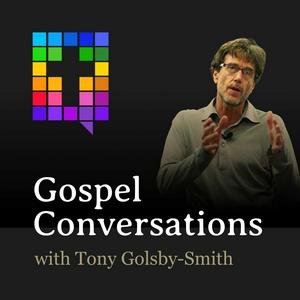
Gospel Conversations takes a creative approach to attaining a deeper understanding of the gospel and what it means to us today. Our speakers are not ministers, but range from a diverse community of Christian thinkers who lead their various fields of knowledge in history, design thinking, theology, philosophy, and organisational leadership—among others. Each month we host a live event in Sydney, then publish it as a podcast. gospelconversations.substack.com
Strona internetowa podcastuSłuchaj Gospel Conversations podcast, The Candace Cameron Bure Podcast i wielu innych podcastów z całego świata dzięki aplikacji radio.pl
Uzyskaj bezpłatną aplikację radio.pl
- Stacje i podcasty do zakładek
- Strumieniuj przez Wi-Fi lub Bluetooth
- Obsługuje Carplay & Android Auto
- Jeszcze więcej funkcjonalności
Uzyskaj bezpłatną aplikację radio.pl
- Stacje i podcasty do zakładek
- Strumieniuj przez Wi-Fi lub Bluetooth
- Obsługuje Carplay & Android Auto
- Jeszcze więcej funkcjonalności
Gospel Conversations podcast
Zeskanuj kod,
pobierz aplikację,
zacznij słuchać.
pobierz aplikację,
zacznij słuchać.
 Polska