
Słuchaj tego podcastu za darmo w aplikacji: Pobierz za darmo z App Store
radio.pl
Sleep timer
Zapisz stacje
16 odcinków
How quantum computers tackle differential equations
13.10.2026 | 46 min.Some of the most important problems in science and engineering can be expressed using differential equations, which describe how systems change over time. From electrical circuits to fluid dynamics, plasma physics, and other complex natural phenomena, solving these equations often requires enormous computational resources. Researchers are increasingly exploring whether quantum computers can offer new ways of tackling these mathematical challenges.
In this episode of The Coherence Times, we’re joined by Duke University’s Di Fang and IBM Research’s Hari Krovi to explore the emerging field of quantum algorithms for differential equations. Together, they discuss how researchers develop new quantum algorithms, the evolution of approaches such as HHL, the challenges of running these methods on real quantum hardware, and what it will take for quantum computers to make an impact on scientific and engineering applications.
Visit The Coherence Times podcast page to get more quantum content → https://www.ibm.com/think/podcasts/the-coherence-times
The opinions expressed in this podcast are solely those of the participants and do not necessarily reflect the views of IBM or any other organization or entity.Inside quantum-centric supercomputing
29.09.2026 | 40 min.One of the biggest misconceptions about quantum computing is that it will eventually replace classical computing, but that’s not the case. *All* quantum computing relies on classical computing, even just for loading data and reading outputs, and many of the most promising quantum use cases involve quantum processing units (QPUs) working alongside the CPUs and GPUs behind powerful classical supercomputers. However, figuring out how these different computing paradigms fit together is easier said than done.
In this episode of The Coherence Times, we’re joined by IBM’s Seetharami Seelam and AMD’s Sanjay Chaurasia to explore the emerging world of quantum-centric supercomputing. Together, they discuss the similarities and differences between GPUs and QPUs, explain how quantum and classical systems work together, and offer a glimpse at the next generation of hybrid computing.
Visit The Coherence Times podcast page to get more quantum content → https://www.ibm.com/think/podcasts/the-coherence-times
The opinions expressed in this podcast are solely those of the participants and do not necessarily reflect the views of IBM or any other organization or entity.Inside quantum optimization research
15.09.2026 | 44 min.Optimization is often cited as one of quantum computing’s most promising applications. Businesses and researchers are constantly searching for better routes, schedules, allocations, and ways to allocate limited resources, meaning that a computational advantage for quantum optimization methods could deliver enormous value. Yet despite years of research, fundamental questions remain: Which optimization problems are best suited to quantum computers? And how will we know when quantum methods have truly surpassed their classical counterparts?
In this episode of the Coherence Times, we’re joined by IBM’s Stefan Wörner and Stephanie Riedmüller of the Zuse Institute to explore the promise and limitations of quantum optimization. Together, they discuss the search for new quantum algorithms, the importance of benchmarking and community-driven research, and what it will take for quantum computers to deliver practical advantages for real-world optimization problems.
Visit The Coherence Times podcast page to get more AI content → https://www.ibm.com/think/podcasts/the-coherence-times
The opinions expressed in this podcast are solely those of the participants and do not necessarily reflect the views of IBM or any other organization or entity.How to install a quantum computer
01.09.2026 | 47 min.Visit The Coherence Times podcast page to get more quantum content → https://www.ibm.com/think/podcasts/the-coherence-times
Quantum computers represent a fundamentally new paradigm in the science of computation, so it’s no surprise that quantum system installations are anything but ordinary. From cryogenic cooling to complex control electronics, deploying a quantum computer requires specialized infrastructure and expertise.
In this episode of The Coherence Times, we sit down with John Kolb of Rensselaer Polytechnic Institute and IBM’s Rajeev Malik to go behind the scenes of a unique installation: a quantum computer housed inside a restored chapel. Together, they offerrare insight into what it takes to install and operate quantum systems, how quantum fits alongside classical supercomputing, and what the future of quantum-centric supercomputing could look like as the technology scales.
The opinions expressed in this podcast are solely those of the participants and do not necessarily reflect the views of IBM or any other organization or entity.Why IBM quantum computers are colder than space
19.08.2026 | 44 min.Visit The Coherence Times podcast page to get more AI content → https://www.ibm.com/think/podcasts/the-coherence-times
IBM’s superconducting quantum computers don’t just require advanced quantum processors, they also rely on highly specialized systems to keep those processors operating in an environment that is stable, protected, and colder than the furthest reaches of outer space. As quantum computers scale, the infrastructure that houses, cools, and operates them must advance as well—delivering systems that are easier to maintain, upgrade, and link with other systems.
In this episode of The Coherence Times, we’re joined by IBM’s Matt Hollister and Allie Lindler to dive deeper into the advanced cooling technology that makes superconducting quantum computing possible. Together, they discuss why cryogenic hardware matters, what goes into engineering refrigeration systems for the for modular quantum systems of the future, and how a new modular platform could help support the next generation quantum processors and systems.
"The opinions expressed in this podcast are solely those of the participants and do not necessarily reflect the views of IBM or any other organization or entity. AI tools may be used to transcribe this episode and support selected stages of the production process. All AI-assisted content is reviewed by the production team before publication."
Więcej Biznes podcastów







Trendy w podcaście Biznes






















O The Coherence Times
Go to podcast website: https://www.ibm.com/think/podcasts/the-coherence-times
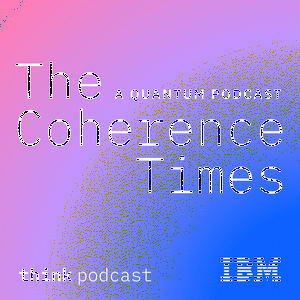
The Coherence Times podcast serves to break down the challenging world of quantum computing into foundational lessons exploring the challenges and the breakthroughs of this era defining generational tech.
In this podcast, our host Ryan Mandelbaum will speak to technologists, researchers, and quantum leaders to discover the fascinating world of quantum computing, gaining a deeper understanding of how this technology works, and the tremendous potential quantum computing promises.
As quantum is an emerging technology, this podcast must appeal to all listeners, while promoting an accurate and hype-free view about the technology and its potential. Therefore, it will level with its listeners and feature a curious tone, while always sticking to facts and realistic presentations of the material. We will be earnest and joyful leaving snark for rare and warranted cases, such as for mythbusting popular news.
Strona internetowa podcastuSłuchaj The Coherence Times, Podcast Biznesowy i wielu innych podcastów z całego świata dzięki aplikacji radio.pl
Uzyskaj bezpłatną aplikację radio.pl
- Stacje i podcasty do zakładek
- Strumieniuj przez Wi-Fi lub Bluetooth
- Obsługuje Carplay & Android Auto
- Jeszcze więcej funkcjonalności
Uzyskaj bezpłatną aplikację radio.pl
- Stacje i podcasty do zakładek
- Strumieniuj przez Wi-Fi lub Bluetooth
- Obsługuje Carplay & Android Auto
- Jeszcze więcej funkcjonalności
The Coherence Times
Zeskanuj kod,
pobierz aplikację,
zacznij słuchać.
pobierz aplikację,
zacznij słuchać.
The Coherence Times: Podcasty w grupie
 Polska

