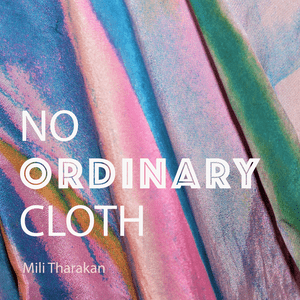
PodcastyCzas WolnyNo Ordinary Cloth: Intersection of textiles, emerging technology, craft and sustainability

No Ordinary Cloth: Intersection of textiles, emerging technology, craft and sustainability

Mili Tharakan
No Ordinary Cloth: Intersection of textiles, emerging technology, craft and sustainability
Najnowszy odcinek

31 odcinków

  • No Ordinary Cloth: Intersection of textiles, emerging technology, craft and sustainability

    🌱 Ep30. Behind the Label: How Data is Rewriting the Rules of Fashion with Jothi Kanayala and Atnyel Guedj (x Fashion District

    02.04.2026 | 1 godz. 15 min.
    This is a special episode in partnership with Fashion District London
    What if you could trace every thread of a garment – from the cotton field to the shop floor and all the way to the recycling centre – and understand its true cost? Not just the financial cost, but the environmental, social, and human cost?
    That's the question at the heart of this episode. The fashion supply chain is one of the most complex systems in the world, and for decades it has operated largely in the dark. But a new generation of technology companies is changing that – gathering data, building transparency, and helping brands finally understand what is actually happening behind their labels.
    We are joined by Jothi Kanayalal from Clothing Connected and Atnyel Guedj from Made2Flow, who together offer a fascinating window into what it means to truly know your supply chain.
    What We Cover in This Episode
    Why the fashion supply chain has operated in the dark for so long – and why that is rapidly changing
    Why a garment label saying "Made in Bangladesh" tells us almost nothing – and why two thirds of a product's environmental impact lies in the invisible upstream tiers
    What Clothing Connected does day-to-day: onboarding suppliers across all tiers, automating compliance, replacing spreadsheets and emails with a real-time single source of truth
    What Made2Flow does: collecting "activity data" from facilities worldwide, running automated lifecycle assessments (LCAs), and turning incomplete, fragmented data into reliable environmental impact results
    The biggest barriers slowing brands' adoption of supply chain technology – from ROI pressure and fragmentation to digital literacy across developing nations
    The regulations brands can no longer ignore: Digital Product Passports (DPP), ESPR, Extended Producer Responsibility (EPR), and the Green Claims Directive
    How AI is beginning to transform data validation and verification
    How Clothing Connected and Made2Flow complement each other in a brand's data ecosystem
    Key Takeaways
    Most brands have visibility only to tier 4 (garment manufacturer) and partially tier 3 (fabric mill). Tier 2 and tier 1 upstream data – spinners, ginners, raw material sources – remains largely invisible
    Without supply chain data, brands cannot ensure ethical production, avoid harmful substances like PFAS, calculate EPR taxes accurately, or prepare for Digital Product Passports
    Clothing Connected operates as a cryptographic ledger – more energy efficient than blockchain – and is multilingual, serving over 3,000 clothing suppliers
    Made2Flow's LCA engine is specialised in fast-moving consumer goods and textiles, able to work with incomplete data and fill gaps reliably using years of accumulated process knowledge
    The brands that invest in data infrastructure now will be far better positioned when DPP and ESPR regulations arrive for textiles in 2027
    This is no longer only a sustainability conversation – it is a financial and business imperative
    Connect with: Jothi Kanayalal I Atnyel Guedj
    Connect with me: LinkedIn I Insta I Buy me a coffee
    Cover art: Photo by Siora, Photography on Unsplash
    Music: Inspired Ambient, Orchestraman
  • No Ordinary Cloth: Intersection of textiles, emerging technology, craft and sustainability

    🌱 Ep 29. Cotton, Soil & Solar: Re‑imagining the "Quiet King" of Textiles with Catherine Bottrill and Felix Bartlett (x Fashion District)

    16.02.2026 | 1 godz. 11 min.
    This is a special episode in partnership with Fashion District London.
    In this episode of No Ordinary Cloth, we go back to where the cotton story truly begins: in the soil and in small farming communities. Mili is joined by Felix Bartlett, founder of Biothread, and Dr. Catherine Bottrill, co‑founder of ACE (Affordable Clean Environment) Cotton, to explore how regenerative farming, microbial science and clean energy can transform the future of the world’s favourite fibre.
    Together they unpack the small and large scale cotton farming industry and ask what it would mean for cotton to become a force for regeneration: rebuilding soil health, cutting emissions and creating real wealth and dignity for the people who grow it.
    In this episode, we talk about:
    Why cotton is still the “quiet king” of textiles – beloved by the richest and the poorest, and deeply bound up with power, politics and identity.
    The difference between conventional, organic and regenerative cotton – and why “regenerative” is as much a process and pathway as an end state.
    How Biothread uses microbial consortia and field trials to reduce synthetic fertiliser use, improve yields and strengthen soil health in cotton systems.
    The social realities behind cotton: farmer debt, crop failure, climate volatility and why soil degradation sits at the heart of many of these crises.
    ACE Cotton’s village‑level model in South Asia – combining solar irrigation, clean household energy and biodiversity projects to support just decarbonisation.
    How brand decarbonisation targets, farm‑level emissions and smallholder energy access can be aligned so climate action also builds resilience and opportunity.
    The role of data, measurement and software in proving impact – from input reductions and yield changes to carbon, water and livelihoods metrics.
    Farmer trust, pilots and “show and tell”: what it takes to introduce new technologies and financing models into communities where risk is already high.
    Why cotton must be protected as the most widely used natural fibre if we are to avoid a fully synthetic future for fashion.
    The power of storytelling in shifting cotton from “cheap commodity” to living system – and how Felix and Catherine draw on their own backgrounds to do that work.
    Pilio Group ACE Village
    BioThread
    Fashion District London
    Books on the history of cotton explore its role as a global commodity that shaped modern capitalism, industrialisation, and imperialism
    Empire of Cotton: A Global History : Sven Beckert
    A History of the Cotton Industry : Anthony Burton
    Cotton (Textiles that Changed the World) : Beverly Lemire
    Connect with me: LinkedIn I Buy me a Coffee
    Recommended listening:
    Ep 25. Turning Agri Waste to Cellulose Fibre
    Ep 14. Farm to Fibre
    Cover art: Photo by Siora, Photography on Unsplash
    Music: Inspired Ambient, Orchestraman
  • No Ordinary Cloth: Intersection of textiles, emerging technology, craft and sustainability

    Ep 28. AI Robotics for Fabrics and the Future of Stitchless Garment Making with Cam Myers

    03.02.2026 | 1 godz. 24 min.
    This episode goes deep into the complexity of how our clothes are cut and sewn today and what it will take to rebuild apparel manufacturing for the 21st century. Mili Tharakan is joined by Cam Myers, Founder, CEO and Board Director of CreateMe Technologies, who shares how his team is pioneering an autonomous, stitchless tailoring platform that brings together robotics, advanced adhesives and what he calls “Physical AI.”
    Cam is a seasoned entrepreneur and inventor with two decades of experience across automation, hardware, software, and apparel tech, he has built CreateMe from concept to industry pioneer, securing 25 patents for apparel automation innovations. Before CreateMe, Cam played key roles at DoubleClick (during its $3.1B sale to Google) and Group Commerce, a venture‑backed e‑commerce platform later acquired by Blackhawk Network. He began his career in investment banking at Allen & Company and holds an MA from Cambridge and an MBA from Northwestern’s Kellogg School, with further studies at MIT in advanced manufacturing.
    Key takeaways
    Why apparel remains one of the most labor‑intensive, offshored industries in the world, employing tens of millions of people and relying heavily on manual sewing.
    What makes sewing so hard to automate: unstable textile physics, extreme variability in fabrics and fits, and the need for human‑like perception and dexterity in three‑dimensional space.
    How CreateMe’s bonded garment technology uses printed adhesive patterns that mimic stitch files, enable fully automated assembly, and can be made thermo‑reversible for disassembly and recycling.
    Where this platform is already being applied—starting with categories like women’s underwear—and the range of fabrics, constructions, and embellishments it can support, from fine silks to complex laminations.
    The vision for on‑shoring and “microfactories of the future”: compact, high‑throughput production cells capable of million‑unit annual output, shorter lead times, and closer proximity to key consumer markets
    What this shift could mean for inventory risk, responsiveness, sustainability, and the economics of producing apparel in high‑wage regions.
    Cam’s founder journey from investment banking and high‑growth tech and e‑commerce ventures to building CreateMe into an apparel automation pioneer with a growing portfolio of patents—and why textiles should be seen as critical infrastructure, not just fashion trends.
    CreateMe
    London Sewing Machine museum: www.museumslondon.org
    🎧 Recommended listening:
    Ep 6. AI for Zero waste fabric, Sustainability and Traceability in Textile Factories
    Ep 13. 3D Weaving yarn to garment and zero inventory circular fashion

    Connect with me
    Mili Tharakan: Linkedin I Insta I Website I Buy me a coffee
    ❤️ If you enjoyed this, please share the episode with a friend or colleague. Subscribe and leave a review, I love to hear your feedback.

    Cover art: Photo by Siora, Photography on Unsplash
    Music: Inspired Ambient, Orchestraman

  • No Ordinary Cloth: Intersection of textiles, emerging technology, craft and sustainability

    Ep 27. Sustainability Through Longevity: Emotional Durability in Fashion with Charles Ross

    07.01.2026 | 1 godz. 16 min.
    In this episode of No Ordinary Cloth, we sit down with Charles Ross, Performance Sportswear Design Lecturer at the Royal College of Art, to explore what durability and sustainability looks like in the fashion and sportswear industries. Charles has spent over two decades at the intersection of functional design and environmental responsibility, championing the idea of sustainability through longevity — creating durable, meaningful clothing that stands the test of time.
    Together, we unpack the idea of emotional durability: how designers can foster deeper connections between people and their garments, making us value what we wear more and waste less. Charles shares insights from his extensive experience working with brands like Patagonia, The North Face and Adidas as well as from his teaching, research, and outdoor pursuits that inform his hands-on approach to design.
    It's an episode where you will laugh and learn from one of the legends of outdoor and performance wear.
    Key Takeaways
    Designing for both physical and emotional longevity is one of fashion’s most sustainable acts.
    Storytelling, authenticity, and personal connection drive emotional durability.
    Consumers are more likely to repair, care for, and retain garments they’re emotionally attached to.
    The sportswear sector can lead in circular thinking by blending innovation with human-centered design.
    Longevity is not just about how long clothes last, but how long they matter.
    Resources:
    DO Lectures
    A Climate of Truth by Mike Bernes-Lee
    There is No Planet B by Mike Bernes-Lee
    Performance Days
    Connect with Charles Ross: LinkedIn
    Connect with Mili Tharakan: LinkedIn I Insta I Website I Buy me a coffee
    If you enjoyed this, please share the episode with a friend or colleague. Subscribe and leave a review, I love to hear your feedback.

    Cover art: Photo by Siora, Photography on Unsplash
    Music: Inspired Ambient, Orchestraman

  • No Ordinary Cloth: Intersection of textiles, emerging technology, craft and sustainability

    Ep 26. Clothing Poverty, Pre-loved South Asian Wedding Fashion and Building Community for Change with Anoli Mehta and Sol Escobar (x Fashion District)

    16.10.2025 | 1 godz. 12 min.
    Special episode by No Ordinary Cloth x Fashion District
    In this episode, Mili speaks with Sol Escobar, founder of Give Your Best, and Anoli Mehta, founder of Circular Threads, two inspiring women tackling fashion’s social and environmental challenges from different angles. Sol’s award-winning social enterprise helps bridge the gap between clothing waste and clothing poverty by allowing people in need—such as refugees and survivors of domestic violence—to shop donated fashion online for free, preserving choice and dignity while promoting circularity. Meanwhile, Anoli’s platform gives South Asian wedding and occasion wear a meaningful second life by creating a space for people to buy, sell, and rediscover preloved garments, extending their lifespan and reducing waste.
    Both founders are proving that community-driven circularity—whether through redistribution or resale—can reshape the fashion system, reducing waste while building inclusivity and meaningful connection in how we consume and value clothes
    Key Topics Discussed:
    How Sol and Anoli’s businesses address fashion waste and offer alternatives to buying new
    The problem of clothing poverty in the UK and how Give Your Best gives agency and dignity to vulnerable individuals through free shopping for donated clothes
    The challenge of overconsumption and the cultural significance of South Asian fashion, and how Circular Threads is building a dedicated marketplace for preloved occasion wear
    The power of community: building genuine connections with buyers, sellers, donors and volunteers
    Stories of personal identity, belonging, and the emotional meaning tied to clothing
    Behind-the-scenes experiences in entrepreneurship, including overcoming failure, learning resilience, and finding inspiration from lived experiences
    What success looks like—impact, culture shift and empowering others
    Calls to Action:
    Listeners are invited to support both projects by donating clothing, becoming a volunteer, attending events, or simply spreading the word to raise awareness
    Anyone with South Asian outfits or formalwear they no longer use is encouraged to visit Circular Threads’ store or online marketplace
    For Give Your Best, all are welcome to donate clothes, connect with local volunteers (“Besties”), and help extend the platform’s mission
    Join these communities to help fashion last longer than an evening out
    Follow and connect with Sol Escobar and Anoli Mehta:
    Give Your Best: Website I Insta
    Circular Threads: Website I Insta
    Connect with me
    Mili Tharakan: LinkedIn I Insta I Website I Buy me a coffee
    If you enjoyed this, please share the episode with a friend or colleague. Subscribe and leave a review, I love to hear your feedback.
    Recommended listening:
    Ep 22. Beyond the Bin: fighting against Fashion Waste
    Ep 21. Circular Fashion in Action: Insights From Luxury and Highstreet Brands

    Cover art: Photo by Siora, Photography on Unsplash
    Music: Inspired Ambient, Orchestraman

Więcej Czas Wolny podcastów

O No Ordinary Cloth: Intersection of textiles, emerging technology, craft and sustainability

Textiles matter! It is the most ubiquitous and powerful material we live with - it has the power to fulfil both our senses and our soul. Join Mili Tharakan, a Smart Textiles designer and researcher with 20+ years experience, as she speaks to textile makers, engineers, bio-chemists, material scientists, artists, innovators and others who are pushing the boundaries of the Textile and Fashion industry by creating textiles that challenge the very meaning, role and function of fabrics as we know it today.Through her conversations and insights with global experts, she brings alive the myriad facets of the world of Textiles - a world where there are no ordinary cloths and fabrics have the power to change us and our world.So listen in and be inspired, learn, find connections and create extraordinary textiles...Connect with Mili Tharakan:Email: [email protected] I LinkedinYour support means the world to me, if you enjoyed this podcast why not consider buying me a coffeeCreditsCover art: Photo by Siora Photography on UnsplashMusic: Inspired Ambient, Orchestraman

Strona internetowa podcastu

Słuchaj No Ordinary Cloth: Intersection of textiles, emerging technology, craft and sustainability, Rock i Borys i wielu innych podcastów z całego świata dzięki aplikacji radio.pl

Uzyskaj bezpłatną aplikację radio.pl

  • Stacje i podcasty do zakładek
  • Strumieniuj przez Wi-Fi lub Bluetooth
  • Obsługuje Carplay & Android Auto
  • Jeszcze więcej funkcjonalności
Media spoecznościowe
v8.8.6| © 2007-2026 radio.de GmbH
Generated: 4/3/2026 - 4:12:55 AM