Słuchaj tego podcastu za darmo w aplikacji: Pobierz za darmo z App Store
radio.pl
Sleep timer
Zapisz stacje
67 odcinków
#66: A Food Historian Defends Processed Food | Rachel Laudan
24.11.2026 | 49 min.If you think the modern food system is bad, try the old one. Historian Rachel Laudan says the past was mostly defined by hunger, hard work, and eating the same foods every day. Rachel is the author of Cuisine and Empire, a history of cooking around the world over 20,000 years. Michael speaks with Rachel about why Thanksgiving started as a radical political idea, the boring food people ate for most of history, why industrialized food made life better, modern pickiness around food, and why you should appreciate our modern food system. They discuss:
(00:00) Feasts and the first Thanksgivings(04:44) Thanksgiving as a political meal(06:22) Humans are the animals that cook(09:12) What people ate for most of history(12:37) How long cooking used to take(14:00) Why food used to be awful(15:49) Was agriculture a mistake?(17:27) How often people ate meat(19:38) The years that changed food(21:23) What processed food got right(24:57) How food once determined your social class(26:42) How national cuisines were invented(29:43) When fresh became better(32:43) Has choice made us pickier?(34:44) Why "ultra-processed" isn't useful(39:17) Eating with common sense(44:26) Is our food system broken?(46:50) The morality of clean eating
Get Rachel's book, Cuisine and Empire: https://www.ucpress.edu/books/cuisine-and-empire/paper
Sponsors:Plaud: Get up to 22% off this Black Friday at https://plaud.ai/easter with code EASTER.Strawberry.me: Get 50% off your first coaching session at https://strawberry.me/easter.MacroFactor: Download the MacroFactor app and use code TWOPCT for 14 days free.
Visit Two Percent, the #1 health and wellness Substack newsletter: https://www.twopct.com
Follow Michael:https://twitter.com/Michael_Easterhttps://instagram.com/michael_easter/https://linkedin.com/in/michael-easter-b208848/https://www.facebook.com/twopcthttps://tiktok.com/@michael_easter6
Host: Michael EasterExecutive Producer: Robbie HiserMusic: The Heater ManagerGraphics: Jackie Philips
Learn more about your ad choices. Visit megaphone.fm/adchoices#65: The Health Benefits of Gathering | Wendy Bounds
19.11.2026 | 1 godz. 3 min.Most podcasts will tell you the worst things for your health are drinking, processed food, and microplastics. But being disconnected from other people is about as bad for your health as smoking, and the places that kept us connected are disappearing. Researchers call them third places: not home, not work, but the bars, churches, diners, and malls where we gather with friends and strangers. They make us healthier and happier, yet they are closing, and since 1990 the share of Americans with no close friends has gone from 3% to 17%. Wendy Bounds is a Senior Vice President of The Wall Street Journal's Leadership Institute and the author of Little Chapel on the River, about Guinan's, a country store and bar on the Hudson River that became her third place after 9/11. Michael speaks with Wendy about what third places do for our health, the eight traits of a great one, why they're vanishing, and how to find one in a digital world. They discuss:
(00:00) Intro(01:11) How surviving 9/11 changed her life(04:14) How she ended up in Garrison(08:34) Inside Guinan's bar(12:16) Moving to Garrison and writing the book(17:24) What third places do for us(19:36) The 8 traits of a third place(20:37) Disagreeing without hating each other(23:40) Strong ties, weak ties, middle ties(28:54) Are bars good for friendship?(37:02) Where we gather is disappearing(40:44) Fitness endeavors as a third place(45:52) Why third places are dying(49:04) Why we all need to look up(53:52) AI and the next generation at work(59:01) When Guinan's closed(1:00:39) Finding that kind of place again
Get Wendy's book, Little Chapel on the River: https://www.harpercollins.com/products/little-chapel-on-the-river-gwendolyn-bounds?variant=32122626736162
Sponsors:Chef iQ: Save 40% at https://chefiq.com with code TWOPCT.MacroFactor: Try MacroFactor free for 14 days in the Apple or Android app store with code TWOPCT.Vuori: Get 20% off your first order at https://vuori.com/TWOPCT. Exclusions apply.
Visit Two Percent, the #1 health and wellness Substack newsletter: https://www.twopct.com
Follow Michael:https://twitter.com/Michael_Easterhttps://instagram.com/michael_easter/https://linkedin.com/in/michael-easter-b208848/https://www.facebook.com/twopcthttps://tiktok.com/@michael_easter6
Host: Michael EasterExecutive Producer: Robbie HiserMusic: The Heater ManagerGraphics: Jackie Philips
Learn more about your ad choices. Visit megaphone.fm/adchoices#64: Life Got Easier. Why Aren’t We Happier? | Dr. Kelly Lambert
17.11.2026 | 1 godz. 1 min.Over the last 100 years, the world has gotten safer and better in almost every single way, yet depression and mental health issues are higher than they've ever been. Dr. Kelly Lambert, a neuroscientist at the University of Richmond and author of Lifting Depression and Wild Brains, argues that one reason for this is that our brain is built to work for its rewards and to look forward to good things.The problem: Modern life is built to bypass all effort and give instant gratification. Michael speaks with Kelly about worker rats and trust fund rats, why crafts and hobbies may work like medicine, what wild animals reveal about modern stress, problems with how pharmaceutical studies are constructed, and why looking forward to something good may matter as much as getting it. They discuss:
(00:00) Intro(01:05) Why mental health hasn't improved(06:02) Exercise and working for rewards(09:29) Why hard-won rewards feel better(11:40) Wild rats vs. lab rats(17:44) Why behavior often beat pills(23:33) The power of working with your hands(26:21) Depression rates before modern life(31:07) What the Amish get right(34:41) Teaching rats to drive(39:48) What rats teach us about joy(42:58) Why anticipation is the best part(48:32) Hope and the swimming rats(50:43) Did docile lab rats mislead the research?(54:57) Pigeons that stop gambling(58:37) How to teach anything(59:47) What Kelly does for her own brain
Get Kelly's book, Wild Brains: https://press.princeton.edu/books/hardcover/9780691246468/wild-brains
Sponsors:Lagoon: Get $25 off any full-size pillow and $60 off gift sets in Lagoon's Black Friday sale at https://lagoonsleep.com/TWOPCT. No code needed.MacroFactor: Download the MacroFactor app and use it free for two weeks with code TWOPCT.
Visit Two Percent, the #1 health and wellness Substack newsletter: https://www.twopct.com
Follow Michael:https://twitter.com/Michael_Easterhttps://instagram.com/michael_easter/https://linkedin.com/in/michael-easter-b208848/https://www.facebook.com/twopcthttps://tiktok.com/@michael_easter6
Host: Michael EasterExecutive Producer: Robbie HiserMusic: The Heater ManagerGraphics: Jackie Philips
Learn more about your ad choices. Visit megaphone.fm/adchoices#63: Why Today’s Kids Are So Anxious | Ginny Yurich
12.11.2026 | 1 godz. 1 min.If you go on the internet, you'll find a lot of experts using the internet to tell us why the internet is destroying our kids' mental health. But Ginny Yurich, the founder of 1000 Hours Outside and author of Until the Streetlights Come On, says the decline in kid and teen mental health started in the sixties, and is more linked to kids having less autonomy and time outside, and too much structure with school and extracurriculars. Michael speaks with Ginny about where the 1,000-hour number comes from, how busy families fit it in, how to handle screens without banning them, why bad weather and a little discomfort are good for kids, and where any family, or any adult, can start. They discuss:
(00:00) Cold open(00:47) Where 1,000 hours comes from(05:32) Her first good day as a mom(09:25) Minutes outside, hours on screens(11:21) When both parents work(14:56) It works for adults too(17:48) Getting screen-loving kids outside(23:29) Screen time without saying no(25:56) Why play takes 45 minutes(27:52) Going outside in any weather(32:16) Waiting on phones and social media(33:54) Overscheduled, anxious kids(38:19) It started before the iPhone(41:28) Starting sports at 13(46:56) Letting kids take risks(49:43) Where to start(53:59) What 1,000 episodes taught her(56:53) Kids and AI
Get Ginny's book, Until the Streetlights Come On: https://bakerpublishinggroup.com/products/9781540903402_until-the-streetlights-come-on
Sponsors:Vuori: Get 20% off your first order at https://vuori.com/TWOPCT. Exclusions apply.MacroFactor: Download the MacroFactor app and use code TWOPCT for 14 days free.
Visit Two Percent, the #1 health and wellness Substack newsletter: https://www.twopct.com
Follow Michael:https://twitter.com/Michael_Easterhttps://instagram.com/michael_easter/https://linkedin.com/in/michael-easter-b208848/https://www.facebook.com/twopcthttps://tiktok.com/@michael_easter6
Host: Michael EasterExecutive Producer: Robbie HiserMusic: The Heater ManagerGraphics: Jackie Philips
Learn more about your ad choices. Visit megaphone.fm/adchoices#62: Life Is Awesome. We Just Need to Realize It | Robert Greene
10.11.2026 | 1 godz. 11 min.Robert Greene, author of The 48 Laws of Power, Mastery, and The Laws of Human Nature, nearly died of a stroke in 2018. It left him unable to type, so he spent the next seven years writing his new book, The Law of the Sublime, by hand. Michael speaks with Robert about what coming close to death did to his mind, why he believes humans need transcendent experiences as much as food and shelter, how comfort and old grudges keep our world small, and the everyday rituals he uses to wake back up to it. They discuss:
(00:00) Cold open(00:59) The stroke(04:56) What nearly dying does to you(07:12) The book he waited 20 years to write(12:16) What is the sublime?(15:31) Finding amazement in his backyard(24:26) A need as deep as food(28:26) The lost rites of passage(33:18) How to make your own rituals(36:49) 40 minutes of meditation a day(45:37) What boredom is good for(50:31) How adults can slow down(53:36) Why nature matters(58:58) Choose discomfort(1:02:48) Death and the afterlife(1:07:26) Seven years writing by hand
Get Robert's book, The Law of the Sublime: https://www.penguinrandomhouse.com/books/634294/the-law-of-the-sublime-by-robert-greene/
Sponsors:Base44: Get 30% off the Builder plan for your first year at https://base44.com/TWOPCT.MacroFactor: Download the MacroFactor app and use code TWOPCT for 14 days free.
Visit Two Percent, the #1 health and wellness Substack newsletter: https://www.twopct.com
Follow Michael:https://twitter.com/Michael_Easterhttps://instagram.com/michael_easter/https://linkedin.com/in/michael-easter-b208848/https://www.facebook.com/twopcthttps://tiktok.com/@michael_easter6
Host: Michael EasterExecutive Producer: Robbie HiserMusic: The Heater ManagerGraphics: Jackie Philips
Learn more about your ad choices. Visit megaphone.fm/adchoices
Więcej Nauka podcastów







Trendy w podcaście Nauka





















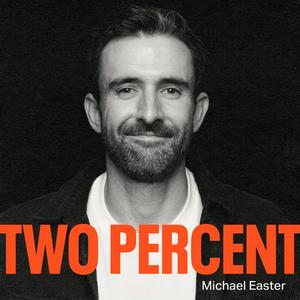
O Two Percent with Michael Easter
Lessons from the frontiers of health, psychology, thought, and human experience. Hosted by Michael Easter—New York Times bestselling author of The Comfort Crisis and Scarcity Brain. New episodes are released twice each week.
Strona internetowa podcastuSłuchaj Two Percent with Michael Easter, Crazy Nauka i wielu innych podcastów z całego świata dzięki aplikacji radio.pl
Uzyskaj bezpłatną aplikację radio.pl
- Stacje i podcasty do zakładek
- Strumieniuj przez Wi-Fi lub Bluetooth
- Obsługuje Carplay & Android Auto
- Jeszcze więcej funkcjonalności

Two Percent with Michael Easter: Podcasty w grupie
 Polska