PodcastyReligia i DuchowośćThe Lydia McGrew Podcast

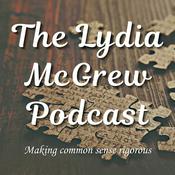
The Lydia McGrew Podcast

Lydia McGrew Podcast
The Lydia McGrew Podcast
Najnowszy odcinek

87 odcinków

  • The Lydia McGrew Podcast

    The Paradox of Improbable Evidence

    28.06.2026 | 28 min.
    It's strange, but it's true: Evidence that is *improbable* even given the hypothesis that it supports can provide as strong an argument as you could want in favor of that hypothesis. At the same time, such evidence, if we don't happen to have it, is resistant to being used in an argument from silence. And historical evidence fits this pattern very well. This sounds a warning: Don't be quick to model "strong evidence" for a hypothesis as evidence that is highly expected given that hypothesis. That may be inaccurate and may also unnecessarily open up the possibility of an argument from silence, if such evidence should not be found. Put on your geek hats and enjoy the probability theory!All of this applies to, among other things, the argument for Jesus' resurrection.Here is a free copy of Tim's argument from silence paper:https://timothymcgrew.com/wp-content/uploads/2024/01/The-Argument-from-Silence-Acta-Analytica-Tim-2013.pdf
  • The Lydia McGrew Podcast

    Competing models of the Gospels: Why is the confirmation of details so helpful to reportage?

    28.06.2026 | 17 min.
    Here I return to a point I discussed a couple of weeks ago, here:https://youtu.be/Xs4mRIzICKwThe historical reportage model and the fact-changing literary device model give quite different probabilities to finding details in the Gospels confirmed. The literary device model says that it was part and parcel of the Gospels' genre that their authors felt licensed to change details. In fact, Dr. Licona has gone so far as to say that we see these kinds of things all the time in the Gospels. Therefore, finding these details confirmed is evidence for the historical reportage model over the literary device model.Today I revisit the orator Quintilian and discuss the claim that Quintilian is evidence that the Gospels are probably in a genre in which they felt licensed to change facts. Here is an earlier video I did on this topic, in which I quoted Quintilian:https://youtube.com/live/weDCbf7bKDYHere, cued up, is Licona comparing the "green grass" detail to Quintilian's advice and implying that it was added just to make the readers feel like they were there.https://www.youtube.com/watch?v=qcAHjxkvT5A&t=3442sHere is the comparison of errancy and deliberate making up or changing details, with their different effects upon the estimate of reliability:https://youtube.com/live/pS9pFGV8l8wHere is the footnote from The Eye of the Beholder:"Michael Licona has suggested that specific sensory details in the Gospel narratives may be added (apparently with or without factual justification) to make the reader feel like he is present in the scene, citing Quintilian as giving permission to historians to do so. “Do We Have Evidence for Jesus’ Resurrection: Mike Licona Responds,” S. J. Thomason, Christian-Apologist.com, February 2, 2019, minute 57:22, https://youtu.be/qcAHjxkvT5A?t=3442. But Quintilian is discussing high-flown rhetorical embellishment in a speech by an orator in order to excite emotion or win a case. Quintilian, Institutio Oratoria, 4.2.63-64, 8.3.61-71. He envisages either open imagination in painting a lush scene (“I seem to see,” etc.) or outright deception in an attempt to sway the judge to one’s side--an activity of unscrupulous lawyers both past and present. Nothing could be further from either the genre or the style of John’s Gospel, with its sober narration and its casual touches of realism, than what Quintilian envisages. Licona also misses an undesigned coincidence in this context, suggesting that the reference to the green grass at the feeding of the five thousand found in Mark (he accidentally says that it is found in John) may be such a rhetorical flourish. But in fact the “green grass” reference found in Mark dovetails nicely with John’s mention that the Passover was near."
  • The Lydia McGrew Podcast

    When are details suspicious?

    28.06.2026 | 28 min.
    Here I'm anticipating a possible criticism--namely, that no matter what the details are like or even could be like in the Gospels, I'm always going to say that they indicate truthfulness or at least don't constitute any evidence worth speaking of against truthfulness. I give three categories (and I stipulate these aren't exhaustive) of kinds of details that *could be* in a document, but aren't found in the Gospels, that would raise suspicion that the document is at least partially fictionalized. The categories are lavishness, consistency, and infodump. Watch to find out what I mean by each of those and to hear examples.Here is my longer video on the Aethiopika by Heliodorus:https://www.youtube.com/watch?v=esp1dPJqZ4sHere is my video on arguments from silence:https://www.youtube.com/watch?v=W0VWCdw4epk&t=4sHere is my video on Gospel details in the Goldilocks zone in which I read an example of consistency in narrative detail in fiction:https://www.youtube.com/watch?v=CW1Z_pFPr7c&t=376sLet me know if I missed a link to something that I promised to link.
  • The Lydia McGrew Podcast

    Independence and the case of Mr. Jones

    08.06.2026 | 33 min.
    Today I'm taking a hypothetical police case in which a mother and daughter testify. Since they live together and haven't been kept separate before they testify, it seems like their testimony can't possibly be regarded as independent, right? And that lessens the force of their two testimonies for what they agree on, right? I mean, c'mon. They've got to be influencing one another.Here I illustrate the fact that independence is not a flat, simple thing. Dependence in the form of an undesigned coincidence can even be *good* for the confirmation of some H, because H unifies the testimonies better than ~H. The details can show us that the witnesses don't seem to be even unconsciously influencing each other's memories. All of that can be understood in terms of the mysterious case of Mr. Jones.If you want to get into more geeky details, here's a paper of mine on the value of varied evidence:https://quod.lib.umich.edu/e/ergo/12405314.0003.010?view=text;rgn=main
  • The Lydia McGrew Podcast

    What model of the Gospels is confirmed by undesigned coincidences?

    08.06.2026 | 25 min.
    Anybody who is trying to study the Gospels honestly is trying to get a good model of what they are like. Those who think that the Gospel authors were writing in a genre in which they were licensed to change and fabricate even details are making non-deductive arguments for their own model. (And it's disturbingly misleading to say that these claims are restricted to just details, but that's not what I'm addressing in this video, except in passing.)So when I argued in The Mirror or the Mask that finding undesigned coincidences is in tension with the view that the authors considered themselves licensed to change facts, I was making a *probabilistic* point about model comparison and explanatory inference. This seems like a good time to review that point.Interested in more? Go here to buy The Mirror or the Mask:https://www.amazon.com/Mirror-Mask-Liberating-Gospels-Literary/dp/1947929070/ref=sr_1_1?dchild=1&keywords=mirror+or+the+mask&qid=1600272214&sr=8-1
Więcej Religia i Duchowość podcastów
O The Lydia McGrew Podcast
The goal: To take common sense about the Bible and make it rigorous. I'm an analytic philosopher, specializing in theory of knowledge. I've published widely in both classical and formal epistemology. On this channel I'm applying my work in the theory of knowledge to the books of the Bible, especially the Gospels, and to apologetics, the defense of Christianity. My aim is to bring a combination of scholarly rigor and common sense to these topics, providing the skeptic with well-considered reasons to accept Christianity and the believer with well-argued ways to defend it.
Strona internetowa podcastu

Słuchaj The Lydia McGrew Podcast, Chlebak i wielu innych podcastów z całego świata dzięki aplikacji radio.pl

Uzyskaj bezpłatną aplikację radio.pl

  • Stacje i podcasty do zakładek
  • Strumieniuj przez Wi-Fi lub Bluetooth
  • Obsługuje Carplay & Android Auto
  • Jeszcze więcej funkcjonalności
The Lydia McGrew Podcast: Podcasty w grupie