

Słuchaj tego podcastu za darmo w aplikacji: Pobierz za darmo z App Store
radio.pl
Sleep timer
Zapisz stacje
15 odcinków
We’ll Never Beat the Houthis
09.10.2026 | 10 min.DESCRIPTION
YouTube Channel member @edhodapp6465 asks: should we go to war against the Houthis, and is damaging Iran's proxies a worthwhile strategy? My answer is no. We're at war with Iran, but we're not fighting the Houthis. They're fighting Saudi Arabia. We already failed to beat them in 2025, and after the war with Iran, we have even fewer munitions now. The Houthis can hit Saudi oil infrastructure and control the Bab el-Mandeb strait. And if we started winning, I believe Iran would step in. The U.S. has no winning strategy in the Gulf.
————————————————————
CHAPTERS
0:00 Intro
0:04 Should we go to war against the Houthis?
0:47 Two separate wars: US vs. Iran, Houthis vs. Saudi Arabia
2:07 Trump's failed 2025 campaign against the Houthis
3:13 Should the US join Saudi Arabia against the Houthis?
3:41 Why the Houthis are a real threat (Bab el-Mandeb)
4:25 Why the answer is no: we can't win, and we're short on munitions
6:29 Houthi retaliation and Saudi oil infrastructure
8:03 What if the US were winning? Iran would step in
9:08 Conclusion: no winning strategy in the Middle East
————————————————————The Korean War: America vs China | Ask The Professor
07.10.2026 | 16 min.YouTube Channel member @spacecometrue asked me to share my analysis of the causes and course of the Korean War. North Korea invaded the South on June 25, 1950, and nearly won before the U.S. stepped in. MacArthur's Inchon landing pushed the North Koreans back to the 38th parallel. When we crossed it and headed for the Yalu River, China entered the war in October 1950, and from that point it was really a war between the U.S. and China. It ended in an armistice in July 1953, not a peace agreement. I also explain why each side fought. North Korea wanted to unify the peninsula. The U.S. came in after Dean Acheson's blunder, because a Soviet ally controlling Korea threatened Japan and Northeast Asia. China found U.S. troops on its border unacceptable, much as Russia saw Ukraine in NATO. I also cover how the war militarized the Cold War, and why I think the Korean Peninsula is stable today despite North Korea's nuclear weapons. ————————————————————
CHAPTERS 0:00 Intro: 0:04 A member's question on Korea 0:41 How the Korean War unfolded 1:36 The U.S. enters and the Inchon landing 2:08 Crossing the 38th parallel 3:15 China enters the war 4:31 Really a U.S.–China war, and the 1953 armistice 5:28 How Korea militarized the Cold War 6:55 Why North Korea invaded 8:27 Why the U.S. came in: Acheson's blunder 10:24 Why China came in 11:16 The Ukraine–NATO parallel 12:41 The Korean Peninsula today 14:01 Why North Korea's nukes are defensive 15:24 Verdict: another war is unlikely ————————————————————Episode 11: Trump Can’t Bluff Iran into Surrender
06.10.2026 | 38 min.DESCRIPTION
It seems clear that the Trump administration and its allies are working overtime to create the false impression that the United States is well on its way to defeating Iran and that Tehran should therefore submit to American demands sooner rather than later. If it does not, so the argument goes, not only will the economic punishment inflicted on Iran reach crushing levels, but President Trump will launch a devastating military attack that might even include putting U.S. ground forces into Iran. I will argue in this episode that this is largely a propaganda campaign—and that it is unlikely to work because Iran, not the Trump administration, is in the driver’s seat.
————————————————————
CHAPTERS
0:00 Intro
0:42 The Administration's Propaganda Campaign
3:41 A Two-Pronged Approach
4:12 The Economic Argument: Blockade & Bessent's Strategy
6:21 The Military Argument: More Troops & Carriers
8:48 Why the Story Is Deeply Flawed
9:16 Why a New Air Campaign Won't Work
10:51 The "Three Carriers" Myth
14:28 Striking Oil Infrastructure & Iran's Second Strike
15:35 The Ground Invasion: How Many Combat Troops?
20:23 What Can You Do With 7,500 Troops?
23:05 Body Bags & Getting the Marines Ashore
25:19 Will Economic Pain Make Iran Surrender?
26:28 Lesson of History: Blockades Alone Don't Win Wars
28:38 Facing an Existential Threat
29:23 Iran's Doomsday Option
31:14 Is the West Really Doing Well?
32:01 New Strait Attacks & the Houthi Threat to Saudi Oil
34:30 Oil Is Flowing, but Economies Are Still Hurting
36:01 Bottom Line
————————————————————
MUSIC
"The Ice Giants" Kevin MacLeod (incompetech.com)
Licensed under Creative Commons: By Attribution 4.0 License
http://creativecommons.org/licenses/by/4.0/
Music modified (edited/remixed) from the original.Forget Vietnam, You Get Iran And Iraq | Ask The Professor
03.10.2026 | 11 min.I'll explain how the Vietnam War shaped my thinking about international relations, and the lessons it holds for today.Will China Attack Taiwan? | Ask The Professor
02.10.2026 | 7 min.I'll explain why I believe a Chinese invasion of Taiwan in the next decade is unlikely, and the one scenario that could change that.
Więcej Nauka podcastów
 Nauka To LubięEdukacja, Nauka, Technologia
 The Rest Is ScienceFilozofia, Fizyka, Nauka, Społeczeństwo i Kultura, Technologia
 StarTalk with Neil deGrasse TysonEdukacja, Nauka
 Mój ŚwiatNauka, Społeczeństwo i Kultura
 Making Sense with Sam HarrisFilozofia, Nauka, Polityka, Religia, Religia i Duchowość, Społeczeństwo i Kultura, Wiadomości
 Szkoła Bardzo Wieczorowa Radia KatowiceNauka
 To Bardziej SkomplikowaneEdukacja, Nauka, Społeczeństwo i Kultura
 Keep That in MindNauka, Nauki Społeczne
 Elektryfikacja - podcast Jakuba WiechaNauka
 Почему мы еще живыEdukacja, Nauka
Trendy w podcaście Nauka
 DiscoveryNauka
 ШоПоКоAstronomia, Nauka, Nauki Przyrodnicze
 Babbage from The EconomistNauka, Technologia, Wiadomości, Wiadomości Technologiczne
 IQ - Wissenschaft und ForschungNauka
 PrzySłowieNauka, Nauki Społeczne
 The Skeptics' Guide to the UniverseNauka
 Why This Universe?Astronomia, Fizyka, Nauka
 Quarks DailyNauka
 Radio Paranormalium - wszystkie audycjeDokumentacja, Duchowość, Nauka, Nauki Przyrodnicze, Religia i Duchowość, Społeczeństwo i Kultura
 Let's Learn Everything!Nauka
 Przystanek NaukaHistoria, Nauka, Społeczeństwo i Kultura
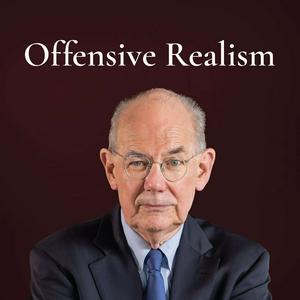
O John Mearsheimer - Offensive Realism
The official podcast of Prof. John Mearsheimer
Strona internetowa podcastuSłuchaj John Mearsheimer - Offensive Realism, Nauka To Lubię i wielu innych podcastów z całego świata dzięki aplikacji radio.pl
Uzyskaj bezpłatną aplikację radio.pl
- Stacje i podcasty do zakładek
- Strumieniuj przez Wi-Fi lub Bluetooth
- Obsługuje Carplay & Android Auto
- Jeszcze więcej funkcjonalności
Uzyskaj bezpłatną aplikację radio.pl
- Stacje i podcasty do zakładek
- Strumieniuj przez Wi-Fi lub Bluetooth
- Obsługuje Carplay & Android Auto
- Jeszcze więcej funkcjonalności

John Mearsheimer - Offensive Realism
Zeskanuj kod,
pobierz aplikację,
zacznij słuchać.
pobierz aplikację,
zacznij słuchać.
John Mearsheimer - Offensive Realism: Podcasty w grupie
 Polska