
Słuchaj tego podcastu za darmo w aplikacji: Pobierz za darmo z App Store
radio.pl
Sleep timer
Zapisz stacje
95 odcinków
The untouched flap handle doomed the takeoff - did they make it?
29.10.2026 | 22 min.A Boeing 737 begins its Buenos Aires takeoff with flaps never extended - can the crew stop disaster as runway and lives run out?
The untouched flap handle doomed the takeoff - did they make it?
In this episode, we follow the minute-by-minute lead-up to the LAPA Flight 3142 accident, tracing crew actions, aircraft status, and procedural breakdowns that preceded the runway overrun. The episode asks how checklists, warnings, and certification failures intersected - and whether timely action could have changed the outcome.
Event: LAPA Flight 3142
Date: August 31, 1999
Location: Aeroparque Jorge Newbery, Buenos Aires
Aircraft: Boeing 737-200, registration LV-WRZ
People on board: 100 (95 passengers, 5 crew)
- Captain Gustavo Weigel boarded and interacted with dispatch; his pilot license had expired and personnel files logged repeated checklist and command weaknesses.
- First officer Luis Etcheverry, the junior pilot, arrived separately and ordered 8,500 kg of fuel before boarding procedures proceeded.
- The aircraft was airworthy with functioning engines, hydraulics, brakes, and thrust reversers; the airframe had logged 64,564 flight hours and 38,680 cycles.
- The takeoff checklist card was found intact and unworn in its holder, and cockpit recorders captured a timeline showing flaps were never extended.
- Investigators documented a paper trail of warnings, a cockpit warning light that activated and was ignored, and repeated certifications that overlooked documented procedural struggles.
To listen to this podcast ad-free and access premium episodes, try our subscription with a 14-day free trial at obomedia.com.
© 2026 OBOMEDIA. All rights reserved.
This episode and its content (audio, text, and related materials) are the exclusive property of OBOMEDIA and are protected by applicable copyright laws. Reproduction, distribution, editing, or commercial use, in whole or in part, without prior written permission from OBOMEDIA is prohibited. For permissions, licensing, and business inquiries: business@obomedia.com.The approach lights masked the wind shear and stole their seconds
28.10.2026 | 20 min.A nine-month-old DC‑10 descends low toward Miami's runway, its crew unaware that approach lights and unseen wind shear have stolen their seconds.
The approach lights masked the wind shear and stole their seconds
In this episode, we follow the final minutes of a brand‑new Douglas DC‑10 on approach to Miami International and the sequence of decisions and missing information that shaped the descent. The story focuses on what the crew knew (and what they were never told) as the aircraft crossed the approach lights and encountered a sudden atmospheric instability - and asks whether systems or experience failed to buy them enough time.
Aircraft: Douglas DC‑10 (N310EA)
Date: December 20, 1972
Location: Miami International Airport, Runway 27 left approach
People: Captain James Sutor and three‑man cockpit crew (combined ~85,000 flight hours)
Passengers on board: 168
- The plane had been delivered in March 1972 and had accumulated 2,016 flight hours by December.
- Approach lights were mounted on 32‑foot concrete and steel piers extending into shallow water just short of the runway threshold.
- Instrument landing system and radio communications were functioning, but crews lacked accurate information about low‑level wind shear.
- The descent rate increased through an invisible instability that the pilots did not recognize in time given available information.
- Investigators concluded the trap was systemic - experienced crew competence could not compensate for critical information that was never provided.
To listen to this podcast ad-free and access premium episodes, try our subscription with a 14-day free trial at obomedia.com.
© 2026 OBOMEDIA. All rights reserved.
This episode and its content (audio, text, and related materials) are the exclusive property of OBOMEDIA and are protected by applicable copyright laws. Reproduction, distribution, editing, or commercial use, in whole or in part, without prior written permission from OBOMEDIA is prohibited. For permissions, licensing, and business inquiries: business@obomedia.com.The left turn at nine thousand feet cost them the chance to survive
27.10.2026 | 21 min.A Boeing 737 climbing out of Beirut makes a sudden left turn at 9,000 feet with 90 people aboard - did they make it in time?
The left turn at nine thousand feet cost them the chance to survive
In this episode, we reconstruct the first chaotic minutes after Ethiopian Airlines Flight 409 took off from Beirut, piecing together radar tracks, shoreline witness accounts, and the cockpit crew profiles to show how the flight deteriorated. What happened in those four minutes and forty-one seconds, and how did crew dynamics and weather shape the choices made in the cockpit?
Date: January 25, 2010
Flight: Ethiopian Airlines Flight 409
Aircraft: Boeing 737, registration ET-ANB
Time: 02:41 local
Location: Off the coast near Na'ameh, Mediterranean Sea
- Four minutes and forty-one seconds after takeoff the radar return vanished while the jet was still climbing and in sight of runway lights.
- The aircraft had climbed to about 9,000 feet and then executed a left-hand turn recorded by instruments.
- Captain Habtamu Benti Negasa had 10,233 total flight hours and 2,488 on the 737; First Officer Aluna Tamerat Beyene had 673 hours total and 350 on the 737.
- Weather that night featured variable winds at eight knots and thunderstorms rolling through the eastern Mediterranean, with shifting wind directions near the coast.
- Wreckage was later located about 45 meters beneath the Mediterranean near the village of Na'ameh, while shore witnesses and radar data presented conflicting accounts.
To listen to this podcast ad-free and access premium episodes, try our subscription with a 14-day free trial at obomedia.com.
© 2026 OBOMEDIA. All rights reserved.
This episode and its content (audio, text, and related materials) are the exclusive property of OBOMEDIA and are protected by applicable copyright laws. Reproduction, distribution, editing, or commercial use, in whole or in part, without prior written permission from OBOMEDIA is prohibited. For permissions, licensing, and business inquiries: business@obomedia.com.The Beechcraft's Engine Misfired-Could They Reach Clear Lake in Time?
26.10.2026 | 22 min.A Beechcraft with Buddy Holly aboard struggles north from Mason City toward Clear Lake after an engine misfire-can they make it to the field in time?
The Beechcraft's Engine Misfired-Could They Reach Clear Lake in Time?
In this episode, we follow the twelve-hour chain of decisions that put Buddy Holly, Ritchie Valens, J.P. "Big Bopper" Richardson and pilot Roger Peterson on a single Beechcraft Bonanza. The narrative traces Holly's rise from Lubbock radio bands to national stardom and the fatal flight that left an envelope sealed for twenty-one years; what choices and mechanical warnings mattered most?
Person: Buddy Holly
Date: February 3, 1959
Location: Five miles northwest of Clear Lake, Iowa
Event: Beechcraft Bonanza crash after takeoff from Mason City Municipal Airport
Status: Personal effects sealed in courthouse envelope until March 1980
- Buddy Holly practiced piano, steel guitar and flat-top acoustic until his sound was fully formed, then teamed with local musicians into the Crickets.
- After a rejected Decca contract, Holly recorded "That'll Be the Day" at Norman Petty’s Clovis studio, which led to a number one hit and rapid touring success.
- On February 3, 1959, a Beechcraft Bonanza took off at 1:05 a.m. into freezing darkness from Mason City Municipal Airport with four people aboard.
- Eyewitness and administrative traces: an envelope dated April 7, 1959 held glasses, a wristwatch, a lighter, dice and watch parts and remained unopened for twenty-one years.
- In the preceding months Holly had recorded ambitious sessions, moved to Greenwich Village, married and faced complex label and royalty arrangements routed through Norman Petty.
To listen to this podcast ad-free and access premium episodes, try our subscription with a 14-day free trial at obomedia.com.
© 2026 OBOMEDIA. All rights reserved.
This episode and its content (audio, text, and related materials) are the exclusive property of OBOMEDIA and are protected by applicable copyright laws. Reproduction, distribution, editing, or commercial use, in whole or in part, without prior written permission from OBOMEDIA is prohibited. For permissions, licensing, and business inquiries: business@obomedia.com.The nose-gear light failed and nine minutes ran out
25.10.2026 | 18 min.A senator’s Aerostar nears Philadelphia with a dark nose‑gear indicator; can on-scene helicopter checks stop the clock with nine minutes left?
The nose-gear light failed and nine minutes ran out
In this episode, we follow the nine-minute sequence after a nose-gear indicator failed on Senator John Heinz’s Aerostar as it neared Philadelphia while children played outside at Merion Elementary. We track the decisions, improvised checks, and communications that unfolded and ask whether those actions could avert disaster.
Person: John Heinz
Date: April 4, 1991
Location: Lower Merion Township, Pennsylvania
Aircraft: Piper PA-60 Aerostar
- Pilot used propeller spinners as an improvised visual check and reported seeing the gear appear down.
- Philadelphia tower observers stated the nose gear “appeared” extended but could not verify gear was locked.
- The Aerostar’s warning horn would sound if throttles were reduced with gear unconfirmed, but investigators concluded the crew probably never tested it.
- No cockpit voice recorder existed on the Aerostar, leaving crew conversations and actions during the nine minutes undocumented.
- A Bell 412 SP helicopter crew heard the radio exchanges and offered to visually assist the Aerostar on approach.
To listen to this podcast ad-free and access premium episodes, try our subscription with a 14-day free trial at obomedia.com.
© 2026 OBOMEDIA. All rights reserved.
This episode and its content (audio, text, and related materials) are the exclusive property of OBOMEDIA and are protected by applicable copyright laws. Reproduction, distribution, editing, or commercial use, in whole or in part, without prior written permission from OBOMEDIA is prohibited. For permissions, licensing, and business inquiries: business@obomedia.com.
Więcej Czas Wolny podcastów









Trendy w podcaście Czas Wolny






















O Air Disasters - The Black Box Files
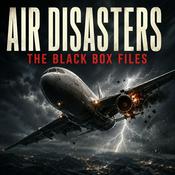
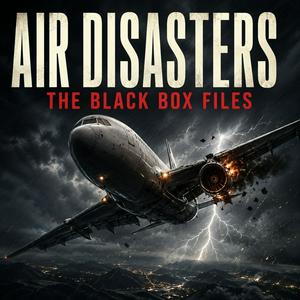
Air disasters begin quietly: a sensor reading nobody trusts, a bolt torqued wrong on a night shift, two words misheard between cockpit and tower. This show reconstructs true air disasters from the black box outward, one flight at a time. Each episode rebuilds one flight in full, cinematic detail: the crew and their decisions, the machine and its hidden flaw, the seconds where routine turned into emergency, and the investigation that pieced the truth together from wreckage and data. No host chatting between clips, no panel debating theories. Just one complete story, narrated start to finish, built from cockpit voice recorders, accident reports, and the testimony of investigators. You will fly through air disasters caused by a single frozen instrument, collisions built from a chain of tiny coincidences, and impossible landings that saved hundreds when everything had already failed. Some episodes follow the final minutes second by second; others follow the years-long investigations that changed how the world flies. All of them treat air disasters as what they really are: lessons written at terrible cost, and the reason flying keeps getting safer. If you are drawn to air disasters told with rigor and humanity, this is built for you. New episodes drop regularly, each one a self-contained investigation. Subscribe now so the next of these air disasters lands the moment it goes live.
Strona internetowa podcastuSłuchaj Air Disasters - The Black Box Files, Rock i Borys i wielu innych podcastów z całego świata dzięki aplikacji radio.pl
Uzyskaj bezpłatną aplikację radio.pl
- Stacje i podcasty do zakładek
- Strumieniuj przez Wi-Fi lub Bluetooth
- Obsługuje Carplay & Android Auto
- Jeszcze więcej funkcjonalności
Uzyskaj bezpłatną aplikację radio.pl
- Stacje i podcasty do zakładek
- Strumieniuj przez Wi-Fi lub Bluetooth
- Obsługuje Carplay & Android Auto
- Jeszcze więcej funkcjonalności

Air Disasters - The Black Box Files
Zeskanuj kod,
pobierz aplikację,
zacznij słuchać.
pobierz aplikację,
zacznij słuchać.
Air Disasters - The Black Box Files: Podcasty w grupie
 Polska

