

Słuchaj tego podcastu za darmo w aplikacji: Pobierz za darmo z App Store
radio.pl
Sleep timer
Zapisz stacje
243 odcinków
Beauty Behavioral Ecology | Dr. Marta Kowal
07.10.2024 | 1 godz. 51 min.A discussion with Marta Kowal on beautification and what predicts it.
Marta Kowal (PhD) is a post-doctoral researcher at the IDN Being Human Lab, Institute of Psychology, University of Wrocław, Poland. Marta's academic background is in evolutionary psychology, and her research primarily focuses on mate attraction, physical attractiveness-enhancing behaviors, and romantic love, particularly from a cross-cultural perspective. During her PhD program, under the guidance of her supervisor, Professor Piotr Sorokowski, Marta secured a grant from the Polish National Science Centre to explore beauty-enhancing behaviors across different cultures. Marta takes one of the leadership positions in an extensive international consortium of over 400 scientists from more than 100 countries passionately committed to facilitating large-scale cross-cultural research projects.
Marta's website: https://martakowal.com/
If you want to listen to my audio course on human evolution, you can find it here: https://mackenmurphy.gumroad.com/l/humanevolution?layout=profile
If you want to donate to support Species, you can do so, here: https://donorbox.org/keep-species-free
If you want to keep up with my work, everything is here: https://linktr.ee/mackenmurphy
Timestamps
0:00 Intro
5:08 231 minutes daily on beauty?
10:38 The Benefits of Beauty
12:23 Beauty: Not (Just) a Social Construct
19:35 Collecting Big Data
23:34 Gender & Beautification
48:51 Age & Beautification
54:28 Social Media & Beautification
1:08:25 The Beautiful Beautify More
1:12:57 Wealth, Education, Politics & Beauty
1:24:32 Intrasexual Competition All The Way Down
1:28:44 The Pathogen Prevalence Hypothesis
1:36:57 Cultural and Individual Differences in Strategies
1:47:14 Conclusion
1:50:10 OutroIn Other Nests | Macken Murphy
15.09.2024 | 59 min.A natural history of infidelity and a history of science on the topic. Listen and learn about the oldest known laws in history, fish that get pessismistic without their boyfriend, the costs of monogamy, the ovulatory shift hypothesis (and a conspiracy theory about it), the mate-switching vs. dual-mating debate, and so much more.
If you want to listen to my audio course on human evolution, you can find it here: https://mackenmurphy.gumroad.com/l/humanevolution?layout=profile
If you want to donate to support Species, you can do so, here: https://donorbox.org/keep-species-free
If you want to keep up with my work, everything is here: https://linktr.ee/mackenmurphy
Timestamps:
0:00 Intro
12:38 Theme
13:42 The Costs of Monogamy
20:01 The Many Strategic Functions of Infidelity
27:16 The Primary Reason Men Cheat
29:21 Intro to The Dual Mating Strategy
32:02 Ovulatory Shifts in Mate Preferences
34:26 Intro to the Mate Switching Hypothesis
36:13 Initial Impressions
42:15 Testing Mate-Switching vs. Dual-Mating
46:35 Addressing Critiques
48:16 The Usual Caveats
50:26 The Manosphere Reaction
51:31 Rollo's Conspiracy (lol)
55:01 Nature's Curse, Nature's Gift
58:15 Outro
Selected references (most key information is in, or referenced in, these texts): Murphy, M., Phillips, C. A., & Blake, K. R. (2024). Why women cheat: testing evolutionary hypotheses for female infidelity in a multinational sample. Evolution and Human Behavior, 45(5), 106595.
Buss, D. M., Goetz, C., Duntley, J. D., Asao, K., & Conroy-Beam, D. (2017). The mate switching hypothesis. Personality and Individual Differences, 104, 143-149.
Gangestad, S. W., & Thornhill, R. (1998). Menstrual cycle variation in women's preferences for the scent of symmetrical men. Proceedings of the Royal Society of London. Series B: Biological Sciences, 265(1399), 927-933.
Gangestad, S. W., Thornhill, R., & Garver-Apgar, C. E. (2005). Adaptations to ovulation: Implications for sexual and social behavior. Current Directions in Psychological Science, 14(6), 312-316.
Also:
Finkelstein, J. J. (1968). The Laws of Ur-Nammu. Journal of cuneiform studies, 22(3-4), 66-82.
Hicks, T. V., & Leitenberg, H. (2001). Sexual fantasies about one's partner versus someone else: Gender differences in incidence and frequency. Journal of Sex Research, 38(1), 43-50.
Laubu, C., Louâpre, P., & Dechaume-Moncharmont, F. X. (2019). Pair-bonding influences affective state in a monogamous fish species. Proceedings of the Royal Society B, 286(1904), 20190760.
Scelza, B. A. (2011). Female choice and extra-pair paternity in a traditional human population. Biology Letters, 7(6), 889-891.
Scelza, B. A. (2013). Choosy but not chaste: Multiple mating in human females. Evolutionary Anthropology: Issues, News, and Reviews, 22(5), 259-269.
Scelza, B. A. (2014). Jealousy in a small-scale, natural fertility population: The roles of paternity, investment and love in jealous response. Evolution and Human Behavior, 35(2), 103-108.
Stewart-Williams, S. "Nurture Alone Can't Explain Male Aggression." Nautilus. April 26, 2019. http://nautil.us/blog/nurture-alone-cant-explain-male-aggression
Yildiz, F. (1981). A tablet of codex Ur-Nammu from Sippar. Orientalia, 50(1), 87-97.Forgotten Apes | Dr. Susan Cheyne
05.05.2024 | 1 godz. 29 min.An audio essay on human nature, followed by an interview with primatologist Dr. Susan Cheyne. Susan is the co-director of the Borneo Nature Foundation International and the Borneo River Initiative for Nature Conservation and Communities, she is the Vice Chair of the IUCN Section on Small Apes, and she is also a Senior Lecturer at Oxford Brookes; she has been studying gibbons for about 27 years. Our conversation is wide-ranging, but centers on gibbons. We discuss gibbon locomotion, life among gibbons, the nature and function of gibbon song, gibbon violence, monogamy, and infanticide (and lack thereof), and other subjects. Enjoy.
Dr. Cheyne's research: http://www.susancheyne.com
IUCN Section on Small Apes: https://gibbons.asia/
Timestamps:
0:00 Are humans naturally monogamous?
17:27 Introducing today's subject and guest
20:25 Gibbon overview (interview starts)
31:57 Why do humans have twins?
34:02 A day in the life of a gibbon
38:57 Studying gibbons
40:37 Forgotten apes
44:06 Monogamy
1:09:27 Violence
1:11:34 Singing
1:17:49 Intelligence
1:23:28 Conservation
Sources relevant to the introduction:
Stewart-Williams & Thomas | "The Ape That Thought It Was a Peacock" | 2013
Fisher | "The Anatomy of Love" | 2016
Ryan & Jethá | "Sex at Dawn" | 2010
Kramer | Pew Research | 2020
Marlowe | Behavioural Processes | 2000
Chapais | Evolutionary Anthropology | 2013
Schacht & Kramer | Sec Behavioral and Evolutionary Ecology | 2019
Shankman | "The Mead–Freeman Controversy Continues" | 2018 (I'm not sure if this view is correct; once again, you can find academics on both sides of this.)Pilled | Louis Bachaud
12.02.2024 | 2 godz. 9 min.A deep dive into the manosphere, with the scholar who knows it best, Louis Bachaud.
The manosphere is a constellation of 5 loosely affiliated communities, including pick-up artists (PUAs), men's rights activists (MRAs), "Men Going Their Own Way" (MGTOW), incels (the "Black Pill" communiy), and the "Red Pill" community. Louis details the history of the manosphere, describes the current factions and their differences, and guides us through their use and misuse of science, especially evolutionary psychology. The episode opens with a systematic critique of the manosphere, and the interview starts around 34 minutes in. Enjoy.
Recommended background, especially for critiques of the manosphere:
- Bachaud, L., & Johns, S. E. (2023). The use and misuse of evolutionary psychology in online manosphere communities: The case of female mating strategies. Evolutionary Human Sciences, 5, e28.
For the size and direction of sex differences, see:
- Archer, J. (2019). The reality and evolutionary significance of human psychological sex differences. Biological Reviews, 94(4), 1381-1415.
- Stewart-Williams, S., Butler, C. A., & Thomas, A. G. (2017). Sexual history and present attractiveness: People want a mate with a bit of a past, but not too much. The Journal of Sex Research, 54(9), 1097-1105.
- Schmitt, D. P. (2005). Sociosexuality from Argentina to Zimbabwe: A 48-nation study of sex, culture, and strategies of human mating. Behavioral and Brain sciences, 28(2), 247-275.
- Buss, D. M. (1989). Sex differences in human mate preferences: Evolutionary hypotheses tested in 37 cultures. Behavioral and brain sciences, 12(1), 1-14.
For extra-pair paternity:
- Wolf, M., Musch, J., Enczmann, J., & Fischer, J. (2012). Estimating the prevalence of nonpaternity in Germany. Human Nature, 23, 208-217.
- Anderson, K. (2006). How well does paternity confidence match actual paternity? Evidence from worldwide nonpaternity rates. Current anthropology, 47(3), 513-520.
- Bellis, M. A., Hughes, K., Hughes, S., & Ashton, J. R. (2005). Measuring paternal discrepancy and its public health consequences. Journal of Epidemiology & Community Health, 59(9), 749-754.
For age gaps:
- Conroy-Beam, D., & Buss, D. M. (2019). Why is age so important in human mating? Evolved age preferences and their influences on multiple mating behaviors. Evolutionary Behavioral Sciences, 13(2), 127.
- Antfolk, J., Salo, B., Alanko, K., Bergen, E., Corander, J., Sandnabba, N. K., & Santtila, P. (2015). Women's and men's sexual preferences and activities with respect to the partner's age: Evidence for female choice. Evolution and Human Behavior, 36(1), 73-79.
- Buunk, B. P., Dijkstra, P., Kenrick, D. T., & Warntjes, A. (2001). Age preferences for mates as related to gender, own age, and involvement level. Evolution and Human Behavior, 22(4), 241-250.Hair on Our Faces | Dr. Barnaby Dixson
29.10.2023 | 1 godz. 48 min.Today, we explore the befuddling (and surprisingly complex) mystery of the human beard. Our guide is Dr. Barnaby Dixson, a human behavioral ecologist at the University of the Sunshine Coast who uses interdisciplinary methods to investigate human mate preferences across cultures. His extensive work has bettered our understanding of a wide variety of physical traits; most relevant to today's discussion, he is one of the primary contributors to our understanding of beards. We discuss the evolution of facial masculinity and facial hair, and their role in attractiveness and intimidation across various contexts. You can learn more about Dixson, here: https://www.usc.edu.au/staff/dr-barnaby-dixson
Relevant sources are mostly in Dixson's past publications: https://scholar.google.com.au/citations?user=LE_ROqQAAAAJ&hl=en
But also, see: https://docs.google.com/document/d/1vbEZV65uWCcG3E3Qzk-DEuy2m3rodw07WIt3l6meMSo/edit?usp=sharing
Więcej Natura podcastów





Trendy w podcaście Natura
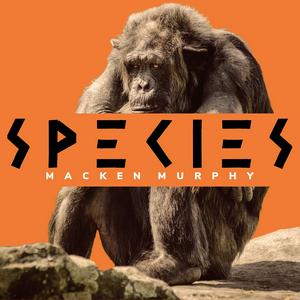
O Species
"The host, Macken Murphy, is able to condense vast chunks of information into engaging and digestible episodes. Fact-filled and fun."
— The New York Times
Strona internetowa podcastuSłuchaj Species, Babka Natura i wielu innych podcastów z całego świata dzięki aplikacji radio.pl
Uzyskaj bezpłatną aplikację radio.pl
- Stacje i podcasty do zakładek
- Strumieniuj przez Wi-Fi lub Bluetooth
- Obsługuje Carplay & Android Auto
- Jeszcze więcej funkcjonalności
Uzyskaj bezpłatną aplikację radio.pl
- Stacje i podcasty do zakładek
- Strumieniuj przez Wi-Fi lub Bluetooth
- Obsługuje Carplay & Android Auto
- Jeszcze więcej funkcjonalności

Species
Zeskanuj kod,
pobierz aplikację,
zacznij słuchać.
pobierz aplikację,
zacznij słuchać.
 Polska