

Słuchaj tego podcastu za darmo w aplikacji: Pobierz za darmo z App Store
radio.pl
Sleep timer
Zapisz stacje
447 odcinków
Three years after October 7, with Aaron David Miller
09.10.2026 | 1 godz. 8 min.Three years after the October 7 attacks, Gaza remains divided and without a clear path forward. Hamas has been severely weakened militarily but retains significant influence, while Palestinians continue to face difficult humanitarian conditions and little prospect of a political breakthrough.
On the GZERO World Podcast, Ian Bremmer sits down with former US Middle East negotiator Aaron David Miller to take stock of Israel and the region three years later. They discuss why Hamas has proven so difficult to dislodge, what Israel’s October 27 election could actually change, and why a new government may look different at home without dramatically changing Israel’s approach to Gaza, Lebanon, and Iran.
They also examine the changing US-Israel relationship as bipartisan support erodes, Israel’s shifting image among Americans, and a regional balance increasingly shaped by Israel, Turkey, and Iran. Miller argues that changing leadership could improve Washington’s relationship with Israel – but that the broader Middle East remains deeply fragmented, with few signs of an easy way out.
Host: Ian Bremmer
Guest: Aaron David Miller
Subscribe to the GZERO World with Ian Bremmer Podcast on Apple Podcasts, Spotify, or your preferred podcast platform, to receive new episodes as soon as they're published.
Hosted by Simplecast, an AdsWizz company. See pcm.adswizz.com for information about our collection and use of personal data for advertising.The great US-China superpower rivalry, with Elizabeth Economy
03.10.2026 | 25 min.President Trump and China’s Xi Jinping traded handshakes, toasts, and pandas at a diplomatic summit at the White House last week, but beneath all the pageantry, the rivalry between the world’s two most powerful countries is only getting more intense. Hoover Institution Senior Fellow Elizabeth Economy joins Ian Bremmer on the GZERO World podcast for a look at what’s really driving the relationship between the US and China right now, where each side has leverage, and whether the US is falling behind in the race for global influence and technological dominance.
From Beijing's perspective, the second Trump administration has handed China some useful opportunities as well as challenges. On one hand, Washington is no longer pressing Beijing about human rights issues and has stepped back from its leadership role in global institutions, giving China an opening. On the other, the Trump administration still views China as its biggest strategic competitor, both in terms of tech competition and national security. Bremmer and Economy look at the state of the US-China rivalry—from computer chips to AI to space dominance—and where it goes from here.
Host: Ian Bremmer
Guest: Elizabeth Economy
Subscribe to the GZERO World with Ian Bremmer Podcast on Apple Podcasts, Spotify, or your preferred podcast platform, to receive new episodes as soon as they're published.
Hosted by Simplecast, an AdsWizz company. See pcm.adswizz.com for information about our collection and use of personal data for advertising.The UN at a crossroads, with Secretary-General António Guterres
26.09.2026 | 32 min.This week on the GZERO World Podcast, Ian Bremmer sits down with UN Secretary-General Antonio Guterres on the sidelines of the General Assembly for the final time in his official capacity as UN chief. After a decade as the UN’s top diplomat, the former Portuguese Prime Minister is leaving his position at a moment of great global instability. Wars grind on in Ukraine and Iran with no end in sight. Humanitarian crises in Gaza and Sudan have exposed how little leverage the international system has when powerful states and their partners act with impunity. With faith in global institutions at an all-time low, does the world’s most ambitious experiment in multilateralism still have a place?
While Guterres will be the first to acknowledge that the UN is weakened, he says it is far from obsolete. The old superpowers are discovering their limits, while middle and rising powers are demanding more influence. Those countries need a place to negotiate rules, build coalitions, and keep competition from becoming confrontation. For all its failures, the United Nations is still the only table where all 193 member states still have a seat. Guterres and Bremmer discuss all of that, as well as the erosion of international law, limits of superpowers, and why he believes AI is the most urgent challenge facing humanity.
Host: Ian Bremmer
Guest: António Guterres
Subscribe to the GZERO World with Ian Bremmer Podcast on Apple Podcasts, Spotify, or your preferred podcast platform, to receive new episodes as soon as they're published.
Hosted by Simplecast, an AdsWizz company. See pcm.adswizz.com for information about our collection and use of personal data for advertising.Bioweapons, AI, and the end of the world, with Annie Jacobsen
19.09.2026 | 27 min.For decades, nuclear war has represented the ultimate doomsday scenario. But investigative journalist and author Annie Jacobsen says biological warfare may pose an even greater overall threat. Unlike nuclear weapons, which require tightly controlled materials, enormously expensive delivery systems, and specialized expertise, the barriers to developing biological weapons can be far lower. And artificial intelligence could lower them further.
Ian Bremmer sits down with Jacobsen to discuss how AI is changing the landscape of catastrophic risk. As increasingly powerful models make sophisticated scientific knowledge easier to access, they could allow bad actors to bypass years of specialized training and dramatically shorten the path from an idea to a potentially dangerous capability.
They also explore the struggle to govern a technology developing faster than regulators can respond, the gaps in existing AI safeguards, and what governments and tech companies could do to identify dangerous vulnerabilities before they are exploited. And they step back to a larger question at the heart of Jacobsen’s work: Why does humanity keep developing technologies with the potential to threaten its own survival – and can our ability to manage those risks ever catch up with our ability to create them?
Subscribe to the GZERO World with Ian Bremmer Podcast on Apple Podcasts, Spotify, or your preferred podcast platform, to receive new episodes as soon as they're published.
Hosted by Simplecast, an AdsWizz company. See pcm.adswizz.com for information about our collection and use of personal data for advertising.The enduring legacy of 9/11, with former Defense Secretary Mark Esper
12.09.2026 | 28 min.This week marks 25 years since 9/11—the deadliest terror attack the world has ever seen and a defining moment in American history. The attacks transformed US politics and national security. The war on terror became the organizing principle of American foreign policy. Former Secretary of Defense Mark Esper joins Ian Bremmer on the GZERO World Podcast to reflect on the day that forever changed how Americans thought about national security, and how the United States wielded its enormous power around the world.
How much did we learn from the post-9/11 era and do we risk repeating the same mistakes? 25 years after the US launched its war on terror, America is once again fighting a war in the Middle East without a clear endgame or exit strategy. The United States is on the back foot in its war with Iran, Esper says. The original goal of getting Tehran to the negotiating table about its nuclear program isn’t even being discussed anymore. And meanwhile, the United States is dropping the ball on countering its biggest existential threat: China.
Host: Ian Bremmer
Guest: Mark Esper
Subscribe to the GZERO World with Ian Bremmer Podcast on Apple Podcasts, Spotify, or your preferred podcast platform, to receive new episodes as soon as they're published.
Hosted by Simplecast, an AdsWizz company. See pcm.adswizz.com for information about our collection and use of personal data for advertising.
Więcej Komentarze do Aktualności podcastów
 The New Yorker Radio HourKomentarze do Aktualności, Książki, Polityka, Społeczeństwo i Kultura, Sztuka, Wiadomości
 Polityczny WFKomentarze do Aktualności, Wiadomości
 Беларусы ў Польшчы і ў свецеKomentarze do Aktualności, Wiadomości
 Raport międzynarodowyKomentarze do Aktualności, Polityka, Wiadomości
 NaczelniKomentarze do Aktualności, Wiadomości
 The Tucker Carlson ShowKomentarze do Aktualności, Wiadomości
 Raport o stanie świata Dariusza RosiakaKomentarze do Aktualności, Wiadomości
 PivotKomentarze do Aktualności, Technologia, Wiadomości
 Tomasz Drwal "Na pieńku"Komentarze do Aktualności, Wiadomości
 Dział ZagranicznyKomentarze do Aktualności, Społeczeństwo i Kultura, Wiadomości
Trendy w podcaście Komentarze do Aktualności
 The Danish ConnectionKomentarze do Aktualności, Wiadomości
 Notes from PolandHistoria, Komentarze do Aktualności, Społeczeństwo i Kultura, Wiadomości
 Suma polityczna w JedynceKomentarze do Aktualności, Wiadomości
 The Briefing RoomKomentarze do Aktualności, Wiadomości
 Rafał Otoka-FrąckiewiczKomentarze do Aktualności, Wiadomości
 Judging FreedomKomentarze do Aktualności, Wiadomości
 Defence24Komentarze do Aktualności, Wiadomości
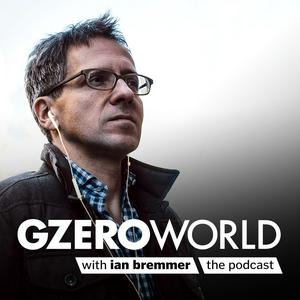
O GZERO World with Ian Bremmer
The United States will no longer play global policeman, and no one else wants the job. This is not a G-7 or a G-20 world. Welcome to the GZERO, a world made volatile by an intensifying international battle for power and influence. Every week on this podcast, Ian Bremmer will interview the world leaders and the thought leaders shaping our GZERO World.
Strona internetowa podcastuSłuchaj GZERO World with Ian Bremmer, The New Yorker Radio Hour i wielu innych podcastów z całego świata dzięki aplikacji radio.pl
Uzyskaj bezpłatną aplikację radio.pl
- Stacje i podcasty do zakładek
- Strumieniuj przez Wi-Fi lub Bluetooth
- Obsługuje Carplay & Android Auto
- Jeszcze więcej funkcjonalności
Uzyskaj bezpłatną aplikację radio.pl
- Stacje i podcasty do zakładek
- Strumieniuj przez Wi-Fi lub Bluetooth
- Obsługuje Carplay & Android Auto
- Jeszcze więcej funkcjonalności

GZERO World with Ian Bremmer
Zeskanuj kod,
pobierz aplikację,
zacznij słuchać.
pobierz aplikację,
zacznij słuchać.
GZERO World with Ian Bremmer: Podcasty w grupie
 Polska