Słuchaj tego podcastu za darmo w aplikacji: Pobierz za darmo z App Store
radio.pl
Sleep timer
Zapisz stacje
30 odcinków
Parent Brain: Pregnancy Shrinks Your Brain But Makes You More Efficient
26.11.2026 | 45 min.Does pregnancy really cause “baby brain” and what’s happening in the brain as we become parents?
In this episode of Change Your Mind with New Scientist, health journalists Helen Thomson and Cat de Lange explore how pregnancy and parenthood reshape the brain. They ask whether pregnancy-related brain changes are harmful, how long they last, and whether the memory lapses many new parents report are caused by changes in cognition or the added mental load of caring for a baby.
Joining them is Winnie Orchard, a researcher at the University of California, Santa Barbara, who studies maternal cognition. Together, they explore the new science of Matrescence.
Produced by Emily Bird
Get in touch at changeyourmind@newscientist.com
Find out more about the cognitive impacts of parenting at New Scientist: https://www.newscientist.com/article/2530223-parenting-may-permanently-improve-brain-health-for-mums-and-dads/Migraine: New Life-Changing Treatments Explained
19.11.2026 | 45 min.Migraine is much more than a headache. It can bring visual disturbances, sensitivity to light and sound, nausea and days of brain fog, and its unpredictability can make everyday life difficult.
In this episode of Change Your Mind with New Scientist, health journalists Cat de Lange and Helen Thomson explore what happens in the brain during a migraine. Joined by Professor Peter Goadsby, a leading migraine researcher, they discuss the condition’s neurological basis, the role of hormones, and the new treatments targeting CGRP. In this episode we also unpack Cat’s own experience with Migraine and sort fact from fiction to tackle some of the internet’s favourite home remedies.
Produced by Emily Bird
We want to hear from you, get in touch at changeyourmind@newscientists.com
Find out more about migraine at New Scientist https://www.newscientist.com/article/2516371-fresh-understanding-of-the-causes-of-migraine-reveals-new-drug-targets/ADHD - What you really need to know
12.11.2026 | 43 min.Have you noticed that ADHD seems to be everywhere these days? More and more people are talking about it, and diagnoses are on the rise. But does that mean more of us are actually developing ADHD, or are we simply getting better at recognising something that has always been there?
We often associate ADHD with childhood hyperactivity, but the condition is more complex, and growing awareness is prompting more people to seek a diagnosis. So what distinguishes ADHD from everyday traits, and what’s happening in the brain?
In this episode of Change Your Mind, health journalists Cat de Lange and Helen Thomson explore the science of ADHD. They discuss how it can affect attention, motivation and emotional regulation, why it may be missed in girls and women, and how hormonal changes could influence symptoms.
Joining them is neuroscientist Professor Ellie Dommett of King’s College London. Together, they look at what research can tell us about ADHD, the role of medication, and what evidence suggests about exercise and other ways to manage symptoms.
Produced by Emily Bird
Get in touch at changeyourmind@newscientist.com
Find out more about ADHD at New Scientist: https://www.newscientist.com/topic/adhd/
Sources:
ADHD history:
https://www.newscientist.com/article/2585608-calling-adhd-a-myth-is-pseudoscientific-and-dangerous/
Two to three times more common in boys:
https://aacap.org/AACAP/aacap/Families_and_Youth/Resource_Centers/ADHD_Resource_Center/ADHD_A_Guide_for_Families/How_Common_is_ADHD.aspx
Hormonal influence in women:
https://pmc.ncbi.nlm.nih.gov/articles/PMC12145478/
Explosion in diagnoses
https://www.newscientist.com/article/2371467-adhd-whats-behind-the-recent-explosion-in-diagnoses/
Listen to Cat’s friends podcast Behaviour Blueprint about ADHD medication in children
https://open.spotify.com/show/1zoPMe66io0FcAnmQUHLXe?si=7934bd51fae9426eUltra-processed food - Chris van Tulleken explains how diet impacts your brain
05.11.2026 | 40 min.Chances are you’ve eaten something ultra-processed already today, but should you be worried?
Many of us have a sense that ultra-processed food could be harming our bodies, but what impact does it have on our brains? In this episode of Change Your Mind with New Scientist health Journalists Helen Thomson and Cat de Lange ask whether the food we eat is damaging our mental health, increasing our risk of dementia or even making us age prematurely.
With help from doctor, broadcaster and researcher Chris van Tulleken they explore how ultra-processed food really impacts the brain and whether we should be making changes to our own diets.
Produced by Emily Bird
Get in touch at changeyourmind@newscientist.com
Find out more about Ultra-processed foods at New Scientist: https://www.newscientist.com/article/2519704-how-worried-should-you-be-about-ultra-processed-foods/
Sources:
https://www.newscientist.com/article/2499135-why-not-all-ultra-processed-foods-are-bad-for-you/
https://www.newscientist.com/article/2438428-is-ultra-processed-food-unhealthy-heres-why-no-one-can-agree/
Calories from UPF: https://www.ucl.ac.uk/news/2024/oct/toddlers-get-nearly-half-their-calories-ultra-processed-foods
https://www.ukri.org/news/families-left-in-dark-on-upfs-risks-to-children-ukri-dialogue/
Daniel Lieberman interview: https://www.youtube.com/watch?v=puRaNQpwW6UThe Glymphatic System - Can you boost your brain's deep-cleaning system to prevent Alzheimer’s?
29.10.2026 | 38 min.We all know how important sleep is for our health, it’s a chance to rest our body and mind, but what if it’s also a vital opportunity for the brain to clear away waste?
In this episode of Change Your Mind, health journalists Cat de Lange and Helen Thomson explore the glymphatic system, a hidden cleaning network deep in the brain that has alluded scientists for years. They’re asking how it helps keep the brain healthy, and why sleep could play such an important role.
Joining them is Maiken Nedergaard, a neuroscientist whose research helped uncover the system. Together, they look at how fluid moves through the brain, what scientists are learning about its links to sleep and conditions such as Alzheimer’s, and what might help support it.
Produced by Emily Bird
Get in touch at changeyourmind@newscientist.com
Find out more about the glymphatic system at New Scientist:
https://www.newscientist.com/article/2590514-can-we-harness-the-brains-deep-cleaning-system-to-prevent-alzheimers/
Więcej Nauka podcastów







Trendy w podcaście Nauka




















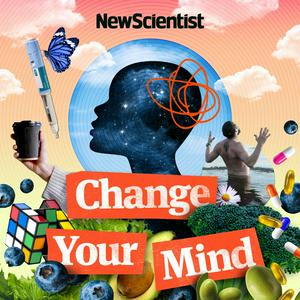
O Change Your Mind with New Scientist
Change Your Mind from New Scientist brings you the brain health advice you really need to know. Every week, award‑winning science journalists Cat de Lange and Helen Thomson cut through wellness hype to find out what actually keeps your mind sharp, your mood steady and your memory strong. As friends, they’ve spent decades swapping stories, testing trends and exploring the latest neuroscience, and thought it was about time to share the tips and tricks that have genuinely changed their own lives. From cold plunges to coffee, supplements to sleep, Ozempic and AI they speak to leading experts and ask: does this really work? Expect smart conversations, clear answers, and practical takeaways - with plenty of laughs along the way. Because when you understand your brain, you really can change your mind - for the better.
New Episodes every Thursday.
Słuchaj Change Your Mind with New Scientist, Почему мы еще живы i wielu innych podcastów z całego świata dzięki aplikacji radio.pl
Uzyskaj bezpłatną aplikację radio.pl
- Stacje i podcasty do zakładek
- Strumieniuj przez Wi-Fi lub Bluetooth
- Obsługuje Carplay & Android Auto
- Jeszcze więcej funkcjonalności

Change Your Mind with New Scientist: Podcasty w grupie
 Polska