Recorded February 14, 2026.
William Blake once signed a guest book with a drawing of a human figure stretched reclining — or flying. Surrounding it were the words, “William Blake who is very much delighted in being in good company. Born 28 Nov. 1757 in London and has died several times since.” Zen Master Hakuin, in Japan in 1749, wrote as a way honoring a student who had recently died: “Turning my head a soaring Mount Fuji capped with snow,/ Its lower half flushed in the crimson glow of the rising sun.” Hakuin’s heir, Torei, commented, “These are lines whose point is grasped after you have died two or three times.”
Actually we are dying all the time. To quote The Rolling Stones’ “Ruby Tuesday” —“ Dying all the time. Lose your dreams and you will lose your mind. Ain’t life unkind.” Ha! We call this ongoing daily minute-by-minute entrustment to reality, our life. For the Buddha death was the activity of his complete entrance into nirvana or parinirvana, a total entrustment. In “Dharma Nature,” section #23 of his Shobogenzo, Eye of the Treasury of the True Dharma Zen master Dogen writes:
Grass, trees, and forests are impermanent; they are buddha nature. Humans, things, body, and mind are impermanent; they are buddha nature. Land, mountains, and rivers are impermanent, as they are buddha nature. Unsurpassable, complete enlightenment is impermanent, as it is buddha nature. Great parinirvana is buddha nature, as it is impermanence.”
How does the Buddha’s Parinirvana inform our own life and practice? Let’s take a look.
Referenced:
The Hungry Tigress: Buddhist Myths, Legends and Jataka Tales, Fully Revised and Expanded Edition, by Rafe Martin
A Zen Life of Buddha, by Rafe Martin
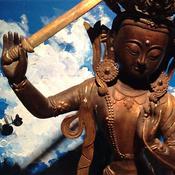
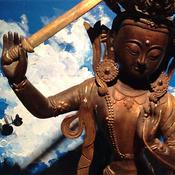
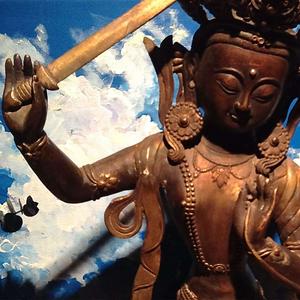
Photo -- Parinirvana Altar, Endless Path Zendo, 2/14/2026
Read Roshi Rafe Martin's latest book: Finding Your Buddha Smile: Coming Home To What Zen is Really All About. Available from Amazon , Sumeru Books, and Barnes & Noble Online.
Books by Roshi Rafe Martin
Talks on YouTube
More information at endlesspathzen.org
































 Polska