

Słuchaj tego podcastu za darmo w aplikacji: Pobierz za darmo z App Store
radio.pl
Sleep timer
Zapisz stacje
213 odcinków
153 - Guadalcanal - Battle of Mount Austen - Hyakutake vs Patch, intelligence failures, sabotage raids and crippling casualties.
27.09.2026 | 36 min.Major General Patch had a simple plan: send the fresh 132nd Infantry Regiment to clear a company of sick Japanese from Mount Austen before the January offensive. Intelligence estimated perhaps 100 defenders. The actual Japanese force was far larger, dug into complex terrain with observation over Henderson Field, and Hyakutake had deliberately positioned them to draw American combat power away from the coastal thrust.
Key learnings:
• Why Japanese 38th Engineer Regiment demolition teams were conducting SAS-style raids on Fighter Field Two from Mount Austen
• How Hyakutake's defensive strategy used dispersed strongpoints to fragment American offensive power
• What made the US Army reluctant to attempt amphibious flanking operations in late 1942
This battle is worth considering in the frame of manoeuvre vs attritionalist combat. The Army struggled to develop a coherent combined arms approach to the battle - Lawton Collins would bring this later in the campaign.
Full show notes and transcript: https://theprinciplesofwar.com/
Support the podcast: https://www.patreon.com/principlesofwar
More episodes: https://theprinciplesofwar.com/
Follow on X: https://x.com/surprisepodcast
Subscribe for more Professional Military Education content.152 - National Guard vs Imperial Japanese Army on Guardalcanal - Lessons Learnt for employing green troops at 5th Matanikau
19.07.2026 | 40 min.The US 182nd Infantry Regiment crossed the Matanikau on 18 November 1942 and within 48 hours all three companies of 1st Battalion had broken under Japanese mortar and flanking fire. This episode examines how green National Guard troops faltered in their combat debut, why a four-hour artillery delay negated the prep fires, and what the six-week Point Cruz stalemate reveals about the cost of transitioning from defence to offence.
Key learnings:
• Why the 182nd's thousand-yard overnight gap invited the Japanese counterattack that shattered 1st Battalion on 20 November
• How pulling back 300 yards on 23 November allowed Japanese screening forces to reoccupy vacated positions before the 8th Marines could assault
• What the 325 casualties and combat-ineffective rate of the 164th Infantry between 19–25 November cost the American offensive
Dave Holland is an ex-Marine and was posted to Guadalcanal with the Australian Federal Police. He regularly leads battlefield study tours through the area. He is a world-leading expert on the battles of Guadalcanal and author of Guadalcanal's Longest Fight - The Pivotal Battles of the Matanikau Front.
Full show notes and transcript: https://theprinciplesofwar.com/
Support the podcast: https://www.patreon.com/principlesofwar
More episodes: https://theprinciplesofwar.com/
Follow on X: https://x.com/surprisepodcast
Subscribe for more Professional Military Education content.151 - How Sea Control doomed the 17th Army to Starvation on Guadalcanal: The failure of the Tokyo Express
19.06.2026 | 32 min.The Naval Battle of Guadalcanal cost the US Navy two rear admirals and six warships — yet it stopped 11 Japanese transports carrying 10,000 troops and the supplies needed to take Henderson Field. We discuss the critical 12–15 November 1942 engagements where Rear Admiral Daniel Callaghan's cruisers intercepted a battleship bombardment force, and Willis Lee's radar-directed gunnery from USS Washington sank the Kirishima in the war's only battleship-versus-battleship duel in the Pacific.
Key learnings:
• Why Henderson Field functioned as the decisive terrain controlling both sides' ability to resupply by day or by night
• How only 2,000 Japanese troops landed from the convoy — most without weapons or ammunition
• What the Fifth Battle of the Matanikau plan revealed about American intelligence failures on Japanese defensive positions
Dave Holland is an ex-Marine and was posted to Guadalcanal with the Australian Federal Police. He regularly leads battlefield study tours through the area. He is a world-leading expert on the battles of Guadalcanal and author of Guadalcanal's Longest Fight - The Pivotal Battles of the Matanikau Front.
Full show notes and transcript: https://theprinciplesofwar.com/
Support the podcast: https://www.patreon.com/principlesofwar
More episodes: https://theprinciplesofwar.com/
Follow on X: https://x.com/surprisepodcast
Subscribe for more Professional Military Education content.150 - What new tactics did Carlson's Raiders use to hunt Shoji's Regiment during the Long Patrol on Guadalcanal?
24.05.2026 | 1 godz.Colonel Shoji landed 1,500 Japanese troops east of Henderson Field — and the Americans needed three battalions and a week of manoeuvre to trap just 450 of them at Gavaga Creek. This episode unpacks the Koli Point "Rat Race," the pursuit by Carlson's Raiders, and the fire team tactics that would reshape Marine infantry doctrine for decades.
Dave Holland is an ex-Marine and was posted to Guadalcanal with the Australian Federal Police. He regularly leads battlefield study tours through the area. He is a world-leading expert on the battles of Guadalcanal and author of Guadalcanal's Longest Fight - The Pivotal Battles of the Matanikau Front.
Key learnings:
• How Carlson's Raiders used Chinese Communist guerrilla techniques to harass Shoji's withdrawing column across 30 days
• Why the three-man fire team — each with a BAR, Thompson, and M1 Garand — gave squads independent manoeuvre elements
• What institutional opposition to "an elite within the elite" meant for the Raider battalions' disbandment in 1944
Full show notes and transcript: https://theprinciplesofwar.com/category/guadalcanal/
Support the podcast: https://www.patreon.com/principlesofwar
More episodes: https://theprinciplesofwar.com/
Follow on X: https://x.com/surprisepodcast
Subscribe for more Professional Military Education content.How do you defend an island nation when 40% of your trade flows through contested waters?
13.05.2026 | 1 godz. 22 min.Forty percent of Australian trade flows through the South China Sea — and if conflict erupts near Taiwan, that route becomes uninsurable overnight. Maritime strategist Mark Bailey argues that Western continentalism has left island nations dangerously unprepared for the Indo-Pacific's return to its ancient strategic shape, where China and India once again compete for influence over Southeast Asia. This keynote address traces how Beijing treats the South China Sea as sovereign territory to be garrisoned, why Tokyo has quietly reorganised its navy for convoy escort, and what the Taiping Rebellion's 20–80 million dead reveal about Chinese internal fractures.
This is a special seminar presentation in conjunction with the Royal Australian Artillery Historical Company's Firepower Seminar Series, "Firepower: Lessons from World War II" Our presenter is Dr Mark Bailey, presenting our keynote presentation.
Key learnings:
• Why Japan restructured its fleet into three convoy escort groups anticipating wartime shipping protection
• How Chinese hybrid warfare operates through United Front university networks, cyber intrusions, and fentanyl exports killing 80,000 Americans yearly
• What Australia's 2023 Defence Strategic Review shares with Corbett's maritime principles
Full show notes and transcript: https://theprinciplesofwar.com/
Support the podcast: https://www.patreon.com/principlesofwar
More episodes: https://theprinciplesofwar.com/
Follow on X: https://x.com/surprisepodcast
Subscribe for more Professional Military Education content.
Więcej Historia podcastów
 8:10Historia, Miejsca i Podróże, Społeczeństwo i Kultura, Wiadomości, Wiadomości Codzienne
 PowojnieHistoria
 Podcast Wojenne HistorieHistoria
 Historia BEZ KITUHistoria
 Betwixt The Sheets: The History of Sex, Scandal & SocietyHistoria
 Polska na uchoDokumentacja, Historia, Miejsca i Podróże, Społeczeństwo i Kultura
 Podcast Muzeum Historii PolskiHistoria
 Mroczne WiekiHistoria
 The Rest Is HistoryHistoria
 Historia, jakiej nie znacieHistoria
Trendy w podcaście Historia
 The French History PodcastEdukacja, Historia, Społeczeństwo i Kultura
 The History PodcastHistoria
 Historyczny Top PodcastHistoria
 ThroughlineDokumentacja, Historia, Społeczeństwo i Kultura
 Cautionary Tales with Tim HarfordHistoria, Społeczeństwo i Kultura
 In Our TimeHistoria
 WW2 Pod: We Have Ways of Making You TalkEdukacja, Historia, Społeczeństwo i Kultura
 ВИВАТ, ИСТОРИЯ!Edukacja, Historia, Nauka, Nauki Społeczne, Samodoskonalenie
- The Principles of War - Lessons from Military History on Strategy, Tactics, Doctrine and Leadership.Historia, Rządowe
 Sleepy HistoryDokumentacja, Historia, Społeczeństwo i Kultura
 The WW2 PodcastHistoria, Społeczeństwo i Kultura
 HiP podcast Historia i PrzyszłośćHistoria
- Betwixt The Sheets: The History of Sex, Scandal & SocietyHistoria
 საუბრები ნაპოლეონზეEdukacja, Historia
 Gone MedievalHistoria
 In Our Time: HistoryHistoria
 Podcast Echa PrzeszłościHistoria
 Einschlafen mit GeschichteEdukacja, Historia, Społeczeństwo i Kultura
 HistoryExtra podcastHistoria
 Adolf Hitler: Rise and DownfallDokumentacja, Historia, Społeczeństwo i Kultura
 Закат империиEdukacja, Historia
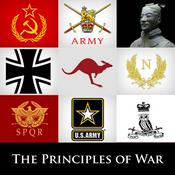
O The Principles of War - Lessons from Military History on Strategy, Tactics, Doctrine and Leadership.
Professional Military Education in 30 minute sessions. Historic Battles study through current doctrine to gain lessons learned. Tactics, Strategy, Combined Arms, Military Leadership in a format for Unit PME programs.
We study the great battles to draw the lessons on strategy, tactics and leadership. Get your lessons learned here rather than in AAR format.
Strona internetowa podcastuSłuchaj The Principles of War - Lessons from Military History on Strategy, Tactics, Doctrine and Leadership., 8:10 i wielu innych podcastów z całego świata dzięki aplikacji radio.pl
Uzyskaj bezpłatną aplikację radio.pl
- Stacje i podcasty do zakładek
- Strumieniuj przez Wi-Fi lub Bluetooth
- Obsługuje Carplay & Android Auto
- Jeszcze więcej funkcjonalności
Uzyskaj bezpłatną aplikację radio.pl
- Stacje i podcasty do zakładek
- Strumieniuj przez Wi-Fi lub Bluetooth
- Obsługuje Carplay & Android Auto
- Jeszcze więcej funkcjonalności

The Principles of War - Lessons from Military History on Strategy, Tactics, Doctrine and Leadership.
Zeskanuj kod,
pobierz aplikację,
zacznij słuchać.
pobierz aplikację,
zacznij słuchać.
The Principles of War - Lessons from Military History on Strategy, Tactics, Doctrine and Leadership.: Podcasty w grupie
 Polska