Słuchaj tego podcastu za darmo w aplikacji: Pobierz za darmo z App Store
radio.pl
Sleep timer
Zapisz stacje
40 odcinków
Ep 37: How to Make Sure AI Recommends Your Wine or Spirits Brand
23.09.2026 | 1 godz.Like it or not, AI is now the gatekeeper between your wine or spirits brand and your consumer. So how do you ensure that when consumers go looking for a product, that you come up in the recommendations?
Felicity and Lulie do a deep dive into the evidence and surface with the answer as to why AI recommends some products and not others. And the news is good for small brands — structure your data properly, and AI might recommend you over big brands with huge digital footprints.
But should brands be using AI to create their marketing in the first place? Felicity and Lulie debate when AI works, when it produces obvious slop, and why AI can make consumers so angry that they start vandalising public advertising. Plus, Coca-Cola’s controversial AI Christmas ads, the possible return of the wine critic, Felicity’s war on German flies, and the critical question of whether being polite to your AI will save you when the robots rebel.
Meet Your Hosts:
Lulie Halstead founded and led international consumer research and strategy consultancy Wine Intelligence, and led it to a successful PE exit. Today she is a renowned global beverage alcohol and wine sector specialist, focused on consumer behaviour, strategy, retail and hospitality. An accomplished keynote speaker, she has spoken at more than 70 international events over the past 20 years.
Felicity Carter is an award-winning wine and drinks journalist, editor and content strategist. She led Meininger’s Wine Business International to become the world’s most must-read wine trade magazine, and was founding Executive Editor of The Drop/Pix, which the Wall Street Journal named one of the most trusted sources of wine information. A regular keynote speaker, she was named a 2024 Industry Leader by WineBusiness Monthly. Her Drinks Insider podcast won the 67 Pall Mall Global Wine Communicator Award for Audio.
Chapters
(00:00:04) - Introduction: AI Nicknames and Today's Question
(00:02:10) - AI Extinction Risk and Perspective
(00:03:33) - How We Use AI Personally
(00:09:40) - Testing AI: Whiskey Recommendations
(00:12:51) - Testing AI: Wine Recommendations and the Tesco Effect
(00:15:11) - The Incumbency Problem and John Lewis Case Study
(00:17:56) - AI vs Traditional SEO
(00:24:35) - How the Drinks Trade Is Using AI
(00:29:36) - Trust Gaps and AI Policy in Wine Businesses
(00:31:21) - Debating AI Writing Quality
(00:36:42) - Consumer Backlash Against AI Marketing
(00:41:11) - Coca-Cola AI Ad Case Study
(00:44:37) - When AI Marketing Works: The Sibling Ads Study
(00:46:34) - Practical Tips: Getting Your Brand Surfaced in AI
(00:53:38) - Third-Party Endorsements and Testing Your AI Visibility
(00:57:13) - Final Thoughts: Democratization vs Incumbency
(00:59:38) - Closing and Sign-offEp 36: The Hidden Ingredient Linking Beer, Coke and Chilled Reds
02.09.2026 | 46 min.Why do cool drinks feel so refreshing? And how did coldness become an essential selling point for drinks?
The link between chilled drinks and refreshment is so common today that it feels natural — but it took 2,000 years of innovation to get there.
In this entertaining, Freakonomics-style episode, hosts Felicity and Lulie trace how drinks went from being served at room temperature, to being so cold it’s hard to distinguish the flavours. Their story takes in snow-cooled water, a Bostonian entrepreneur who built a global trade empire from pond ice, and an Australian printer who noticed that typeface became cooler after he cleaned it.
Along the way they race how Champagne ended up in silver ice buckets and how Coca-Cola’s decision to sell branded $12 coolers to store owners changed the world of drinks forever — and what this means for refreshment in a heating world.
Meet Your Hosts:
Lulie Halstead founded and led international consumer research and strategy consultancy Wine Intelligence, and led it to a successful PE exit. Today she is a renowned global beverage alcohol and wine sector specialist, focused on consumer behaviour, strategy, retail and hospitality. An accomplished keynote speaker, she has spoken at more than 70 international events over the past 20 years.
Felicity Carter is an award-winning wine and drinks journalist, editor and content strategist. She led Meininger’s Wine Business International to become the world’s most must-read wine trade magazine, and was founding Executive Editor of The Drop/Pix, which the Wall Street Journal named one of the most trusted sources of wine information. A regular keynote speaker, she was named a 2024 Industry Leader by WineBusiness Monthly. Her Drinks Insider podcast won the 67 Pall Mall Global Wine Communicator Award for Audio.
Chapters
(00:00:04) - A Question of Drinks
(00:00:30) - A Question of Drinks
(00:01:53) - Cold Drinks
(00:03:36) - Why Does a Cold Drink Feel Remarkably Good?
(00:06:39) - Wine transport in the 1980s
(00:07:49) - Cold Drinks
(00:10:05) - Seneca on Cold Drinks
(00:14:58) - Cold Drinks in the Habsburg Empire
(00:15:58) - The Ice King
(00:20:32) - Refrigeration
(00:25:34) - How did pasteurization intersect with refrigeration?
(00:26:02) - Wine and the changing tastes
(00:27:25) - Ranting in the World of Wine...
(00:28:12) - Chilled Off: The Science of Wine
(00:28:48) - Coca Cola: Cold Drinks
(00:34:50) - What is the appeal of Extra Cold?
(00:37:28) - Temperature and refreshment
(00:41:46) - What do we lose with the ritual in drinking wine?
(00:43:28) - A Question of DrinksEp 35: How Aperol Spritz Conquered a Market But Opened the Door to Its Competitors
05.08.2026 | 1 godz. 3 min.How did the spritz take over every pub, bar and supermarket this summer? Is it a fad — or is it the result of clever marketing?
While Aperol dates back to 1919, the seeds of its success were planted in 2003, when Campari bought the brand and introduced the aperitivo moment to Germany. But, luckily for them, their bright orange drink coincided with the expanding of Prosecco production.
While the timing couldn’t have been more serendipitous, the Aperol spritz became a victim of its own success. Campari hadn’t just built a brand — they’re introduced a whole new drinking occasion to the market, and competitors soon moved in. Today, drinkers can choose between the Aperol spritz, the Hugo, the limoncello spritz, and even the tequila spritz.
But how that happened is a highly entertaining story, involving a millionaire enclave in Germany, a bored bar tender in northern Italy, and an Australian winemaker who had a run in with the Australian Taxation Office.
Meet Your Hosts:
Lulie Halstead founded and led international consumer research and strategy consultancy Wine Intelligence, and led it to a successful PE exit. Today she is a renowned global beverage alcohol and wine sector specialist, focused on consumer behaviour, strategy, retail and hospitality. An accomplished keynote speaker, she has spoken at more than 70 international events over the past 20 years.
Felicity Carter is an award-winning wine and drinks journalist, editor and content strategist. She led Meininger’s Wine Business International to become the world’s most must-read wine trade magazine, and was founding Executive Editor of The Drop/Pix, which the Wall Street Journal named one of the most trusted sources of wine information. A regular keynote speaker, she was named a 2024 Industry Leader by WineBusiness Monthly. Her Drinks Insider podcast won the 67 Pall Mall Global Wine Communicator Award for Audio.
Chapters
(00:00:04) - A Question of Drinks
(00:00:30) - A Question of Drinks
(00:02:51) - The Spritz
(00:05:05) - Search for Hugo Spritz Up 694% in a Week
(00:07:04) - M&S Spritz
(00:08:16) - The Rise of the Spritz
(00:09:32) - Spritz
(00:10:30) - Campari's Aperol and the Prosecco Sp
(00:15:43) - The Hugo Spritz
(00:17:27) - Saint Germain and the elderflower liqueur
(00:18:47) - Aperol Spritz: The
(00:24:25) - The Sparklit
(00:25:07) - Spritz and the future of alcohol
(00:26:36) - Campari's Aperol Spritz: Moderation and Low
(00:30:40) - Aperol's 'panic' over packaging
(00:34:36) - What Did You Do During Lockdown?
(00:35:34) - Family themed nights during the pandemic
(00:36:40) - The Australian Tax Office
(00:41:07) - Campari vs Bacardi: The Spritz
(00:46:43) - Aperol Spritz
(00:51:30) - How Germans make their spritz
(00:52:36) - The Limoncello Spritz
(00:57:09) - Gentian Rudolph on Quality and Drinking
(00:59:07) - Aperol and Campari: The
(01:00:51) - What occasion should we own as a podcast?
(01:01:30) - A Question of DrinksEp 34: How the Wine Industry Learned to Bore Its Best Customers
23.07.2026 | 1 godz. 9 min.Felicity has just returned from a conference in Dublin devoted to drinking studies, an academic field that examines alcohol's role in history and culture from angles the wine world rarely considers. This prompts Lulie to reveal the ordeal she suffered at a recent tasting, where the audience had to wait for 42 agonising minutes before tasting a single wine. That's the signal for Lulie and Felicity to start arguing about whether wine is boring. Does one bad presenter indict a whole industry? Is reverence for fine wine earned or performed? And who is the star of a wine tasting — the wine or the consumer?
Along the way they cover the Robert Hodgson wine judging experiment, Orley Ashenfelter's rainfall-based vintage predictions and the fury it once provoked, the 1976 Judgment of Paris and what it did and didn't prove about prestige, and a run of case studies from La Vieille Ferme's accidental rebrand as "chicken wine" to Archer Roos and emotion-first advertising. Who is right in the end? And what's your own opinion? There's a lot to unpack.
Meet Your Hosts:
Lulie Halstead founded and led international consumer research and strategy consultancy Wine Intelligence, and led it to a successful PE exit. Today she is a renowned global beverage alcohol and wine sector specialist, focused on consumer behaviour, strategy, retail and hospitality. An accomplished keynote speaker, she has spoken at more than 70 international events over the past 20 years.
Felicity Carter is an award-winning wine and drinks journalist, editor and content strategist. She led Meininger’s Wine Business International to become the world’s most must-read wine trade magazine, and was founding Executive Editor of The Drop/Pix, which the Wall Street Journal named one of the most trusted sources of wine information. A regular keynote speaker, she was named a 2024 Industry Leader by WineBusiness Monthly. Her Drinks Insider podcast won the 67 Pall Mall Global Wine Communicator Award for Audio.
Chapters
(00:00:04) - A Question of Drinks
(00:00:30) - A Question of Drinks
(00:02:12) - How to make wine more interesting
(00:03:25) - The 42 Minute Winemaker
(00:04:11) - The joy of a wine tasting
(00:06:47) - The Bad Presentation
(00:10:38) - Richard Rantler on
(00:13:16) - The Future of Wine Tasting
(00:16:39) - The Problem with Presentations
(00:17:34) - Wine as a condiment
(00:19:33) - Wine as an Identity
(00:22:35) - The New World of Wine
(00:23:38) - Luxury and the Veblen Effect
(00:26:33) - The Judgment of Paris
(00:27:08) - The Judgment of Paris
(00:32:38) - The Importance of Respect for Wine
(00:35:55) - Do Cheesecake Judges Are Frauds?
(00:38:30) - Don't Trust the Experts in Wine
(00:42:24) - Bringing more joy, happiness into wine
(00:42:53) - The French wine called Chicken Wine
(00:45:04) - Vineland
(00:46:48) - The Presentation Problem
(00:48:39) - Wine Experts and the Question of Treasured Objects
(00:53:26) - The role of humor in wine
(00:55:07) - Advertising effectiveness and the wine
(00:56:33) - Archer Ruse Canned Wine Promo
(00:57:09) - Wine Advertising
(00:59:05) - How to separate trade communication from consumer communication
(01:00:47) - "Build the Wine Round"
(01:01:47) - Are We Now Revealing That You're Not Normal?
(01:03:08) - Wine Presentations: Better Presentations
(01:05:04) - Selling Your Own Wine
(01:06:17) - Questions of DrinksEp 33: Treasury Wine Estates' Great Brand Purge: Genius or Disaster?
25.06.2026 | 1 godz. 6 min.Treasury Wine Estates, one of the world’s biggest wine companies, has announced it is about to cut more than 40 brands from its portfolio, including names with deep roots in history, like Seppelts. Instead, it will concentrate on 10 ‘regional heroes’, and three main brands: Penfolds, DAOU and Matua.
In this latest episode, Lulie and Felicity look at what this decision means. Lulie argues the move is overdue and rational, because consumers buy relevance, not heritage, and a company carrying 40 underperforming brands is carrying 40 liabilities it doesn't need. Felicity pushes back, arguing that some of this is cultural vandalism — since wine is more than a branded good. It’s also cultural heritage.
It raises a fundamental question: should companies optimise purely for consumers, or do they have a responsibility to history, even when it doesn’t produce commercial results? Lulie and Felicity both have strong opinions and sparks fly as they argue over whether wine is just a business like any other, or an institution with a debt to the past.
Meet Your Hosts:
Lulie Halstead founded and led international consumer research and strategy consultancy Wine Intelligence, and led it to a successful PE exit. Today she is a renowned global beverage alcohol and wine sector specialist, focused on consumer behaviour, strategy, retail and hospitality. An accomplished keynote speaker, she has spoken at more than 70 international events over the past 20 years.
Felicity Carter is an award-winning wine and drinks journalist, editor and content strategist. She led Meininger’s Wine Business International to become the world’s most must-read wine trade magazine, and was founding Executive Editor of The Drop/Pix, which the Wall Street Journal named one of the most trusted sources of wine information. A regular keynote speaker, she was named a 2024 Industry Leader by WineBusiness Monthly. Her Drinks Insider podcast won the 67 Pall Mall Global Wine Communicator Award for Audio.
Chapters
(00:00:04) - A Question of Drinks
(00:00:30) - A Question of Drinks
(00:01:43) - Addice to Wine
(00:02:55) - Treasury Wine Estates: The future of Australian wine
(00:07:15) - Australia's Biggest Wine Company to Shut Down 10 Brands
(00:08:14) - In the Elevator With Wine
(00:10:08) - Fosters vs Treasury: The Decisions Made
(00:12:26) - Treasury's plan to reduce their wine portfolio by 30
(00:14:37) - Wine and the future
(00:16:12) - Treasury's Down Rose Buying
(00:17:52) - Robert Foy Criticizes Treasury's Dow Wines Acquisition
(00:21:35) - Brexit and the Brand portfolio
(00:22:07) - The Glenrothes portfolio review
(00:23:51) - Yellow Glen
(00:26:20) - Sparkling Red
(00:28:00) - Sepulch
(00:30:31) - Wolf Blast
(00:32:27) - Wolf Blast
(00:33:58) - The Wolf Blouse
(00:34:42) - The Secret to Marketing Your Wine
(00:35:06) - How to Build a Successful Wine Brand
(00:35:49) - The story of Wolf Blasse
(00:36:59) - Wolf Blast
(00:38:23) - Chasing Big Reds in a
(00:39:58) - Wolf Blouse Reservation
(00:42:23) - Blue Nun
(00:45:41) - As for the future of brands,
(00:46:58) - Old Fashioned vs Retro: What's The Difference?
(00:48:58) - Wolf Blasse: Going Back to the Archive
(00:52:05) - Does History Matter in Australian Wine?
(00:54:03) - The role of corporations in wine
(00:56:02) - 19 crimes
(00:56:24) - 19 Crimes Wine For Men
(00:59:57) - 19 Crimes: The Wine for Young Men
(01:01:25) - Why didn't Tullist Make 19 Crimes?
Więcej Biznes podcastów








Trendy w podcaście Biznes


















O A Question of Drinks
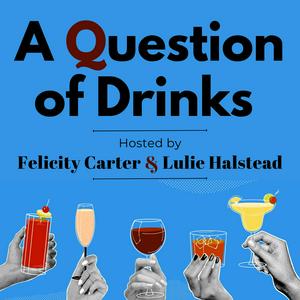
Why do we drink what we do? Is it just the taste — or are there other drivers behind what's on the shelf? Drinks data expert Lulie Halstead joins writer and editor Felicity Carter to explore the economic, technological and social turning points that determine what's in the glass.
Strona internetowa podcastuSłuchaj A Question of Drinks, Odd Lots i wielu innych podcastów z całego świata dzięki aplikacji radio.pl
Uzyskaj bezpłatną aplikację radio.pl
- Stacje i podcasty do zakładek
- Strumieniuj przez Wi-Fi lub Bluetooth
- Obsługuje Carplay & Android Auto
- Jeszcze więcej funkcjonalności
Uzyskaj bezpłatną aplikację radio.pl
- Stacje i podcasty do zakładek
- Strumieniuj przez Wi-Fi lub Bluetooth
- Obsługuje Carplay & Android Auto
- Jeszcze więcej funkcjonalności

A Question of Drinks
Zeskanuj kod,
pobierz aplikację,
zacznij słuchać.
pobierz aplikację,
zacznij słuchać.
 Polska