Słuchaj tego podcastu za darmo w aplikacji: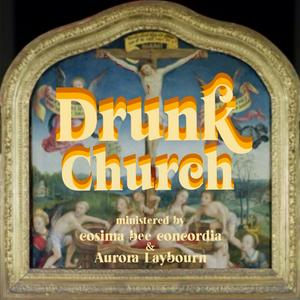 Pobierz za darmo z App Store
radio.pl
Sleep timer
Zapisz stacje
31 odcinków
An Academic Breakdown: Invoking Free Speech to End Free Speech
06.12.2025 | 1 godz. 11 min.
When academic freedom is under attack, what do we do? Is it enough to fight back from within—especially when the university itself is embedded in larger systems of oppression?On this episode of Drunk Church, we examine how academia has become a petri dish for racist and transphobic campaigns aimed at eroding our most basic freedoms—a protected environment where these ideologies are cultivated, refined, and strengthened before being released into the body politic. We ask why universities are uniquely positioned as incubators for these movements, and whether the illness we’re witnessing is a contamination from outside, or a symptom of something already rotting within the ivory tower itself.Is resistance enough if the presence of leftist academics risks shoring up the very institution they critique? If the ivory tower collapses under the weight of its own decay, is that necessarily a bad thing? And are there ways not only to resist this plight, but to refuse it altogether—to stop allowing ourselves to be used as hosts for campaigns that thrive on our engagement and our silence? In what ways can we contain the onslaught of this plague?This episode marks a first in Drunk Church history: an anonymous interview with a professor who has witnessed firsthand how the university sets instructors up to fail their students. Their testimony offers a cautionary tale of how administrative pressures quietly conscript academics into enforcing bigotry and fascism—and how attempts at institutional “neutrality” allow real, material harm to spread unchecked like a virus through classrooms and across campuses. In the end only you can choose whether it's time to walk away. Hosted on Acast. See acast.com/privacy for more information.
Welcome To Drunk Church 2.0: Confirmation
04.10.2024 | 49 min.
The old has passed away; behold, the new has come. Hosted on Acast. See acast.com/privacy for more information.
Bimbo Theory: A Gender Maximalist Guide to Having It All
04.03.2024 | 58 min.
We’re not like other girls… Join us for our most recent episode as we offer a critical re-evaluation of the figure of the bimbo and deconstruct societal preconceptions of femininity at large through our own cosima bee concordia’s essay “My Official Bimbo Diagnosis”. With our two remaining brain cells we ponder, why does everyone seem to hate femininity so much, and why it is that femininity is seen as a threat to feminism? We argue (to the degree that bimbos can string ideas together) that femmephobia is in part the result of an aesthetic double bind. This double bind normatively expects us all to perform gender while also punishing or shaming those who perform gender “too much”. The “too much” of gender is dangerous because it wrests us from the pervasive myth that gender is natural. In a patriarchal world where the masculine is the neutral ideal, femininity is always “too much” and thus provides a useful scapegoat to perpetuate misogyny in both men who hate women and feminists alike. In an effort to challenge these totalizing power dynamics we examine the extent to which it is both possible, and necessary -- albeit not without risk -- to take pleasure in gender even though it is gender that oppresses us. In what ways can we re-purpose the too much of gender? How can the BDSM dungeon as seen through Susan Stryker’s “Dungeon Intimacies” be “a technology for the production of (trans)gendered embodiment”? And finally, could it be that the only gender binary that matters is Gender Minimalism vs. Gender Maximalism?For discussions on all those questions and more, listen to “Bimbo Theory: A Gender Maximalist Guide to Having It All”Read "My Official Bimbo Diagnosis" by cosima bee concordiaTo not miss out on episodes and get bonus content, sign up for our Patreon -- you're what makes this show possible!Intro and outro song is "Bless You" by the Ink Spots Hosted on Acast. See acast.com/privacy for more information.
Spectres of Ableism: A Halloween Special!
01.11.2023 | 1 godz. 8 min.
We are at most only temporarily able-bodied and minded. While we may live our lives more or less aware of our relationship with disability and while we may experience different periods of health and illness, the fact that we are all pre-disabled is an immutable aspect of the human condition. For our second annual Drunk Church Halloween Special we explore the dark and dusty contours of this one undeniable truth. In what ways does this insight effect our ability to create solidarity with one another across different experiences? Given that disability is a fundamental condition to being human, what does it mean to reject notions of cure and instead demand conditions for our own flourishing? Utilizing Susan Sontag's "Illness as a Metaphor" as a point of departure, we lay out our own personal histories of disability to show how our relationship with disability is inextricably linked to our understanding of the self. The lens of disability exposes the urgent need to confront the eugenic specters that loom large over every aspect of our lives in order to truly care for one another.We asked listeners to share their experience with disability with us by telling us ways that disability has influenced the way they experience the world, and at the end of the episode we share a selection of them with you.Happy Halloween and god bless all the goth mommies and daddies of the world! Hosted on Acast. See acast.com/privacy for more information.
Everything is Possible and Nothing is True: Mia Khalifa, Fake News, Free Speech, and the Hope for a Free Palestine
17.10.2023 | 27 min.
This is a special mini episode, driven by the immediacy of the horrors happening right now in the Gaza Strip.Mia Khalifa, controversial public figure and Lebanese ex-porn star, was publicly reprimanded and fired last week by Playboy for her "disgusting actions"—a.k.a. voicing solidarity with the Palestinian people in their struggle for liberation against settler colonial apartheid and genocide. Obvious contradictions arise here that can be extrapolated to better understand the entire structure of how easily signs are twisted and power is inverted to justify the horrors of imperialist and colonial power, as well as how our marginalized identities are used against us in an attempt to turn us against the most marginalized for the lie of our own meager benefit.It’s no mistake that “terrorism” is only used to describe violence committed by politically disenfranchised actors in the absence of state sanctioned power. State power commits much more violence, but naturalizes and invisibilizes it as necessary and normal. Only resistance to the state is terrorism, which is why terrorism is such a powerful idea in order to confound where power actually lies—it seems as if it is suddenly the disenfranchised who inflict the greatest horrors, the oppressed made oppressor and the oppressor made oppressed. If you don’t believe in violence, instead of condemning the disenfranchised you should be steadfastly in solidarity with oppressed peoples in their struggle for liberation from the tyranny of state power, which constructs, commits, and excuses the vast majority of violence. If saying you don’t believe in violence leads you to be on the side of colonial and imperialist power, all you really believe in is the comfort, stability, and privilege of the status quo.Free Palestine Hosted on Acast. See acast.com/privacy for more information.
Więcej Sztuka podcastów
 Fashion Neurosis with Bella FreudSztuka, Społeczeństwo i Kultura, Moda i Uroda, Relacje
 Sztuka Poza RamamiSztuka
 Big Book Podcast. O książkachSztuka, Książki
 Nie-winna SztukaSztuka
 Pierwsza MłodośćSztuka, Wiadomości, TV i Film, Wiadomości Codzienne, Recenzje Filmów, Sztuki Wizualne
 Literatura PrzepięknaSztuka, Książki
 MysteryTVSztuka, Książki
 Ludzie w UbraniachSztuka, Moda i Uroda
 Wszystkie książki świataSztuka, Książki
 Articles of InterestSztuka, Moda i Uroda
Trendy w podcaście Sztuka
 Eleanor & Alasdair Read ThatSztuka, Komedia, Książki
 STEFAN ŻEROMSKI - PRZEDWIOŚNIESztuka, Książki
 Mint Podcast o kulturzeSztuka
 PhotoWork with Sasha Wolf | Conversations on PhotographySztuka, Sztuki Wizualne
 Ikony stylu lat 90. i 2000.Sztuka, Społeczeństwo i Kultura, Moda i Uroda
 Lernen Sie Deutsch!Sztuka, Książki
 Rebuilding The RenaissanceSztuka, Historia
 Every OutfitSztuka, Moda i Uroda
 DishSztuka, Komedia, Społeczeństwo i Kultura, Jedzenie
 Godzina SzumuSztuka
 ArtRage - wcale nie podcastSztuka, Książki
- Articles of InterestSztuka, Moda i Uroda
 Poczet pisarzy polskich | Radio KatowiceSztuka, Książki
 Бунт у БібліотеціSztuka, Edukacja, Książki, Samodoskonalenie
 Po co sztuka? Galeria Osobliwości Grażyny BastekSztuka
 SłuchanockiSztuka, Książki
 Przed obrazem – muzeum w słuchawkachSztuka, Sztuki Wizualne
 Vogue Polska LivingSztuka, Społeczeństwo i Kultura, Design
 Plik tekstowySztuka, Książki
 Pan Tadeusz. Adam MickiewiczSztuka, Książki
 Normalnie o tej porzeSztuka, Nauka, Społeczeństwo i Kultura, Design, Miejsca i Podróże
 Wehikuł HarelSztuka, Historia, Społeczeństwo i Kultura, Dokumentacja, Moda i Uroda
 CoolCorki Kulturki - rozmowy z dziecmi o ksiazkach dla dzieciSztuka, Książki
 Gablotki - Podcast o sztuceSztuka
 The Magnus ArchivesSztuka, Fikcja, Dramat, Sztuki Sceniczne, Fantastyka Naukowa
 ill-advised by Bill NighySztuka, Komedia, Muzyka, Książki
 Raport o stanie modySztuka, Społeczeństwo i Kultura, Moda i Uroda
- Ludzie w UbraniachSztuka, Moda i Uroda
- Nie-winna SztukaSztuka
O Drunk Church
After their time as philosophy undergrads gorging on cheap wine and bread, co-hosts cosima bee concordia and Aurora Laybourn reunite almost a decade later for Drunk Church, a podcast haunting the liminal spaces between anti-fascist theory and religious eroticism.Named for a gathering of queers where art, drink, and communion were shared outside of the confines of formal institutions, Drunk Church seeks to transgress, subvert, and blaspheme the religious for our own pleasure and thriving. In a world that feels like it’s ending and with fascism ascendant, how do we to build shared ritual, meaning, and narrative on our own terms? Come get drunk on the blood of God! Hosted on Acast. See acast.com/privacy for more information.
Strona internetowa podcastuSłuchaj Drunk Church, Fashion Neurosis with Bella Freud i wielu innych podcastów z całego świata dzięki aplikacji radio.pl
Uzyskaj bezpłatną aplikację radio.pl
- Stacje i podcasty do zakładek
- Strumieniuj przez Wi-Fi lub Bluetooth
- Obsługuje Carplay & Android Auto
- Jeszcze więcej funkcjonalności
Uzyskaj bezpłatną aplikację radio.pl
- Stacje i podcasty do zakładek
- Strumieniuj przez Wi-Fi lub Bluetooth
- Obsługuje Carplay & Android Auto
- Jeszcze więcej funkcjonalności

Drunk Church
Zeskanuj kod,
pobierz aplikację,
zacznij słuchać.
pobierz aplikację,
zacznij słuchać.
 Polska