

Słuchaj tego podcastu za darmo w aplikacji: Pobierz za darmo z App Store
radio.pl
Sleep timer
Zapisz stacje
262 odcinków
Blaine Billingsley: OpenAI designer on the collaboration problem AI hasn't solved yet
23.09.2026 | 28 min.Blaine Billingsley is a staff designer at OpenAI, and his path there was anything but a straight line. He studied music composition and comparative religion, played guitar in Texas for a living (he remembers checking his bank account, seeing seven dollars, and feeling pumped), then drove to San Francisco and took a data entry job at a startup.
This is a preview of a premium episode. To listen to the whole thing, join our premium membership on Susbtack: https://designbetterpodcast.com/p/blaine-billingsley
The engineers taught him to script his way through the work in a couple of hours, and he spent the rest of the day learning from them. From there he went on to companies big and small, including a long run on Gmail.
Blaine has an allergy to corporate jargon that we found interesting. He’s known amongst his colleagues for rewriting product specs to get absolute clarity on a project, and for raising his hand in meetings to ask, “what do we really mean by ‘create a command center for work’”.
We talk about why a design principle only helps if you could reasonably disagree with it, and his counterintuitive advice for working with a pushy PM: the best way to have influence is to be influenced.
Then we get into how design actually works inside OpenAI. Blaine walks us through what goes into an eval, and the product design plugin he built with one engineer, whose biggest fans turned out to be the PMs and engineers who were starved for a design partner.
Bio
Blaine Billingsley is a member of the design staff at OpenAI, where he works on making ChatGPT a daily tool for designers and built a product design plugin focused on translation workflows like image-to-code. Before OpenAI, he was a Product Design Architect at Slack and a Staff Experience Designer at YouTube, and earlier held design roles at Airbnb, where he created a system of Host Guides, and Google, where he worked on Inbox by Gmail.
He was also the sole designer at Pattern Technologies, an AI-powered sales startup acquired by Workday. Blaine studied music composition and comparative religion, played guitar professionally in Texas, and got his start in tech doing data entry at a San Francisco startup. He's known for his allergy to jargon, his love of a clear process, and his belief that a designer's job is to represent the user.
Books & links mentioned
Show notes
Blaine Billingsley
blaineb
Blaine Billingsley — Design Mentor
@blaineranium
The Systems Bible
The OpenAI Product Design Plugin
Mid-air Thief
Vargamae: Volume I of the Truth and Justice Pentalogy
***
Premium Episodes on Design Better
This is a premium episode on Design Better. We release two premium episodes per month, along with two free episodes for everyone.
New premium subscriber benefit:
Weekly Portfolio Club calls this summer helped our paid subscribers build portfolios that land great jobs. Experts joined us weekly to provide feedback, and we compiled lessons from each session into a portfolio design guide.
We’ve launched a private Slack workspace…join now to connect with designers, product leaders & creative practitioners in our community.
And get a behind-the-scenes pass to every episode with The Roundup, where each week we bring you insights and actionable tactics from recent episodes.
Premium subscribers get access to the documentary Design Disruptors and our growing library of books. You’ll also get access to our monthly AMAs with former guests, ad-free episodes, discounts and early access to workshops, and our monthly newsletter The Brief that compiles salient insights, quotes, readings, and creative processes uncovered in the show.
And subscribers at the annual level now get access to the Design Better Toolkit, which gets you major discounts and free access to tools and courses that will help you unlock new skills, make your workflow more efficient, and take your creativity further.
Upgrade to paid
***
Learn more about your ad choices. Visit megaphone.fm/adchoicesMack Paul: Co-author of Miracle Road on designing places where innovation happens
17.09.2026 | 44 min.In the mid-1950s, North Carolina was one of the poorest states in the country. Its economy ran on tobacco, furniture, and textiles — all three in decline — and its universities were turning out talent that promptly left for somewhere with better jobs.
Find bonus content and more on our Substack: https://designbetterpodcast.com/p/mack-paul-co-author-of-miracle-road
Today the stretch of pine woods between Raleigh, Durham, and Chapel Hill is the largest research park in the United States. The barcode came out of it. So did AZT, ultrasound, and AstroTurf.
Our guest Mack Paul spent years working out how that happened. He’s the co-author of Miracle Road, a history of Research Triangle Park (known as RTP) written with his father — a journalist — and built on about 160 interviews with the scientists, planners, and politicians who were there. It’s out October 6th.
Hundreds of research parks have been attempted, and most failed. RTP started later than Silicon Valley or Route 128, with no defense money, no entrepreneurial culture, and universities that were openly uneasy about mixing academia with industry. But it worked anyway.
Mack’s answer to why is not what you might expect. The park itself was almost an afterthought. What made it work was a set of long, unglamorous commitments: a governor who went industry hunting, a community college system that promised to train any company’s workers for free, and a decision about desegregation that made North Carolina a better bet than Virginia — which is a big part of why IBM came in 1965.
We talk about what made it take off, the challenges now as RTP tries to become something denser and less car-dependent, and what it takes to build a place people actually want to be. We also talk about what it’s like to write a book with your father.
Bio
Mack Paul is a founder of Morningstar Law Group in Raleigh, where he has spent 30 years on the legal and political machinery behind how places get built — zoning, land use, environmental permitting, public-private partnerships, and public financing for infrastructure, mostly on large mixed-use and urban infill projects in North Carolina’s Triangle region.
He’s a LEED Accredited Professional and served six years as the public member of the NC Building Code Council. He sits on the NC State Design Guild board, has advised the modernist preservation nonprofit US Modernist, helped organize the “Build Raleigh Better” symposium, and co-founded a development company aimed at raising design quality in the region. He teaches Real Estate Development Law at NC State.
Mack is the co-author, with his father, of Miracle Road: The Story of Research Triangle Park, published by Duke University Press.
***
Premium Episodes on Design Better
This ad-supported episode is available to everyone. If you’d like to hear it ad-free, upgrade to our premium subscription, where you’ll get an additional 2 ad-free episodes per month (4 total). Premium subscribers also get access to the documentary Design Disruptors and our growing library of books. New premium subscriber benefit:
Get design and career support in Design Club
Weekly Portfolio Club calls this summer helped our paid subscribers build portfolios that land great jobs. Experts joined us weekly to provide feedback, and we compiled lessons from each session into a portfolio design guide.
We’ve launched a private Slack workspace…join now to connect with designers, product leaders & creative practitioners in our community.
And get a behind-the-scenes pass to every episode with The Roundup, where each week we bring you insights and actionable tactics from recent episodes.
You’ll also get access to our monthly AMAs with former guests, ad-free episodes, discounts and early access to workshops, and our monthly newsletter The Brief that compiles salient insights, quotes, readings, and creative processes uncovered in the show. And subscribers at the annual level now get access to the Design Better Toolkit, which gets you major discounts and free access to tools and courses that will help you unlock new skills, make your workflow more efficient, and take your creativity further.
Upgrade to paid
***
Learn more about your ad choices. Visit megaphone.fm/adchoicesFederico Casalegno: Samsung EVP and MIT Design Lab founder on what 20,000 years of human creativity means for design today
10.09.2026 | 24 min.When Samsung’s CEO asked Federico Casalegno to redesign the cameras on the company’s phones, Federico told him he was the wrong person for the job. He wasn’t an optical engineer. He didn’t understand cameras. What he understood was storytelling — and he pointed to the Lascaux caves in France, where people were marking walls twenty thousand years ago for the same reason we hold up our phones today: to capture a moment, and tell it to someone we love.
Find the full episode on our Substack:https://designbetterpodcast.com/p/federico-casalegno
That’s the kind of answer you get from a designer who arrived by way of studying human society. Federico is Head of Samsung’s Global Design Studios, with teams spread across San Francisco, Europe, and Seoul. Before that he spent two decades at MIT, where he co-founded the MIT Design Lab with Bill Mitchell, and before that he was a social scientist embedded with engineers and psychologists at Philips Design in the nineties — back when “cross-disciplinary” wasn’t yet a word anyone put on a job posting.
We talk about what that looks like in practice at the scale Samsung operates at. His team builds digital twins of human ears — thousands of 3D and 4D scans across real demographics — then simulates millions of variations to figure out how an earbud should fit. Then they strap the buds onto robots and make them run. Then they test with actual humans, because at some point a person still has to decide what “comfortable” means.
There’s a phrase Federico kept returning to: technology without humanity is merely perfection without purpose. The designer’s role is problem making first, problem solving later.
We also get into how critique works inside a company that speaks a dozen native languages, what he actually looks for when hiring, and the French philosopher who, at 102, looked at his calendar and said he was booked until next year.
Bio
Federico Casalegno is Executive Vice President at Samsung, where he leads product experience innovation across business units and heads the company’s Global Design Studios. Reporting directly to the CEO, he builds teams of designers, engineers, creative technologists, and strategists working on advanced design and next-generation experience planning. As head of design and AI, he established Samsung’s Computational Design function and leads digital transformation across the organization.
Before Samsung, Federico spent two decades at MIT, where he founded the MIT Design Lab and the MIT Mobile Experience Lab and taught at MIT and the MIT Media Lab, researching the intersection of design, AI, and emerging technology. He previously worked at Motorola and Philips Design, and holds a PhD in sociology from the Sorbonne.
***
Premium Episodes on Design Better
This is a premium episode on Design Better. We release two premium episodes per month, along with two free episodes for everyone. New premium subscriber benefit:
Get design and career support in Design Club
Weekly Portfolio Club calls this summer helped our paid subscribers build portfolios that land great jobs. Experts joined us weekly to provide feedback, and we compiled lessons from each session into a portfolio design guide.
We’ve launched a private Slack workspace…join now to connect with designers, product leaders & creative practitioners in our community.
And get a behind-the-scenes pass to every episode with The Roundup, where each week we bring you insights and actionable tactics from recent episodes.
Premium subscribers get access to the documentary Design Disruptors and our growing library of books. You’ll also get access to our monthly AMAs with former guests, ad-free episodes, discounts and early access to workshops, and our monthly newsletter The Brief that compiles salient insights, quotes, readings, and creative processes uncovered in the show.
And subscribers at the annual level now get access to the Design Better Toolkit, which gets you major discounts and free access to tools and courses that will help you unlock new skills, make your workflow more efficient, and take your creativity further.
Upgrade to paid
***
Visiting the links below is one of the best ways to support our show:
Masterclass: MasterClass is the only streaming platform where you can learn and grow with over 200+ of the world’s best. People like Steph Curry, Paul Krugman, Malcolm Gladwell, Dianne Von Furstenberg, Margaret Atwood, Lavar Burton and so many more inspiring thinkers share their wisdom in a format that is easy to follow and can be streamed anywhere on a smartphone, computer, smart TV, or even in audio mode. MasterClass always has great offers during the holidays, sometimes up to as much as 50% off. Head over to http://masterclass.com/designbetter for the current offer.
If you’re interested in sponsoring the show, please contact us at: sponsors@thecuriositydepartment.com
If you’d like to submit a guest idea, please contact us at: contact@thecuriositydepartment.com
Learn more about your ad choices. Visit megaphone.fm/adchoicesJonathan Adler returns: The minimalist inside the maximalist
02.09.2026 | 44 min.Jonathan Adler was one of our favorite guests, so we’ve been angling to get him back ever since. He started as a potter and now designs furnishings and interiors that are decadent, but layered with meaning and humor. A lot has happened since we last spoke: he had a retrospective at the Museum of Arts and Design — the same institution whose gift shop took a chance on his pots 32 years ago — and launched a sprawling collaboration with Michaels, which he calls a temple of craft.
Find bonus content and more on our Substack: https://designbetterpodcast.com/p/jonathan-adler-returns
We talk with Jonathan about what it felt like to stop making long enough to curate three decades of his own work, why he’s grateful he chose commerce over the gallery world, and whether people really are trading doomscrolling for making things with their hands.
Along the way, we talk about his father, the lawyer who painted — and why the maximalist you think you know insists he’s a minimalist. Also, much like our last conversation with Jonathan, there are some instances of adult language and humor, so if you have kids around it might be a good idea to throw on some headphones.
Bio
Potter, designer, and author Jonathan Adler launched his namesake brand after leaving his day job to pursue his first love: pottery. In 1993, Barneys bought his collection of pots, and five years later, he opened his first store in Soho.
Today, Jonathan Adler is a design company with retail locations worldwide, a thriving e-commerce site, a full slate of residential and commercial projects, and a global wholesale business. They strive to create luxe and livable interiors that are seriously designed, but don’t take themselves too seriously. Earlier this year, the Museum of Arts and Design mounted a retrospective of his work, presented in dialogue with pieces he curated from the museum’s own collection. He lives in New York with his husband, the writer Simon Doonan.
***
Premium Episodes on Design Better
This ad-supported episode is available to everyone. If you’d like to hear it ad-free, upgrade to our premium subscription, where you’ll get an additional 2 ad-free episodes per month (4 total). Premium subscribers also get access to the documentary Design Disruptors and our growing library of books. New premium subscriber benefit: we’ve launched a private Slack workspace…join now to connect with designers, product leaders & creative practitioners in our community.
And get a behind-the-scenes pass to every episode with The Roundup, where each week we bring you insights and actionable tactics from recent episodes.
You’ll also get access to our monthly AMAs with former guests, ad-free episodes, discounts and early access to workshops, and our monthly newsletter The Brief that compiles salient insights, quotes, readings, and creative processes uncovered in the show. And subscribers at the annual level now get access to the Design Better Toolkit, which gets you major discounts and free access to tools and courses that will help you unlock new skills, make your workflow more efficient, and take your creativity further.
Upgrade to paid
***
Visiting the links below is one of the best ways to support our show:
Masterclass: MasterClass is the only streaming platform where you can learn and grow with over 200+ of the world’s best. People like Steph Curry, Paul Krugman, Malcolm Gladwell, Dianne Von Furstenberg, Margaret Atwood, Lavar Burton and so many more inspiring thinkers share their wisdom in a format that is easy to follow and can be streamed anywhere on a smartphone, computer, smart TV, or even in audio mode. MasterClass always has great offers during the holidays, sometimes up to as much as 50% off. Head over to http://masterclass.com/designbetter for the current offer.
If you’re interested in sponsoring the show, please contact us at: sponsors@thecuriositydepartment.com
If you’d like to submit a guest idea, please contact us at: contact@thecuriositydepartment.com
Learn more about your ad choices. Visit megaphone.fm/adchoicesClay Parker Jones: author of "Hidden Patterns" on why your team isn't really a team
28.08.2026 | 23 min.We all know that there is something fractured about the workplace, that makes it inefficient, and at times inhumane. If only someone was thinking deeply about those problems, and how to address them…
Visit our Substack for the full episode: https://designbetterpodcast.com/p/clay-parker-jones
That’s what Clay Parker Jones is working on right now. Clay has spent close to two decades on this problem — first at the consultancy undercurrent, and today as Head of Org Design and Development at Airbnb. He advocates for investment in creativity and humanity at work, something you might think would be obvious for any company, but sadly is eclipsed by short term thinking.
His new book, Hidden Patterns: A Playbook for More Human Workplaces, is one of the most cohesive philosophies of organizational structure we’ve come across. And his diagnosis of what’s broken is simple: there aren’t enough real teams. Most of us work in what he calls “co-acting groups” — people who convene for a meeting and then scatter back to their actual work.
In this conversation, we get into why psychological safety stays a platitude until you make it structural, what rule of law looks like inside a company, and how to break a manager’s job into atomic pieces and hand away the parts you’re bad at. We also chat about why the org chart is a design problem that designers should be at the table for.
Bio
Clay Parker Jones leads Organizational Design & Development at Airbnb, refining how a creativity-first company learns and ships new ideas. A former Chief Strategy Officer at Black Glass, co-founder of August, and transformation lead at R/GA, his work has been recognized by B Lab and profiled in a Harvard Business School case study. A former bike mechanic with a BA in Diplomacy and World Affairs from Occidental College, Clay now resides in Brooklyn with his wife Emily and cat Ian. You can find him on the Fort Greene tennis courts in his spare time.
***
Premium Episodes on Design Better
This is a premium episode on Design Better. We release two premium episodes per month, along with two free episodes for everyone. New premium subscriber benefit: we’ve launched a private Slack workspace…join now to connect with designers, product leaders & creative practitioners in our community.
And get a behind-the-scenes pass to every episode with The Roundup, where each week we bring you insights and actionable tactics from recent episodes.
Premium subscribers get access to the documentary Design Disruptors and our growing library of books. You’ll also get access to our monthly AMAs with former guests, ad-free episodes, discounts and early access to workshops, and our monthly newsletter The Brief that compiles salient insights, quotes, readings, and creative processes uncovered in the show.
And subscribers at the annual level now get access to the Design Better Toolkit, which gets you major discounts and free access to tools and courses that will help you unlock new skills, make your workflow more efficient, and take your creativity further.
Upgrade to paid
Learn more about your ad choices. Visit megaphone.fm/adchoices
Więcej Biznes podcastów
 ZSŻBiznes
 Nowoczesna Sprzedaż i MarketingBiznes, Marketing, Przedsiębiorczość
 EkonomicznieBiznes
 UnhedgedBiznes, Inwestowanie, Wiadomości, Wiadomości Gospodarcze
 PB BRIEFBiznes
 Hot Smart Rich with Maggie Sellers ReumBiznes
 Podcast BiznesowyBiznes
 PB PodcastyBiznes
 CTO Morning CoffeeBiznes, Kariera, Technologia
 Good Bad BillionaireBiznes, Dokumentacja, Przedsiębiorczość, Społeczeństwo i Kultura
Trendy w podcaście Biznes
 Twój BiznesBiznes
 The Prof G Pod with Scott GallowayBiznes, Przedsiębiorczość
 World Business ReportBiznes, Wiadomości, Wiadomości Gospodarcze
 Michał Kanarkiewicz PodcastBiznes
 HBR On LeadershipBiznes, Edukacja, Przedsiębiorczość, Samodoskonalenie, Zarządzanie
 Aspire with Emma GredeBiznes, Przedsiębiorczość, Społeczeństwo i Kultura
 Phil KoniecznyBiznes, Inwestowanie
 Biznes MisjaBiznes
 The Psychology of Money with Morgan HouselBiznes
 Strefa InwestorówBiznes, Technologia, Wiadomości
 Maciej Wieczorek - Expert w BentleyuBiznes
 ETF CaféBiznes, Edukacja, Instrukcje, Inwestowanie
 Echa Rynku 🎧 – Podcast SIIBiznes, Inwestowanie
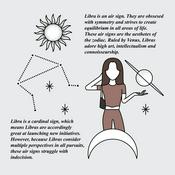 Wyważony PodcastBiznes, Non-Profit
 Skuteczny CEOBiznes, Kariera, Zarządzanie
 Piotr Zając o rynkachBiznes, Inwestowanie
 Moja drogaBiznes, Kariera, Przedsiębiorczość, Zarządzanie
 Girls Money Club PodcastBiznes, Edukacja, Inwestowanie
 MIT Sloan Management Review PolskaBiznes, Edukacja, Marketing
 The Rational Reminder PodcastBiznes, Inwestowanie
 The Knowledge ProjectBiznes, Edukacja, Inwestowanie, Przedsiębiorczość, Samodoskonalenie, Społeczeństwo i Kultura, Technologia
 Finanse w Twojej Firmie (Wojciech Plona)Biznes
 GOFIN: Podatki, Księgowość, Prawo pracyBiznes
O Design Better
Design Better co-hosts Eli Woolery and Aarron Walter explore the intersection of design, technology, and the creative process through conversations with guests across many creative fields, helping you hone your craft, unlock your creativity, and learn the art of collaboration.
Whether you’re design curious or a design pro, Design Better is guaranteed to inspire and inform. Vanity Fair calls Design Better, “sharp, to the point, and full of incredibly valuable information for anyone looking to better understand how to build a more innovative world.”
Strona internetowa podcastuSłuchaj Design Better, ZSŻ i wielu innych podcastów z całego świata dzięki aplikacji radio.pl
Uzyskaj bezpłatną aplikację radio.pl
- Stacje i podcasty do zakładek
- Strumieniuj przez Wi-Fi lub Bluetooth
- Obsługuje Carplay & Android Auto
- Jeszcze więcej funkcjonalności
Uzyskaj bezpłatną aplikację radio.pl
- Stacje i podcasty do zakładek
- Strumieniuj przez Wi-Fi lub Bluetooth
- Obsługuje Carplay & Android Auto
- Jeszcze więcej funkcjonalności
Design Better
Zeskanuj kod,
pobierz aplikację,
zacznij słuchać.
pobierz aplikację,
zacznij słuchać.
 Polska